Bioprocess monitoring and control
Start from imec’s technology toolbox to develop solutions that will finally bring realtime inline/online monitoring and control to biomanufacturing.
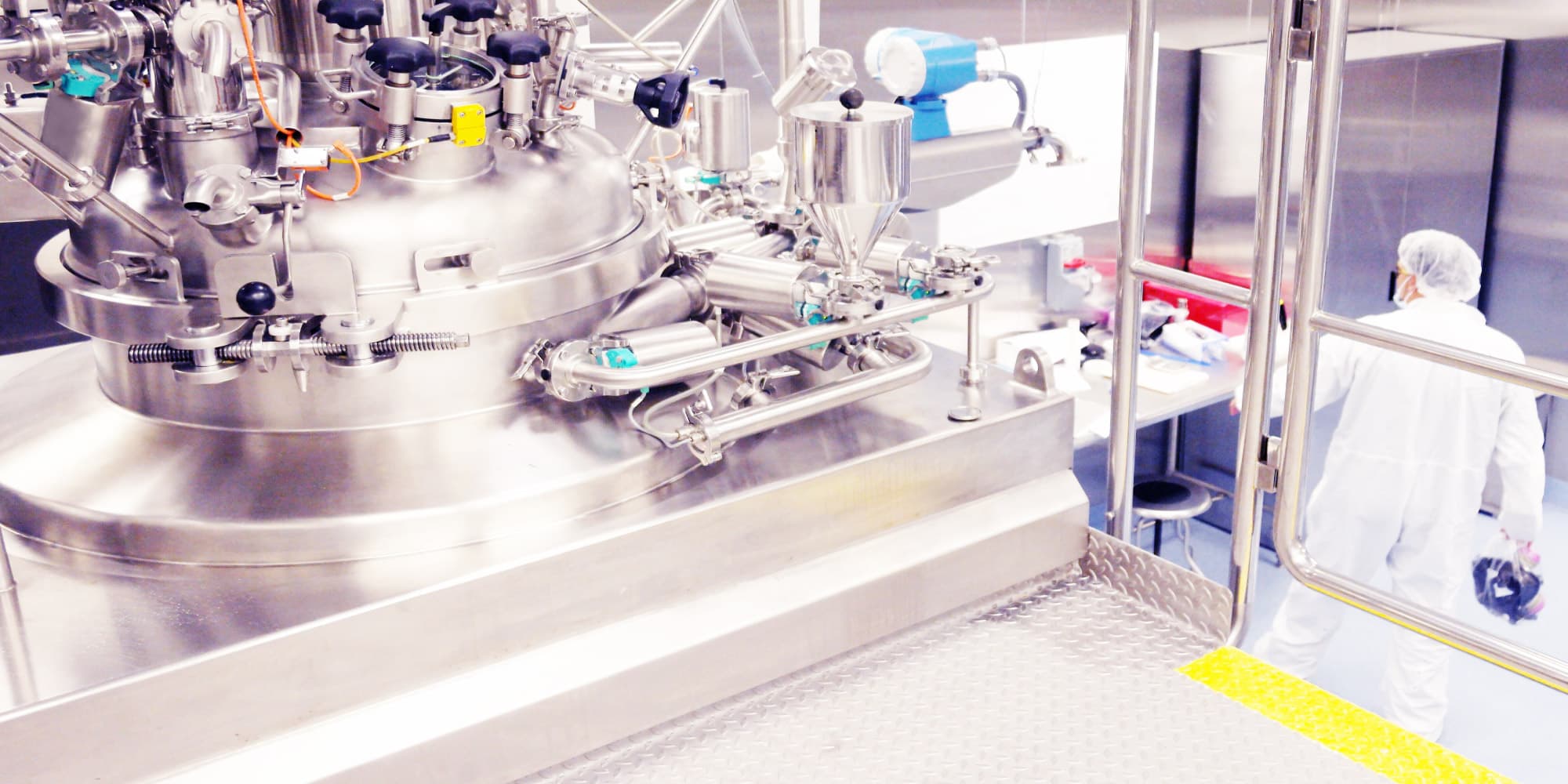
Continuous quality and process control is a surefire way to intensify and enhance the efficiency of an industrial process. It allows constant – even automatic – adjustment of the production steps. And therefore increases yield, reduces waste, and cuts cycle times.
However, such near-real-time process monitoring is difficult to achieve in biomanufacturing. Both the upstream and downstream production steps are incredibly complex. Their sensitivity to the slightest variations necessitates the use of highly sophisticated monitoring equipment. Such tools are expensive and need specialized operators.
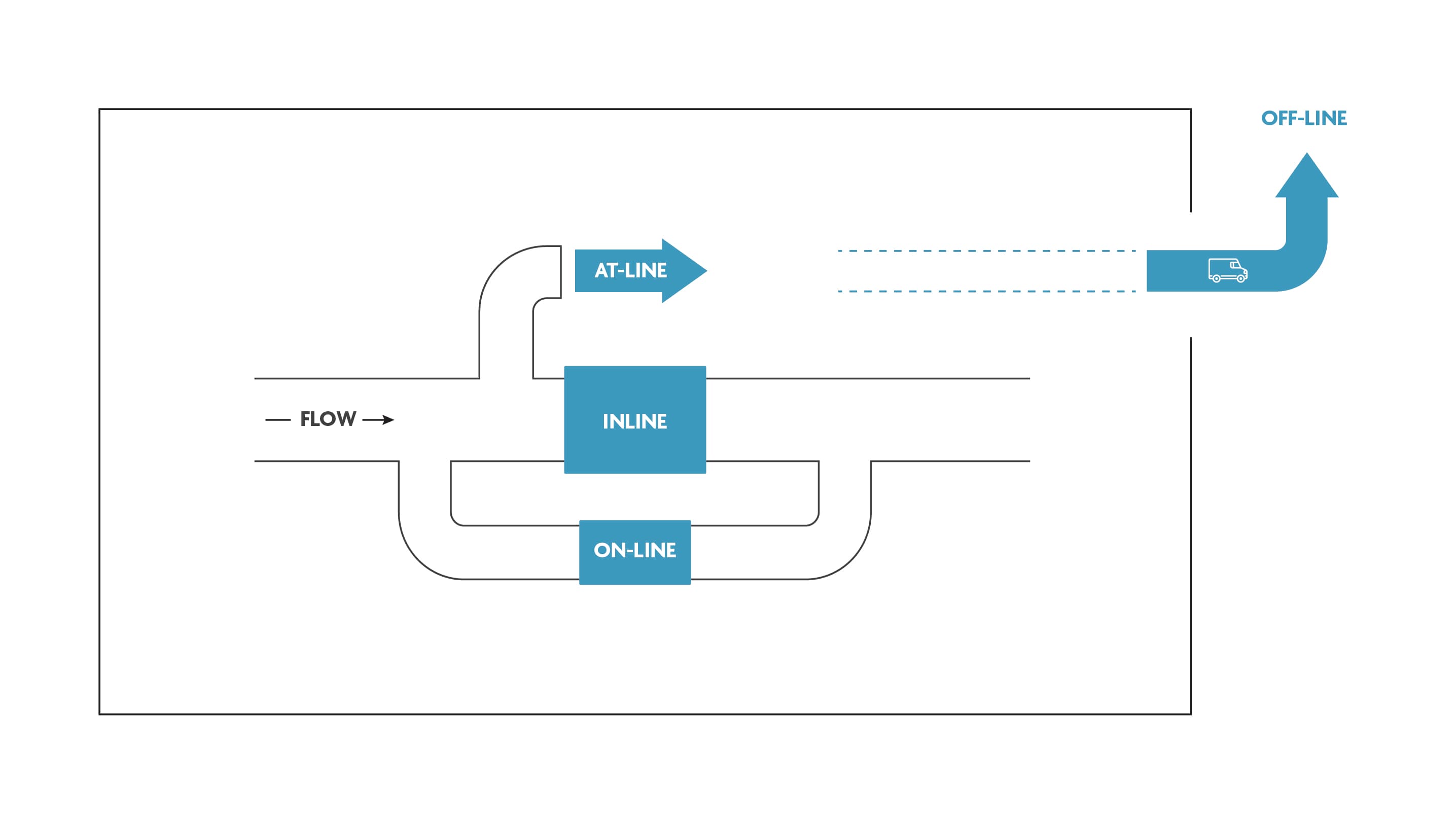
Therefore, offline bioprocess monitoring and control is still the norm. Samples are taken out of the flow and analyzed manually – often even in specialized offsite labs. This disturbs the process flow. For personalized treatments such as cell and gene therapy, it can mean that valuable time is lost for the patient.
Last but not least, it results in a lot of extra costs, both total product costs and investment costs for new facilities.
That’s why online or inline bioprocess monitoring has long been the holy grail of the biomanufacturing industry. Thanks to chip technology, such bioprocess monitoring technologies are finally within its reach.
Bert Verbruggen, imec's program manager for biomanufacturing solutions, talked about the challenges of biomanufacturing and how inline production process monitoring can help solve these issues, with Electronic Engineering Journal. Listen to the podcast.
Semiconductor technology revolutionizes biomanufacturing
With our smartphone, we now have a single device in our pocket that allows us to communicate, access all the world’s information, take pictures, ... Such is the power of semiconductor technology. It can bundle many functionalities in one device or even a single chip – extremely affordable because of mass production.
Moreover, chips can contain much more than electronic circuits. Thanks to the integration of microfluidics, photonics, sensors and actuators, ... they can be made into microdevices that autonomously interact with their environment. In the context of biomanufacturing: lab-on-chips that behave as miniature, but highly accurate versions of PCR reactors, separation modules, cell sorters, spectroscopes, microscopes, ... Ideal to integrate into the bioprocessing flow.
Imec’s toolbox for bioprocess monitoring
Imec’s research has resulted in several technologies that are ready to be tuned and developed for use in biomanufacturing.
Advanced process analytical tools
A quickly adaptable process makes for a predictable outcome. That’s why there’s a need for process analytical technologies (PAT) that keep a constant eye on multiple key parameters. By leveraging the compactness and affordability of chip technology, imec is developing a multiparameter solution for inline sensing. It enables the constant monitoring of an expanding number of parameters such as:
- pH
- dissolved oxygen
- glucose
- lactate
- cell density
- proteins
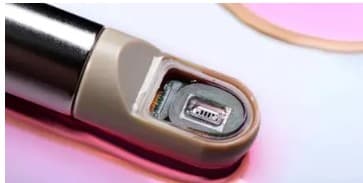
Imec’s multi-PAT solution is conceived as a single probe that’s immediately deployable, remains stable for at least four weeks and can wirelessly transfer data.
At-line bioburden monitoring
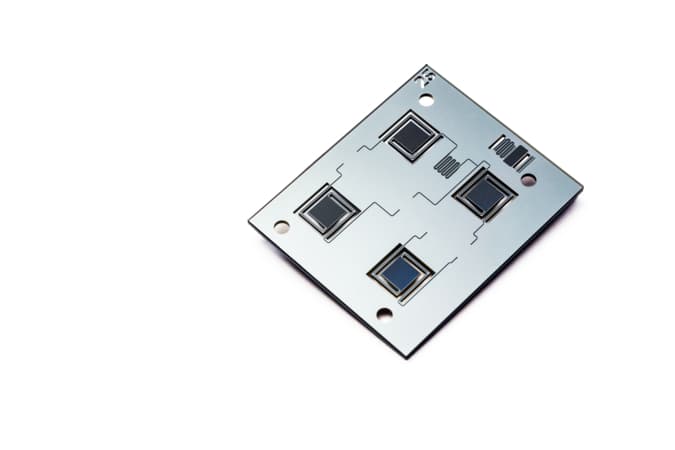
Because bacterial monitoring of a manufactured batch is currently performed off-line, it takes seven to twenty weeks before it can be released. Imec proposes a combination of two technologies to speed up this process:
- Lens-free imaging with a large field of view to detect suspicious particles.
- On-chip PCR to speciate these particles.
Both processes are performed at-line, automatically and in less than 20 minutes. The result can be automatically entered in a laboratory information management system (LIMS). And the PCR-amplified sample can be collected for further analysis.
At-line contamination monitoring
Imec’s toolbox contains three solutions for continuous monitoring of contamination in a bioprocess:
- On-chip photonic immuno-assays for protein sensing. With a sample-to-result in less than 10 minutes.
- Digital PCR for residual DNA monitoring.
- Lens-free imaging for the detection of subvisible particles.
At-line/in-line aseptic monitoring
Bacterial environment monitoring is currently performed using settle plates and visual inspection of colony-forming units (CFUs) – which is time-consuming and relies on highly qualified personnel.
Imec’s goal is to enable real-time, automatic detection of microbiological growth using lens-free imaging. Dramatically speeding up the process and eliminating the cumbersome handling of petri dishes.
Imec’s toolbox for bioprocess control
Cell and gene therapy
Personalized cell and gene therapies are widely considered our best weapon against diseases such as cancer. However, their cost is incredibly high, and their manufacturing process can easily take ten days – from needle to needle.
Imec’s modules to increase the availability and speed of cell and gene therapies, and move to a decentralized approach, include:
- technologies for fast and accurate selection of cells, such as our cell sorter
- technologies for optimum transfection of single cells, such as our multi-electrode array (MEA)
- technologies for continuous process monitoring, with wireless, privacy-preserving read-outs.
Download our white paper on technologies for cell and gene therapy
Data analytics
Bioprocesses often exhibit a staggering complexity. That makes it impossible for even experts to predict their outcomes. But by combining biological expertise with data-driven modeling, the level of uncertainty can be significantly reduced.
Imec’s researchers apply artificial intelligence to predict biomanufacturing processes based on historical and real-time sensor data. This close monitoring enables more timely interventions that prevent, for instance, the destruction of complete batches due to contamination.
One step further is complete lab automation supported by a closed-loop system between sensors and actuators. Meanwhile, imec’s compute system architecture team investigates the groundbreaking computational models we will eventually need to realize the astronomical AI workloads involved in the real-time control of bioprocesses.
Work with us
Are you looking to accelerate your development?
Imec not only helps you to address technological challenges. Thanks to our thorough knowledge of the health and pharma sector, we can function as your full-fledged strategic partner – right down to venturing support.
Click the button below to get in touch.
Publications
Q. Cai et al. "Ultra-fast, sensitive and quantitative on-chip detection of group B streptococci in clinical samples", Talanta, (2019)
External linkS. Cornelis et al. "Multiplex STR amplification sensitivity in a silicon microchip", Scientific reports, (2018)
External linkL Powell et al. "Rapid and sensitive detection of viral nucleic acids using silicon microchips", Analyst, (2018)
External linkA. Yurt et al. "Towards practical cost-effective lens-free imaging", SPIE BiOS, (2017)
External linkE. Mathieu et al. "Time-lapse lens-free imaging of cell migration in diverse physical microenvironments", Lab Chip, (2016)
External linkD. Vercruysse et al. "Three-part differential of unlabeled leukocytes with a compact lens-free imaging flow cytometer", Lab on Chip, (2015)
External linkL. Lagae et al. "High throughput cell sorter based on lensfree imaging of cells", International Electron Devices Meeting, (2015)
External linkApplication domains



Some examples of what we have done

Biomanufacturing innovations for complex therapeutics
Why ecosystem collaboration is the only way forward.
Read more

How point-of-care manufacturing will enable cell therapies to reach the patients who need them
Technological advancements and strategic partnerships are emerging as a solution to the limitations of centralized production of cell therapies.
Read more
ITF USA 2026 at SEMICON® West
From silicon to systems: building the AI future The pace of AI evolution leaves little room for certainty. Yet, several trends are clear: AI agents increasingly collaborating in orchestrated ecosystems are on the rise. Physical AI is a crucial next step, including (humanoid) robots transforming our homes and workspaces. In parallel, AI – just like advances in quantum computing – could help unlock breakthroughs in fields such as physics and biology. Building the AI future starts with a solid hardware foundation – from high-performance, energy-efficient compute in the data centers to low-power, real-time inference at the edge. ITF USA at SEMICON® West presents the building blocks for shaping the AI future. On October 12 in San Francisco, we take stock of the full AI deep-tech stack: from silicon to systems, from research to manufacturing. Discover ITF USA
View event