Semiconductor technology meets synthetic biology
Leverage imec’s technology portfolio and prototyping capabilities to advance your bioengineering solution.
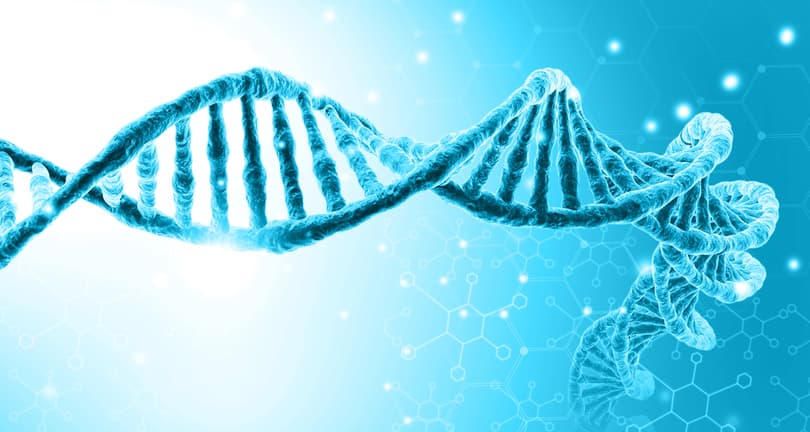
Synthetic biology refers to the design and engineering of new biological systems, organisms, or molecules, and to the re-design of existing, natural biological systems. Also, it refers to the production of specific products that result from this ‘engineering’ of nature. Possible markets are industrial, food, medical and environmental. Think for example of the fabrication of bacteria and algae to produce biofuels, or of biological systems producing therapeutic proteins.
Synthetic biology is a multidisciplinary field that results from the convergence of advanced knowledge in disciplines such as biology, nanotechnology, and digital technology.
With its technology portfolio and more than 15 years of experience in life sciences, imec is ready to assist bioengineering companies in their innovation projects. One important challenge in this field – that could be tackled by scalable chip technologies (through massive parallelization) – is to increase the experimental throughput. Imagine screening millions of genetic variants in a few days. This would support the deployment of AI for health applications, now hampered by a lack of useful data.
During SynBioBeta 2023, imec hosted a roundtable on the deep-tech acceleration of synthetic biology with leading innovators from the ecosystem.
Click here to download the report
Synthetic biotechnology portfolio
For companies operating in the field of synthetic biology, the following objectives stand as key aspirations:
- DNA synthesis at scale to enable discovery and production
- massive parallelization of workflows to enable the production of many different molecules such as proteins (in development phase) or engineered cells
- desktop ‘oligo’ or even gene printers with integrated functions such as purification
- true ‘plug and play’ systems with high user-friendliness for research labs
- closed-loop bioreactors with integrated sensing and parameter steering and bioreactors to scale out for cell and gene therapy and personalized medicine
Imec has built up elaborate expertise in techniques for fast, low-cost high-throughput DNA synthesis and sequencing as documented in this white paper on ‘Semiconductor technologies and system concepts to revolutionize genomics’.
Also, for the domain of synthetic biology – the fabrication of DNA, RNA, proteins, and organisms – micro- and nanotechnology can deliver the building blocks needed for a true revolution in the field:
- highly parallelized DNA and RNA synthesis arrays
- fast fluidics with unique fluidic structures (silicon or polymer) for sample loading, purification, size separation, strand capture and release, heating
- on-chip PCR including digital droplet PCR (ddPCR) and digital droplet technology based on electrowetting
- cell-sorting technology with high sorting speed and cell viability
- micro-electrode arrays for electroporation with individually addressable electrodes at single-cell scale
- integrated (SiN, silicon nitride) photonics for advanced sensing, microscopy, spectroscopy etc.
- biosensors for fast and accurate detection of cells, proteins, DNA, small molecules, etc.
- bioprocess monitoring and control
- advanced artificial intelligence for the design phase of synthetic molecules and for the monitoring of extremely complex bioprocesses (in-silico drug design).
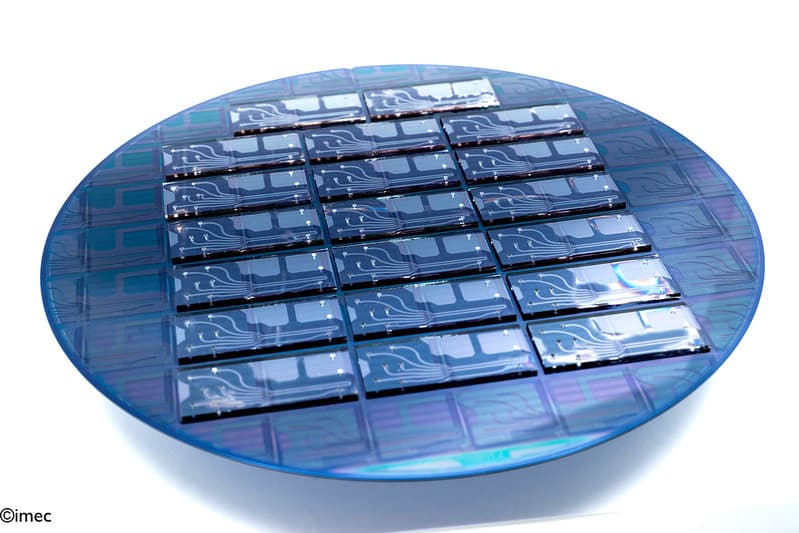
Prototyping and low-volume production of bioengineering devices
The development of lab-on-chips for synthetic biology would substantially boost a field that’s looking to scale its workflows through automation, miniaturization, and parallelization. But the challenges are huge, due to:
- the complexity of the systems that need to be built, a direct consequence of the equally complex biological processes they need to create and monitor
- the question of biology-compatible chip processing technology and the introduction of ‘exotic materials’ in a standard (CMOS) microchip technology workflow, to deal with cells, nucleic acids (DNA/RNA) and specialized reagents
- the need for affordable heterogeneous packaging for disposable chips
Imec is one of the only places in the world that combines an industry-grade microchip research fab with state-of the art biolabs on the same campus. Imec helps to design and miniaturize your microdevice so it can be mass fabricated, even if that entails cracking tough problems such as:
- Creating extremely fine features (< 10 nm) to interact at the molecular level.
- Using alternate, biocompatible electrode materials to interface with wet samples.
- Integrating platforms such as electrodes, photonics, nano-imprint lithography, and microfluidics with CMOS.
Find out more about our prototyping and low-volume manufacturing capabilities in this white paper. It dives into topics such as 3D integration, silicon photonics and the incorporation of exotic materials in a CMOS workflow – all illustrated with cases of advanced applications and their challenges.
Work with us
Are you looking to accelerate your development of synthetic biology solutions? Imec not only helps you to address technological challenges. Thanks to our thorough knowledge of the health and pharma sector, we can function as your full-fledged strategic partner – right down to venturing support.
Click the button below to get in touch.