New dialysis approaches using microelectronics & nanotechnology
After over 50 years of near-standstill, renal medicine is ready for major technological leaps. With microelectronics & nanotechnology as powerful ingredients.

Around 10 percent of the world’s population has some form of Chronic Kidney Disease (CKD). Most often, this goes unnoticed in the early stages. When the affliction becomes more severe, a patient may reach what is called end-stage kidney disease or ESKD. The present renal replacement therapies for ESKD are dialysis and/or a kidney transplant.
Chronic dialysis patients must schedule their life around their therapy. Unfortunately, current dialysis technologies:
- Cost a lot of money – while the average survival on dialysis is limited to about 5 to 6 years.
- Need a developed infrastructure – with reliable electricity and superior-quality drinking water.
- Take a lot of time – the patient being tied to a dialysis machine or infusion set.
- Make for exhausting treatments that cause collateral damage and accelerated aging.
- Restrict the freedom to work and travel.
- Require a strict diet and severely limit the allowed drinking volume between treatments – making patients constantly thirsty.
It’s no wonder that millions of people are yearning for new solutions that enhance their quality of life. Moreover, the International Society for Nephrology (ISN) and the WHO estimate that about 75% of people who need a kidney transplant or dialysis don’t even have access to the existing means of therapy.
Lower costs, higher portability and better functionality are all needed. A bio-hybrid or fully implantable artificial kidney would be a ground-breaking alternative to renal replacement therapies.
Challenges for renal dialysis technology
The artificial kidney was one of the most exciting medical advances in the first decades after the Second World War. But since then, renal dialysis technology has barely changed. What are the reasons for this standstill in innovation?
- technical – Kidney functions are overly complex. Without sufficient transplant kidneys, they can only be replaced by a personalized and integrated combination of advanced technological solutions.
- economical – Innovators face a long time to market, whereas reimbursement is only granted locally. And they must obtain market access before any negotiation on reimbursement can even start.
- regulatory – To obtain market access, new technologies must fulfill strict governmental regulations and standards on safety and essential performance. Innovators are often unfamiliar with these topics. This makes investment risks high. Imec cooperates with international regulatory agencies to find ways to innovate upon regulations.
The answer to these challenges lies in increased cooperation to actively stimulate innovation. This is why the Kidney Health Initiative (KHI) – a public-private partnership that unites patients, health professionals, research organizations and industry – developed an international innovation roadmap for new approaches to renal replacement therapy (RRT).
Imec is a KHI member and is involved in the ongoing actualization of this roadmap by sharing its decades of experience in technology road mapping within semiconductor technology with the renal community.

Added value of microelectronics & nanotechnology for renal dialysis
While the developments in renal replacement technology slowed down, the semiconductor industry boomed. Electronic devices have become cheaper, smaller and more powerful – up to the point where we all have a computer in our pockets.
This reduction in price and size of electronics also led to the development of connected health solutions: wearable, ingestible or implantable devices that:
- collect reliable data
- process and analyze that data to yield actionable insights
- act on that information
It’s evident that such technologies offer significant benefits to renal care. For instance, unobtrusive wearable devices can collect longitudinal multiparameter data to facilitate earlier diagnosis and help adhere to a healthier lifestyle.
Towards an implantable artificial kidney
At imec, we envision developing a fully implantable artificial kidney. It would run on normal blood pressure, requiring no external pumps – just like a natural kidney. The bioartificial kidney would have:
- on-board sensors to detect the onset of problems in real time
- on-board actuators to perform corrective action
- wireless charging
Such an implantable solution would provide the patients with more physiological and continuous therapy. This is opposed to present therapies where patients have restricted freedom regarding lifestyle, diet and movement.
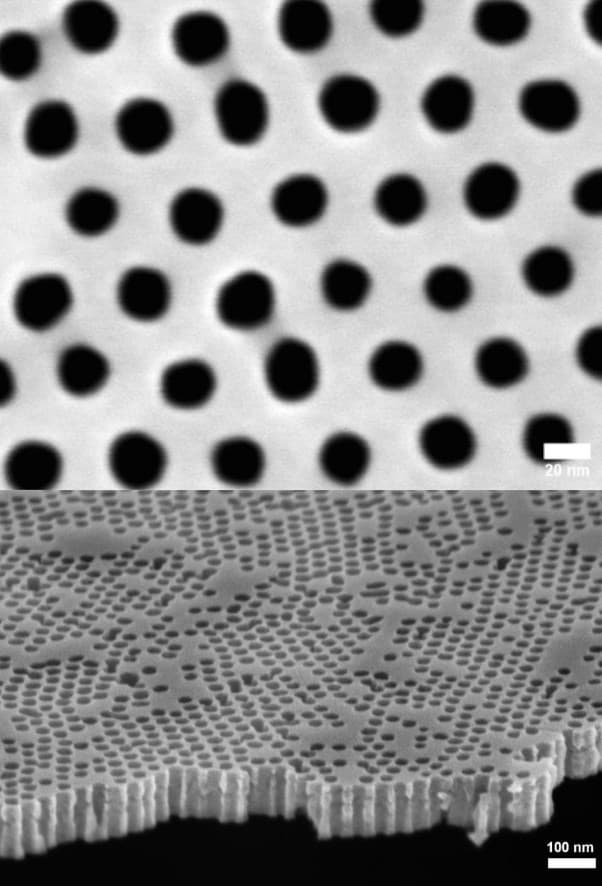
One of the key components we’re currently working on is a high-selectivity filter, which can efficiently filter and purify blood. Using imec’s state-of-the-art cleanroom fabrication technologies, we design and develop nanoporous hemofilters for artificial kidneys.
Want to join our research into new renal dialysis technologies?
Click the button below to set up a meeting.
Scientific publications
F.P. Wieringa et al. "The Future of Technology-Based Kidney Replacement Therapies: An Update on Portable, Wearable, and Implantable Artificial Kidneys", American Journal of Kidney Diseases, (2025)
External linkF.P. Wieringa et al. "Transportable, portable, wearable and (partially) implantable haemodialysis systems: comparison of technologies and readiness levels", Clinical Kidney Journal, (2024)
External linkD. Loureiro Ramada et al. "Portable, wearable and implantable artificial kidney systems: needs, opportunities and challenges", Nature Reviews Nephrology, (2023)
External linkR. Vanholder et al. "The European Green Deal and nephrology: a call for action by the European Kidney Health Alliance", Nephrology Dialysis Transplantation, (2023)
External linkT. Groth et al. "Wearable and implantable artificial kidney devices for end-stage kidney disease treatment: Current status and review", Artificial Organs, (2022)
External linkF.P. Wieringa et al. "Moving ahead on the Kidney Health Initiative innovation roadmap, a transatlantic progress update", Artificial Organs, (2020)
External linkF.P. Wieringa et al. "Smart sensors for real-time monitoring of patients on dialysis", Nature Reviews Nephrology, (2020)
External linkF.P. Wieringa et al. "Regulatory approaches to stimulate innovative renal replacement therapies", Nature Reviews Nephrology, (2020)
External linkB. Pereira Cabral et al. "Probing Expert Opinions on the Future of Kidney Replacement Therapies", Artificial Organs, (2020)
External linkM.K. Schoutteten et al. "Towards personalized fluid monitoring in haemodialysis patients: thoracic bioimpedance signal shows strong correlation with fluid changes, a cohort study", BMC Nephrology, (2020)
External linkF.P. Wieringa et al. “Smart sensors for real- time monitoring of patients on dialysis", Nature Reviews Nephrology, (2020)
External linkF.P. Wieringa et al. “Regulatory approaches to stimulate innovative renal replacement therapies”, Nature Reviews Nephrology. E-pub ahead of print, (2020)
External linkJ.P. Kooman et al. “Wearable health devices and personal area networks: can they improve outcomes in haemodialysis patients?”, Nephrol Dial Transplant, (2020)
External linkF.P. Wieringa et al. “The Kidney Health Initiative innovation roadmap for renal replacement therapies: Building the yellow brick road, while updating the map”, Artificial Organs, (2020)
External linkC. Smeets et al. “The Added Value of In-Hospital Tracking of the Efficacy of Decongestion Therapy and Prognostic Value of a Wearable Thoracic Impedance Sensor in Acutely Decompensated Heart Failure With Volume Overload”, JMIR Cardio, (2020)
External linkS. Song et al. “A 769 μW battery powered single-chip SoC with BLE for multi-modal vital sign monitoring health patches”, IEEE Trans Biomed Circuits Syst, (2019)
External linkF.P. Wieringa et al. “Wearable sensors: can they benefit patients with chronic kidney disease?”, Expert Review of Medical Devices, (2017)
External linkS. Lee et al. “Congestive heart failure patient monitoring using wearable Bio-impedance sensor technology”, 37th Annual International Conference of the IEEE Engineering in Medicine and Biology Society (EMBC), (2015)
External linkRelated technologies

Innovative algorithms for actionable insights
Turn raw health data into actionable insights with algorithms optimized for your connected health device.

Systems-on-chip for medical sensor devices
An electronic device that’s comfortably connected to the human body needs to be as compact as possible. That’s why imec’s assists you in the development o

Implantables: white paper
Small, smart and Connected. Technologies for the next generation of implantable devices.
Other application domains

Neuroscience technology
Work with an innovative neurotechnology platform of advanced algorithms and systems to develop user-friendly, clinical-grade and non-invasive brain monitoring a

Vital sign monitoring
A comprehensive view of someone’s health can’t really be established in a doctor’s office. That’s why imec develops technologies that pave the way towar

Pain and stress monitoring
Feelings such as pain and stress do not only reside in people’s minds. They manifest themselves through physiological signals. Using wearable technologies, yo

Technologies for gastroenterology and precision nutrition
Join imec’s research into non-contact and ingestible technologies to gain insight into digestive processes and enable personalized diets.
Some examples of what we have done

Imec and NeuroGyn present PosStim™ – a breakthrough neurostimulator for pelvic nerve disorders
A functional prototype for next-gen pelvic nerve stimulation, developed by NeuroGyn and imec, is ready and can soon be used for first-in-human trials.
Read more
Technology for active implantable devices
Imec powers the future of bioelectronic medicine with ultra-small, adaptive implants that will unlock new possibilities for therapy and diagnosis.
Read more

Imec presents prototype of ingestible sensor for gut health monitoring
In-human measurements demonstrate promise for the sensor in clinical trials
Read more