Imec hyperspectral sensor aboard newly launched earth-observation satellite
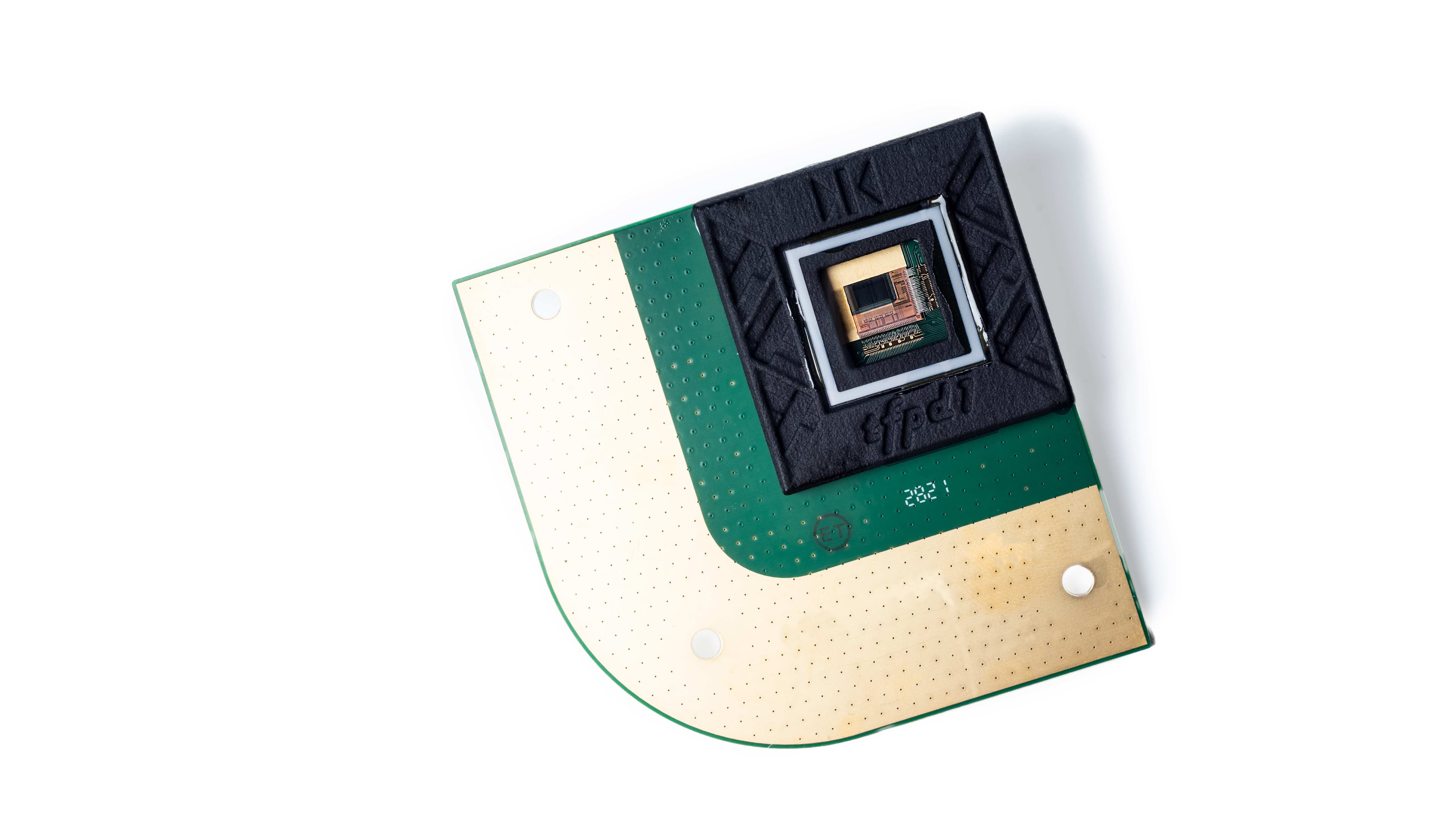
The IPERLITE mission is designed to demonstrate next-generation hyperspectral imaging technology in space. At the core is a hyperspectral sensor developed by imec.

In short
A Belgian-built demonstration mission sets a new benchmark in hyperspectral imaging, enabling more valuable insights for Earth observation.
The imec sensor is inside AMOS’s advanced payload, integrated on Aerospacelab’s flexible platform.
Data is being processed and calibrated thanks to VITO’s expertise.
Demonstrating compact high-resolution hyperspectral monitoring
The IPERLITE mission is an in-orbit demonstration (IOD) flight designed to demonstrate next-generation hyperspectral imaging technology in space from an orbit of 510 km.
Rather than serving as an operational satellite, IPERLITE acts as a testbed – visiting agricultural sites and collecting spectral data to assess the performance of its innovative payload under real orbital conditions.
IPERLITE contributes to a growing wave of compact hyperspectral missions that aim to democratize access to spectral data, complementing larger institutional programs like CHIME and SBG, and paving the way for future constellations.
Imec sensor
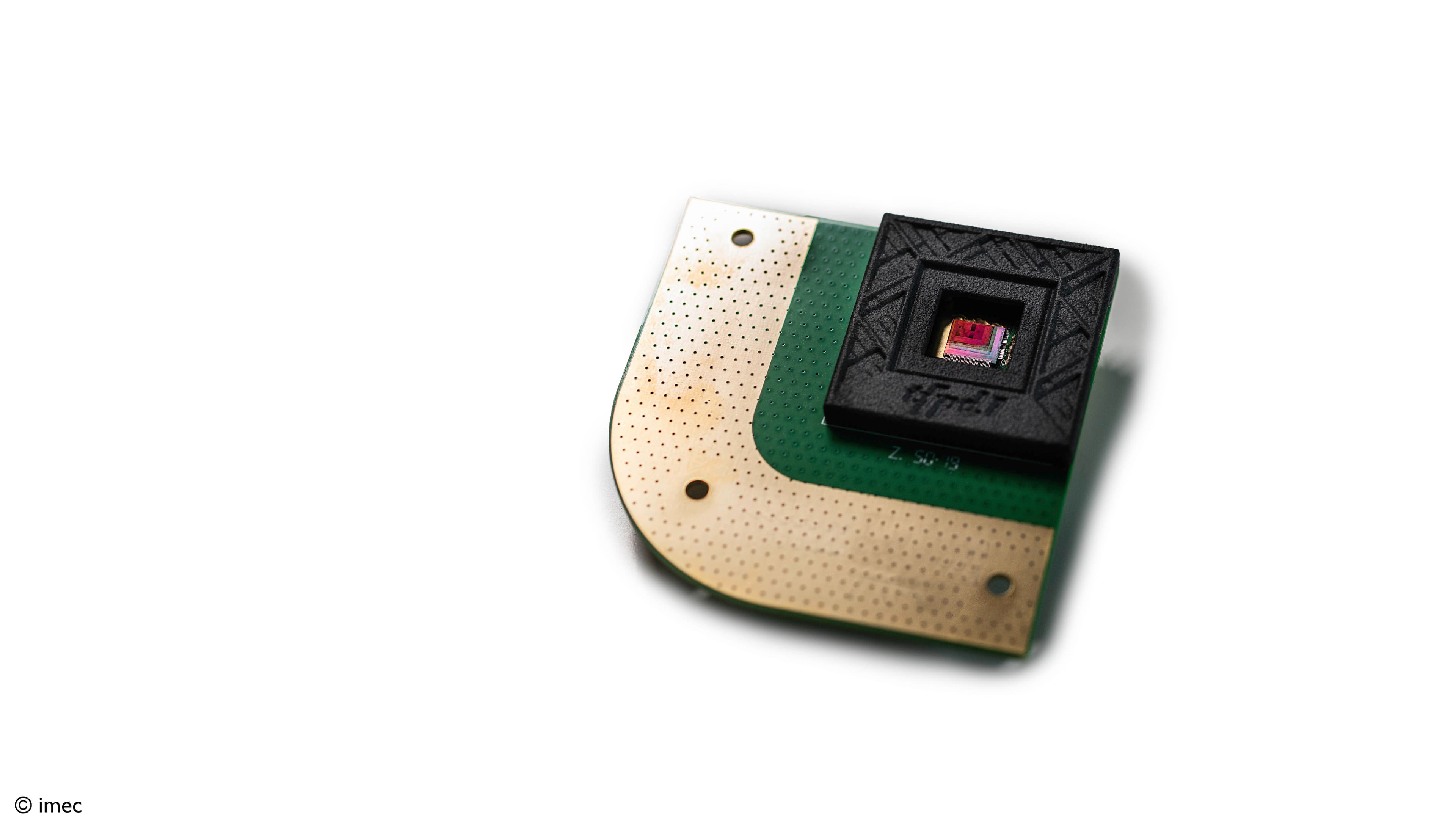
At the core of the IPERLITE mission is a hyperspectral sensor developed by imec, the result of a multi-year ESA-supported R&D trajectory involving several Belgian partners and building further on earlier CHIEM and CSIMBA projects.
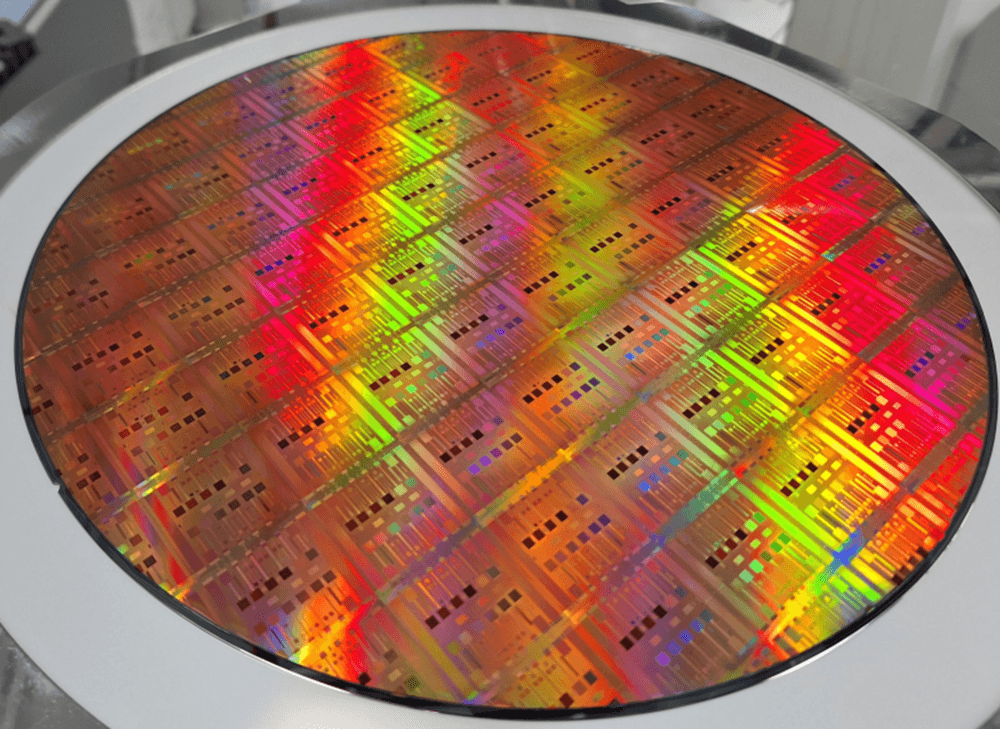
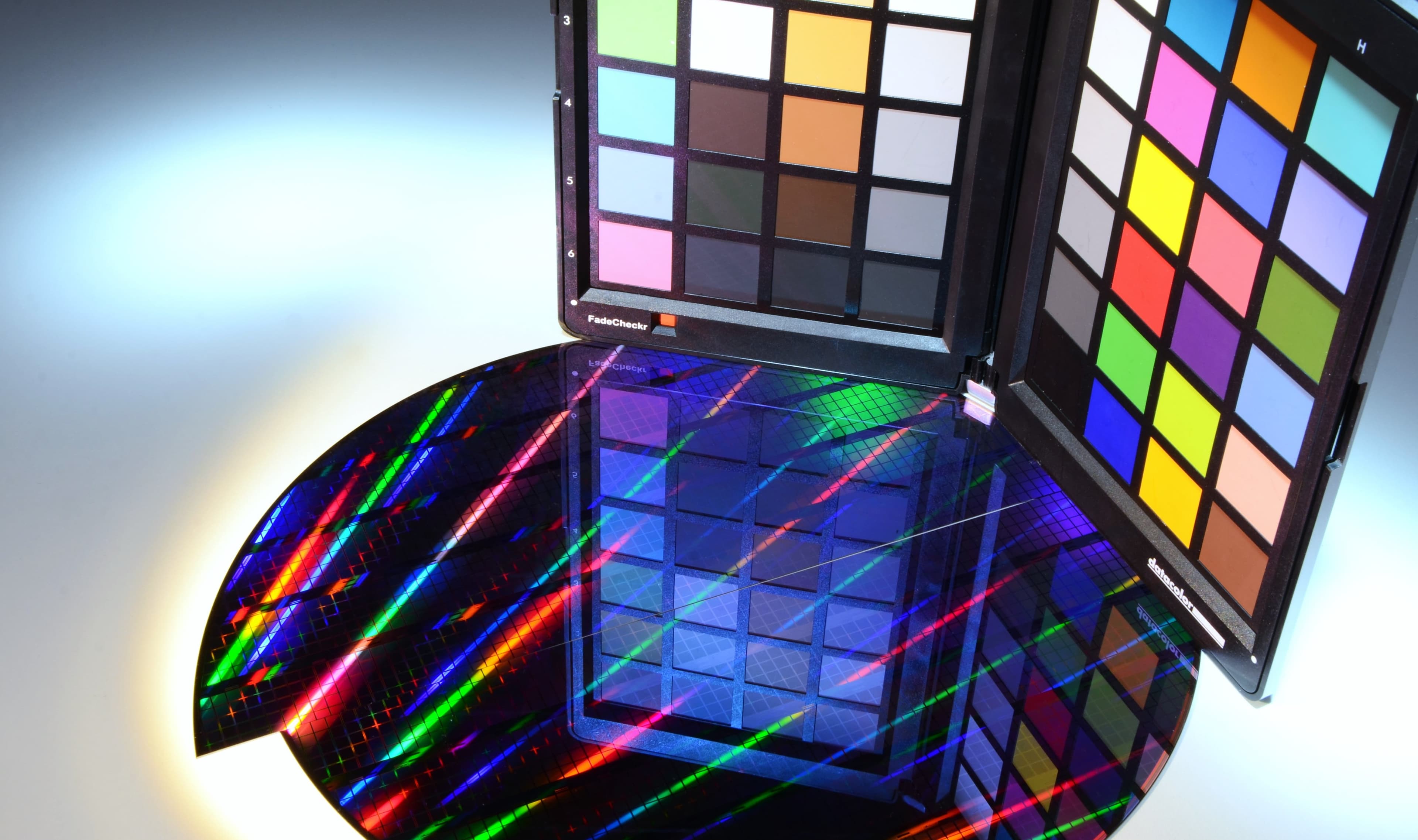
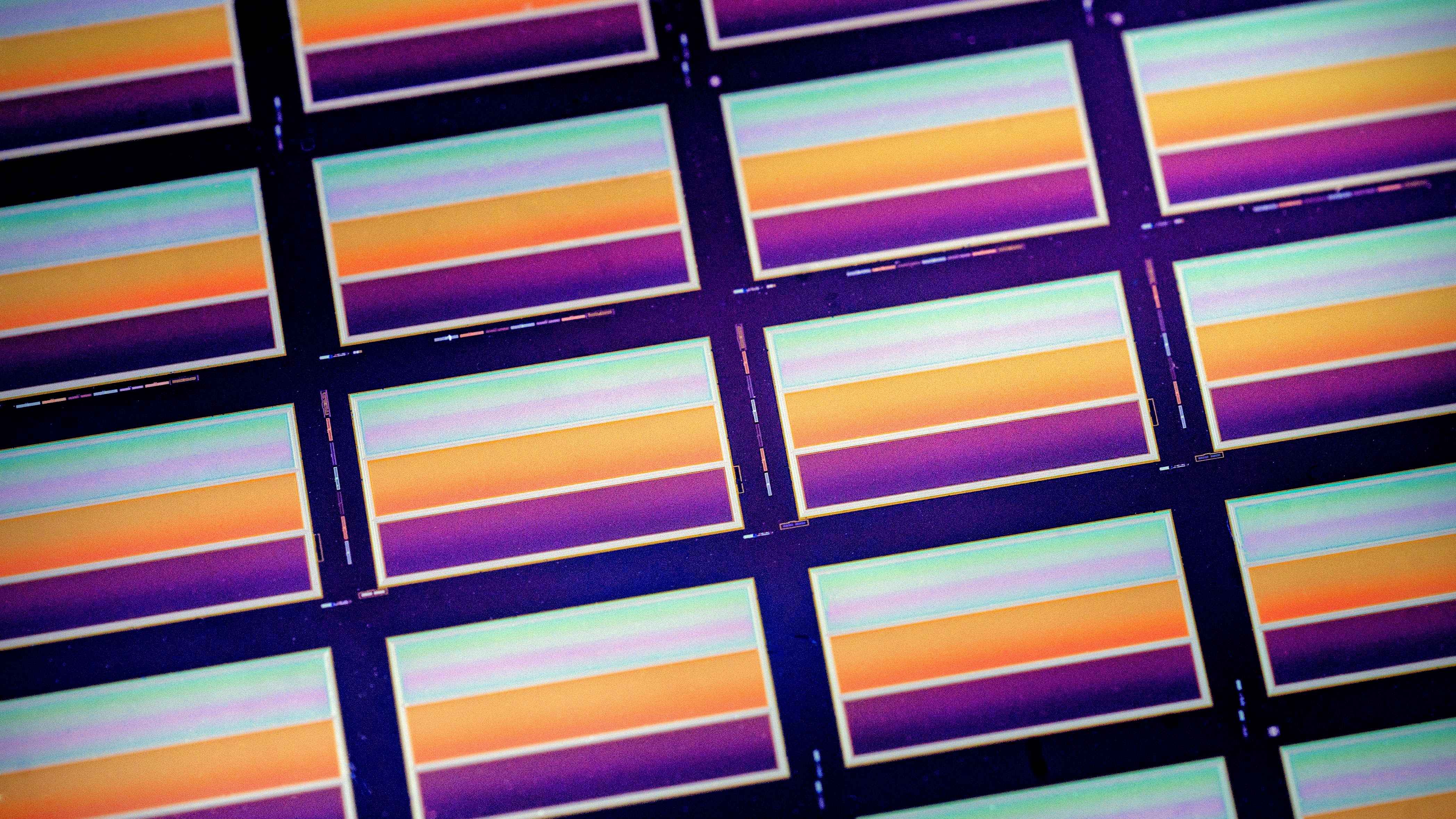
The sensor is fabricated by directly depositing 154 narrowband thin-film interference filters on a 4096 x 3076-pixel CMOS detector.
These filters span the 470–900 nm range with a spectral resolution down to 5 nm, enabling detailed imaging across the visible and near-infrared spectrum.
Each spectral band is captured by 12 TDI (time delay integration) lines, significantly boosting signal-to-noise ratio and radiometric accuracy.
To enhance versatility, the sensor includes two panchromatic zones – areas without spectral filters that collect full-spectrum light. These zones allow for shorter exposure times and sharper imagery. When fused with hyperspectral data, they improve overall image quality and spatial detail.
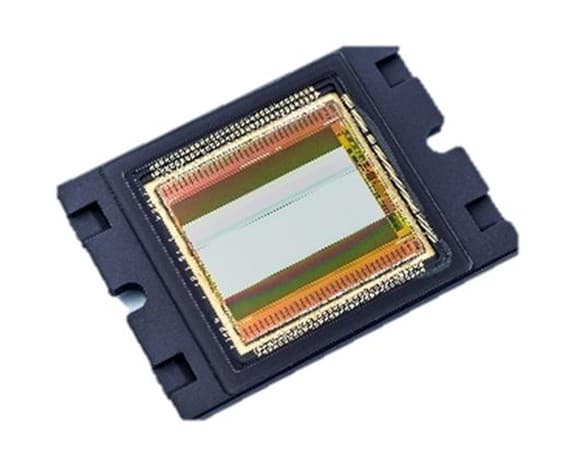
Compared to earlier 2-megapixel designs, this larger 12-megapixel sensor doubles the width per frame and the amount of digital TDI lines per band. Furthermore, it introduces a hybrid architecture that balances spectral fidelity with imaging efficiency.
As such, it will become the most powerful imec hyperspectral image sensor chip in space. It’s a key enabler for small satellite missions aiming to deliver actionable Earth observation data without compromising on quality.
Imec’s ongoing R&D in on-chip spectral imaging has resulted in an expansion of the thin-film filter technology portfolio with improved filter characteristics and the application on new detector platforms covering a broader spectral range – including shortwave infrared – unlocking new opportunities for advanced space missions and applications.
Important to mention is the linescan LS96 VNIR sensor. It contains a line-based on-chip filter bank, featuring a broader spectral range (450-900 nm), high, uniform light sensitivity and doubled amount of detector lines per spectral band enabling digital TDI.
The optimized process technology ensures a very low sensor-to-sensor variability making these sensors ideal for use within satellite constellations. Besides this new development on CMOS-based sensors, imec also develops spectral sensors based on InGaAs and MCT imagers, for wavelengths of respectively 900 to 1700 and 1700 to 2500nm.
Space technology leaders all on board
The IPERLITE mission is the result of a close collaboration between several Belgian space technology leaders.
- On the ground, VITO leads the development of the payload data ground segment (PDGS), providing image calibration, validation, and processing services that transform raw data into actionable insights for end users.
- The satellite itself is built on the VSP-150 platform from Aerospacelab, a versatile and high-performance bus designed for low Earth orbit missions.
- AMOS developed the advanced hyperspectral imaging system – CSIMBA – featuring compact, high-resolution optics tailored for Earth observation.
- DELTATEC contributed the onboard electronics and readout systems, including a 12-stage digital time delay integration (TDI) architecture that significantly enhances signal quality.
Together, these partners form a fully Belgian ecosystem supported by ESA and BELSPO, demonstrating the country’s growing leadership in compact, high-impact space missions.
Co-design advanced space payloads with imec
Imec invites satellite builders and payload developers to co-create next-generation space-grade components – tailored, compact, and built to perform in harsh orbital environments.
Imec offers custom development of hyperspectral imagers, radiation-hardened electronics, and optical circuits for satellite payloads, supporting the full journey from design to flight-ready hardware.
With expertise in thin-film filter-on-chip technology, onboard data processing, and space qualification, imec helps accelerate innovation in Earth observation, communications, and scientific missions.
Explore collaboration opportunities
Or click the contact button below to set up a meeting.