Hyperspectral imaging technology
Imec’s on-chip technology makes hyperspectral imaging robust, compact and mass-producible. This is how it works.

Hyperspectral imaging technology is designed to make images that reveal a maximum of spectral information for each pixel of the image.
Another way of looking at a hyperspectral image is as a set of image layers, each in another wavelength of the electromagnetic spectrum. The combination of those layers is called a hyperspectral data cube.
Want to see how it works? Download our software and a reference datacube.
There are multiple hyperspectral imaging technologies. Each applies different techniques to filter the light and capture the image data. The key differentiators you need to keep an eye on are:
- acquisition speed – the time required to capture the hyperspectral data cube
- snapshot capability – the ability to acquire a hyperspectral image, without scanning
- spatial resolution – the size of the pixel array, similar to regular photography
- spectral resolution – the number of frequency bands (or layers) each hyperspectral image contains.
Selecting the required properties is a tradeoff, driven by the requirements of the application. If you know which spectral bands to look for, there’s no need to capture the full spectral range. Especially because a lower resolution will enable faster acquisition speeds and open new possibilities with hyperspectral video imaging.
Imec can assist you in tailoring its hyperspectral imaging technology to your application. For instance, why not use one of our high-resolution evaluation systems to define which frequency bands are relevant for your needs? Afterwards, we can help you to build your dedicated filters or camera system.

On-chip hyperspectral imaging technology
Traditional hyperspectral imaging scanners contain a lot of precision optics to select and diffract the light. This makes them relatively heavy, expensive, slow and delicate – with a need for frequent recalibration.
Imec’s hyperspectral imaging technology takes a different approach. As a world-leading R&D hub in nanotechnology, we have developed a wafer-level CMOS process to integrate thin-film spectral filters directly on the pixels of the image sensor.
Our filters eliminate the complex optical camera design and can be deposited on a commercial CMOS imager, like the one in your smartphone or a model with scientific imaging capabilities.
The result is that our hyperspectral image sensors enable imaging systems that are:
- capable of operating in video mode
- highly customizable
- compact
- robust to environmental circumstances like shocks and vibrations, which eliminates the need for recalibration
- mass-producible and therefore less expensive
This leads to the increased adoption of hyperspectral imaging in a range of applications.
Flexible technology platform for high-res and real-time hyperspectral imaging
Our unique on-chip hyperspectral imaging technology allows us to make different spectral filter patterns. Those fall into two categories:
- A mosaic pattern (Bayer-like) on top of a group of 3X3, 4X4 or 5X5 pixels. This enables real-time hyperspectral imaging, which is crucial for every application with a moving camera or ‘target’.
- A striped pattern on top of each row of pixels. This results in high-resolution hyperspectral imaging – comparable to so-called linescan or push-broom cameras, only more compact, faster and easier to use.

This website offers you an overview of our ready-to-use evaluation kits, including remote support, and the easy-to-use HSI STUDIO, HSI MOSAIC and HSI SNAPSCAN software suites to make hyperspectral imaging accessible to anyone.
Of course, we can also develop custom spectral image sensors, with your desired pattern lay-out, filter specification, imager chip, ... All the way up to the design of the complete camera system.
Contact our business development team.
Technology publications
Goossens et al. “Vignetted-aperture correction for spectral cameras with integrated thin-film Fabry–Perot filters”, Applied Optics, (2019)
External linkTsagkatakis et al. “Graph and Rank Regularized Matrix Recovery for Snapshot Spectral Image Demosaicing”, IEEE Transactions on Computational Imaging, (2019)
External linkBlanch-Perez-del-Notario et al. “Convolutional Neural Networks For Heterogeneous Ingredient Discrimination With Hyperspectral Imaging”, 10th Workshop on Hyperspectral Imaging and Signal Processing: Evolution in Remote Sensing (WHISPERS), (2019)
External linkGoossens et al. “Spectral Shift Correction for Fabry-Perot Based Spectral Cameras”, 10th Workshop on Hyperspectral Imaging and Signal Processing: Evolution in Remote Sensing (WHISPERS), (2019)
External linkBlommaert et al. “CSIMBA: Towards a Smart-Spectral Cubesat Constellation”, IEEE International Geoscience and Remote Sensing Symposium, (2019)
External linkGoossens et al. “Finite aperture correction for spectral cameras with integrated thin-film Fabry–Perot filters”, Applied Optics, (2018)
External linkKarni et al. “Spatial and spectral filtering on focal plane arrays”, Infrared Technology and Applications XLIV, (2018)
External linkGonzalez et al. “An extremely compact and high-speed line-scan hyperspectral imager covering the SWIR range”, Photonic Instrumentation Engineering IV, (2018)
External linkPichette et al. “Fast and compact internal scanning CMOS-based hyperspectral camera: the Snapscan”, Image Sensing Technologies: Materials, Devices, Systems, and Applications V, (2017)
External linkGeelen et al. “System-level analysis and design for RGB-NIR CMOS camera”, Photonic Instrumentation Engineering IV, (2017)
External linkPichette et al. “Hyperspectral calibration method For CMOS-based hyperspectral sensors”, Photonic Instrumentation Engineering IV, (2017)
External linkGonzalez et al. “A novel CMOS-compatible, monolithically integrated line-scan hyperspectral imager covering the VIS-NIR range”, Next-generation Spectroscopic Technologies IX, (2016)
External linkSpooren et al. “RGB-NIR Active Gated Imaging”, Electro-optical and Infrared Systems: Technology and Applications XIII, (2016)
External linkGeelen et al. “A tiny VIS-NIR snapshot multispectral camera”, Advanced Fabrication Technologies for Micro/Nano Optics and Photonics VIII, (2015)
External linkVereecke et al. “Quantum efficiency and dark current evaluation of a backside illuminated CMOS image sensor”, Japanese Journal of Applied Physics, (2015)
External linkGeelen et al. “A compact snapshot multispectral imager with a monolithically integrated per-pixel filter mosaic”, Advanced Fabrication Technologies for Micro/Nano Optics and Photonics VII, (2014)
External linkLambrechts et al. “A CMOS-compatible, integrated approach to hyper- and multispectral imaging”, IEEE International Electron Devices Meeting, (2014)
External linkMainali et al. “Derivative-Based Scale Invariant Image Feature Detector With Error Resilience”, IEEE Transactions on Image Processing, (2014)
External linkSima et al. “Spatially variable filters — Expanding the spectral dimension of compact cameras for remotely piloted aircraft systems”, IEEE Geoscience and Remote Sensing Symposium, (2014)
External linkGeelen et al. “A snapshot multispectral imager with integrated tiled filters and optical duplication”, Advanced Fabrication Technologies for Micro/Nano Optics and Photonics VI, (2013)
External linkGeelen et al. “Low-complexity image processing for a high-throughput low-latency snapshot multispectral imager with integrated tiled filters”, (2013)
External linkLambrechts, “Snapshot multispectral camera uses tiled filter arrays”, Laser Focus World, (2013)
External linkGeelen et al. “New Multi- and Hyperspectral Cameras Cover Diverse Applications”, Photonics Spectra, (2013)
External linkParton et al. “Interdisciplinarity takes imagers to a higher level”, Solid State Technology, (2013)
External linkTack et al. “A compact, high-speed, and low-cost hyperspectral imager”, Silicon Photonics VII, (2012)
External linkMainali et al. “Image registration software data correction algorithm for hyperspectral imager”, Optical Systems Design, (2012)
External linkLambrechts et al. “CMOS takes hyperspectral imaging beyond the laboratory”, Laser Focus World, (2011)
External linkRead more
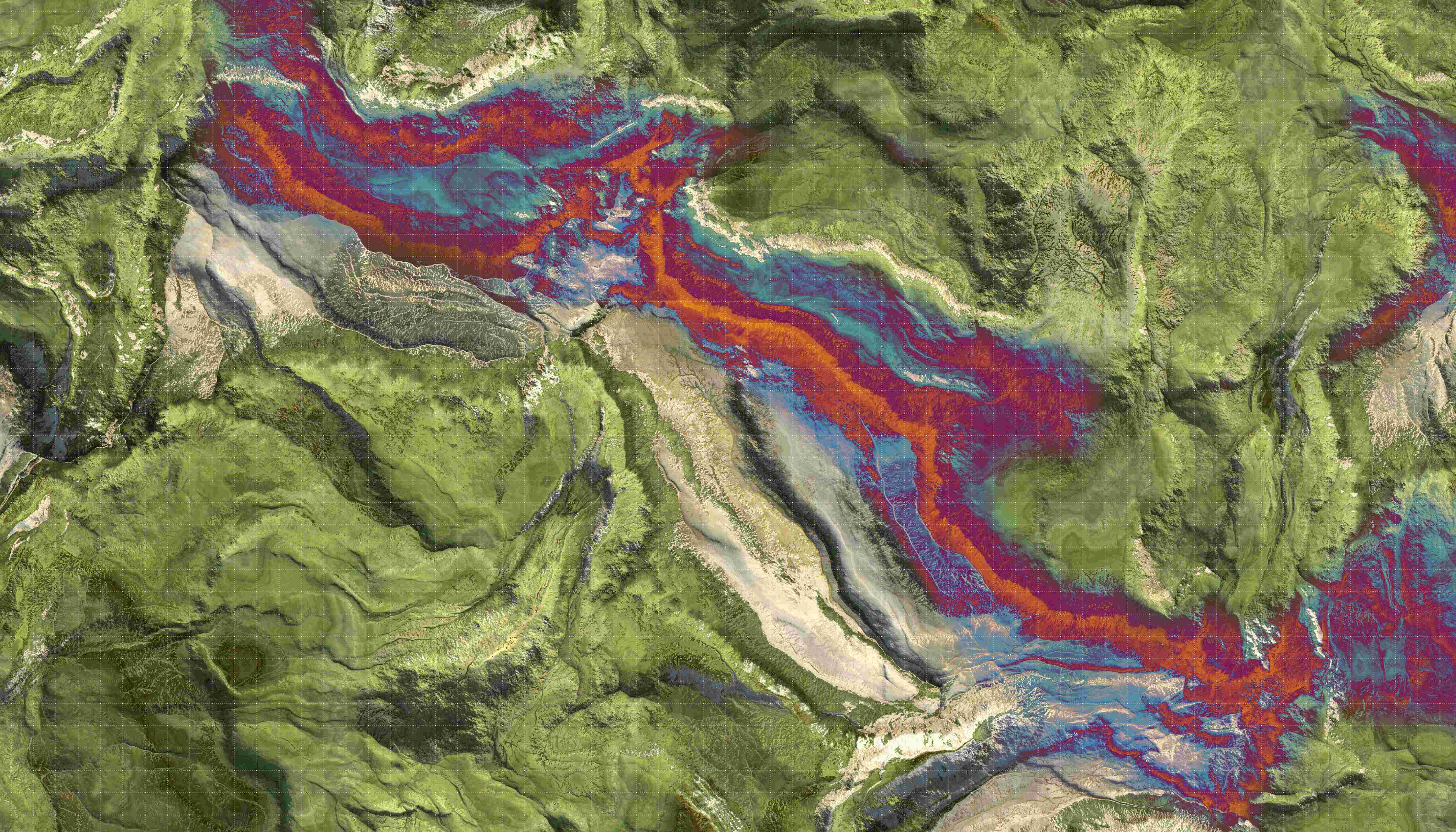
IPERLITE mission launch marks new era in hyperspectral earth observation, with imec technology onboard
Read more
Hypervision Surgical and imec bring real-time AI-enabled spectral imaging to the operating room
By combining real-time AI analytics with video rate on-chip hyperspectral imaging, Hypervision is delivering the first clinically approved platform that gives surgeons live, tissue-level insights for assisted surgery. Imec’s on-chip spectral technology is a cornerstone of this innovation.
Read more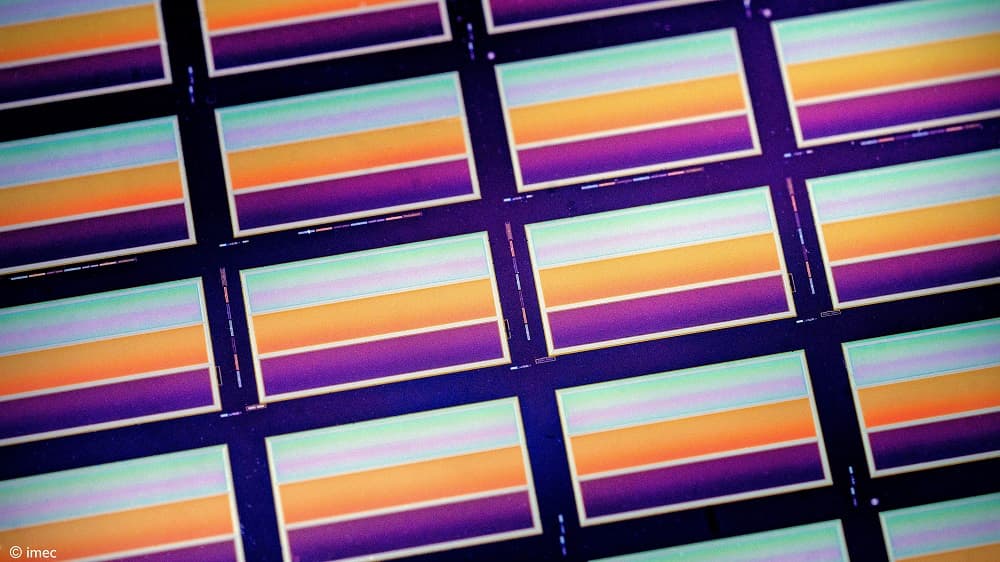
New sensor for spectral imaging from space
For earth observation with high signal-to-noise ratio
Read more