Superconducting computing
From materials up to packaging, imec leverages its wide-ranging semiconductor and system expertise to bring us closer to a promising new computing paradigm.

Superconducting or cryogenic computing is a key element in developing compelling beyond-CMOS technology. The idea is to take advantage of the near-zero electrical resistance of materials at ultra-low temperatures. That leads to a much more efficient operation that enables stacking several high-performance computing chips into a compact yet powerful system.
Why do we need superconducting computing?
Advanced AI techniques such as machine learning are transforming just about every domain in our society. And while crunching massive quantities of data leads to new insights and benefits, it also requires colossal amounts of power. If we only support the growth in AI processing by traditional CMOS scaling and adding more data centers, then the amount of energy required will soon exceed what our earth can provide.
What we need are computing innovations that deliver significantly higher efficiency gains. Imec is working on a number of these innovations, such as edge AI and high-performance computing software. Superconducting computing is another one. It could be up to 200 times more energy-efficient compared to current state-of-the-art processors.
Furthermore, superconducting computing’s higher compute density can significantly reduce the required data center footprint. And it can make systems for local AI processing a lot cheaper.

Applications of superconducting computing
The possible applications of superconducting computing are far-reaching. Three examples:
- In outer space, compact, radiation-hard, and energy-efficient processing is vital for training machine learning models without connecting to a data center.
- For 6G networks, superconducting computers could enable the creation of a ‘fog’ between the edge and the cloud. This consists of superconducting servers that equal the performance of data centers. They have the potential to enable local AI training using dynamic local data with record-low processing latency. Such training is critical for improving our lives with applications such as medical procedures, real-time traffic control, smart agriculture, drug discovery, and scientific experiments with quick turnarounds.
- When it comes to quantum computing, superconducting technology is the ideal interface between the quantum qubits and the surrounding electronics.
Multi-level challenge
The realization of superconducting computing is an ambitious undertaking. It forces the semiconductor industry to reconsider its processes on all possible levels. That’s why imec’s superconducting computing program simultaneously tackles:
- new and scalable materials and fab processes
- breakthrough ideas for logic gates and memory
- innovative methods for packaging and system architectures
Moreover, the co-optimization of all these levels has to be addressed from the start. That’s the only way to ensure a strong match between technology innovations and application needs.
Multidisciplinary approach
Taking on these multitudes of challenges requires multidisciplinary expertise, which is exactly what imec brings to the table. Imec’s R&D platforms such as transistor scaling, microdevice foundry services, quantum computing, and 3D integration apply to the development of superconducting computing. The involvement of our compute system architecture team, and testing and design expertise at imec USA guarantees a holistic solution for the challenge.
Imec’s state-of-the-art 300mm cleanroom facility enables unparalleled processing capabilities, allowing the development of processes that are scalable and manufacturable.
Do you want to engage with us in shaping the superconducting computing roadmap? Be among the first to benefit from its insights and join our research project.
Read more

Meet imec fellow Mircea Dusa
Mircea is a visionary scientist in lithography, with a deep understanding of photolithography and optical equipment built over many years.
Read more
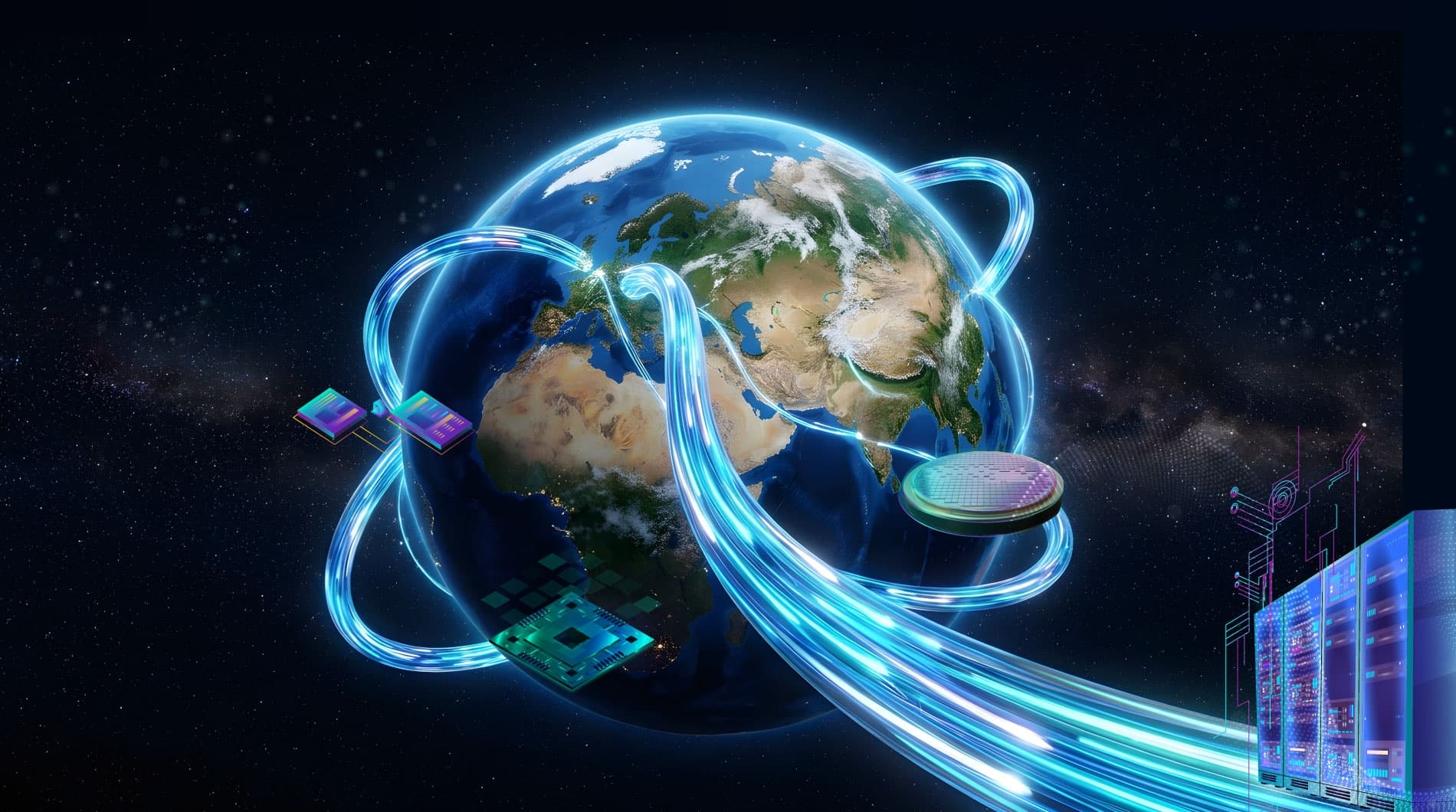
How hyperscalers are rethinking AI infrastructure
To move data faster, farther, and more efficiently, the AI ecosystem is exploring RF silicon interposer technology that allows to heterogeneously integrate CMOS, BiCMOS, and III-V materials
Read more
ITF USA 2026 at SEMICON® West
From silicon to systems: building the AI future The pace of AI evolution leaves little room for certainty. Yet, several trends are clear: AI agents increasingly collaborating in orchestrated ecosystems are on the rise. Physical AI is a crucial next step, including (humanoid) robots transforming our homes and workspaces. In parallel, AI – just like advances in quantum computing – could help unlock breakthroughs in fields such as physics and biology. Building the AI future starts with a solid hardware foundation – from high-performance, energy-efficient compute in the data centers to low-power, real-time inference at the edge. ITF USA at SEMICON® West presents the building blocks for shaping the AI future. On October 12 in San Francisco, we take stock of the full AI deep-tech stack: from silicon to systems, from research to manufacturing. Discover ITF USA
View event