Transforming AI‑driven lab-in-the-loop protein engineering through next‑generation chip technologies

For many years, imec has been developing custom chip solutions for life science instrumentation, integrating fluidics, photonics, sensing, and actuation on top of advanced control electronics through specialized post-processing.
At the recent SLAS2026 conference – an international forum for innovation in laboratory automation – imec presented several new technology building blocks and illustrated how these chip-integrated platforms can enhance the protein-engineering workflow.
While protein engineering serves as a representative example, the underlying message is broader: chip‑scale integration provides instrument developers with new architectural options for improving throughput, automation, precision, and scalability.
These technologies can be adopted as modular components or serve as the foundation for co‑developed, application‑specific systems. Throughout this development, imec places a strong emphasis on manufacturability.

Protein engineering & its challenges as a model for high‑throughput biology
Protein engineering is a multi‑step, iterative process in which proteins are designed, tested, and optimized to achieve improved performance, stability, or specificity. A well-known workflow is the Design-Make-Test-Analyze (DMTA) cycle. It underpins a wide range of applications, including drug discovery, biopharmaceutical production, immunotherapy, protein‑based vaccines, and diagnostic assays.
Traditionally, the process begins with a known protein sequence against a predefined target receptor, followed by the introduction of mutations based on structural knowledge, prior experience, or large libraries of random variants.
Each cycle requires expression, purification, and characterization of many candidate proteins, making the workflow labor‑intensive and limited in throughput. This is why the DMTA cycle is mostly used to improve a few selected lead molecules, not to search for new hits or leads in the early discovery phase.
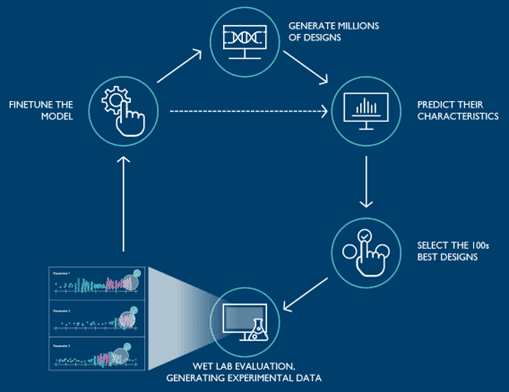
A new approach is emerging in which generative AI models and automated laboratory systems are tightly integrated. It’s called AI-driven lab-in-the-loop protein engineering.
Instead of relying on incremental mutations, AI models can propose large batches of novel protein sequences – often on the order of a thousand variants at a time – designed to meet specific functional criteria. Manual and robotic laboratory platforms then execute a series of experiments for each variant, typically involving multiple assays per protein.
The resulting data are fed back into the AI model, which updates its predictions and generates a new set of candidates. This closed‑loop, data‑driven workflow enables faster iteration and exploration of a broader design space than traditional methods.
The AI-driven lab-in-the-loop approach used to be limited by three factors: scalable AI modelling, scalable molecule synthesis, and scalable wet lab validation. The first two have improved dramatically over the past five years, but wet‑lab validation still faces major challenges.
For example, increasing throughput by miniaturizing assays – such as moving from 96‑well to 384‑well formats – reduces reagent consumption and enables larger screens, yet it also lowers protein yield per variant, which can limit downstream characterization and force trade‑offs between scale and analytical depth.
In addition, protein expression levels often vary across experiments and constructs, complicating comparisons and reducing the reliability of data used to retrain AI models. Together, these factors highlight the need for more precise, scalable, and consistent experimental platforms to fully realize the potential of AI‑driven protein design.
Imec proposes chip-based building blocks that could innovate this wet-lab step in the protein engineering workflow. Here are two concrete examples and a vision of an all-in-one system:
Programmable droplet processor: a chip‑scale platform for automated droplet steering and merging
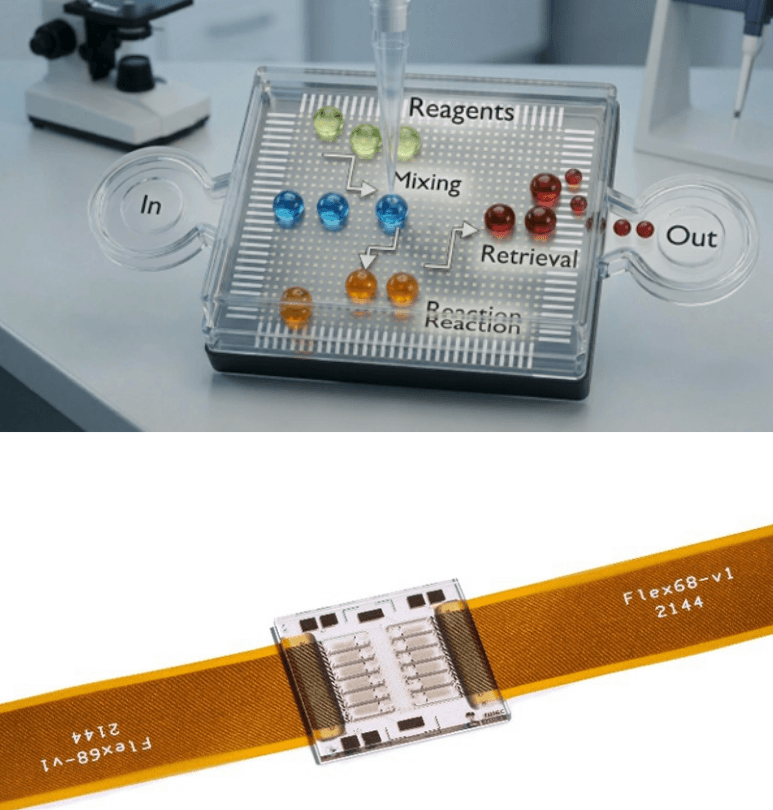
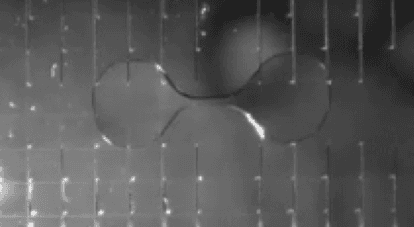
Imec’s programmable droplet processor (PDP) is a lab‑on‑chip platform based on electrokinetic droplet actuation. It enables precise, software‑controlled manipulation of micro‑droplets on a two‑dimensional electrode array.
Each droplet can be moved, merged, mixed, split, incubated, or routed by an electrode array through a sequence of biochemical operations without pumps, tubing, or mechanical components.
Furthermore, imec’s PDP technology differs from classical electrowetting‑on‑dielectric (EWOD) because it can actuate suspension droplets. This capability has been shown to significantly reduce biofouling (non‑specific protein adsorption on the device surface), which has long been a major limitation of traditional EWOD systems.
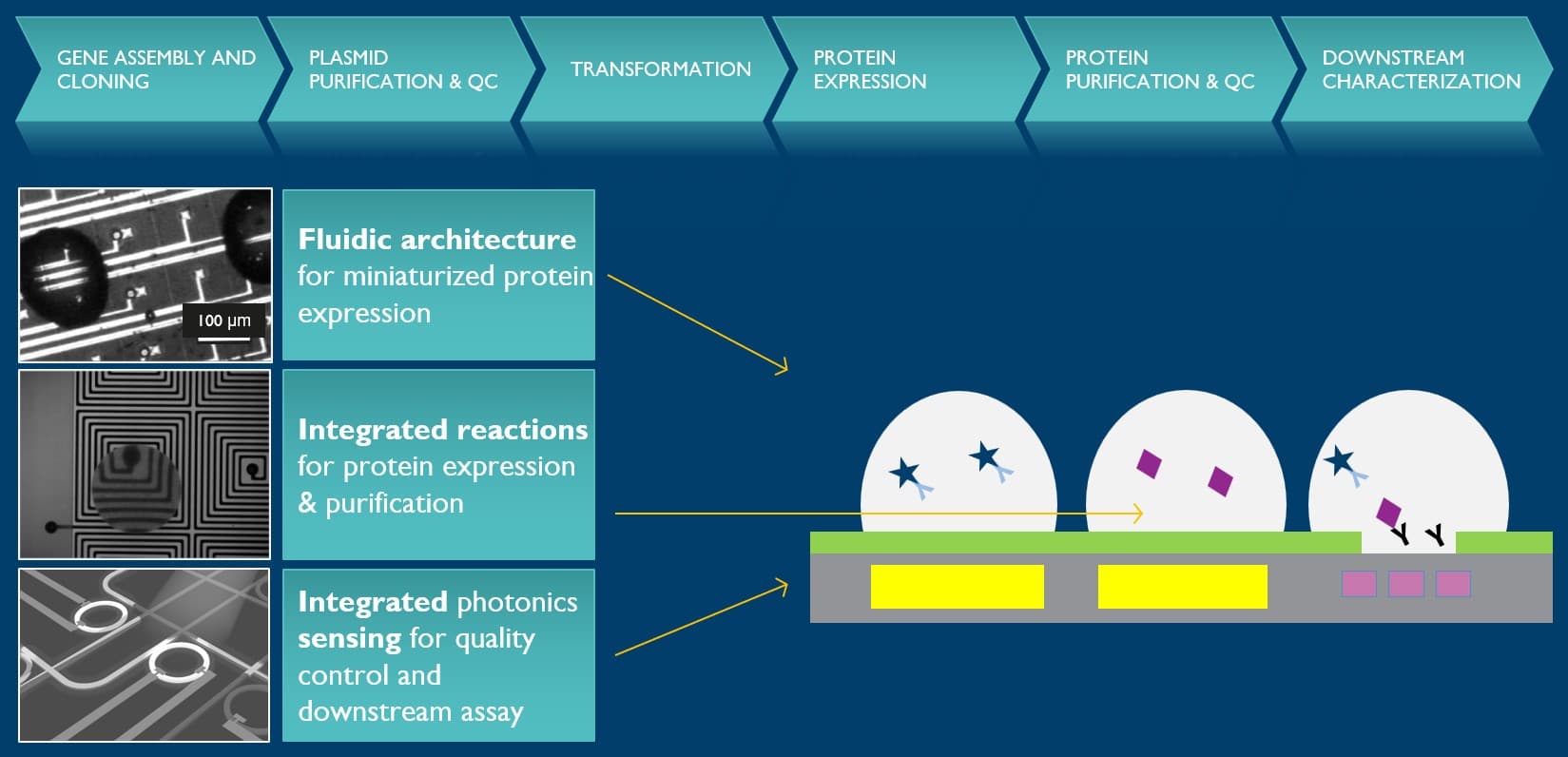
In the context of protein engineering, the PDP can support several key steps in the DMTA cycle. For example, during plasmid quality control, droplets containing DNA constructs can be processed through purification and analytical assays directly on the chip.
For expression optimization, the PDP can generate and evaluate multiple culture or reaction conditions in parallel, allowing rapid identification of the most suitable environment for a given host cell.
The platform can also support protein quality control and downstream functional or biophysical assays by coupling it to the Multimodal Biosensing Platforms that imec offers (see below). Using the actuation, droplets can be guided through a closed-loop sequence of expression, capture, wash, elution, and sensing steps, enabling automated execution of multi-stage protocols with minimal reagent consumption.
This micro-volume operation directly addresses the throughput-yield trade-off that limits many high-density screening approaches. Also, micro-heaters and magnetic isolation elements can be integrated for thermal control and magnetic isolations depending on the assay requirements.
Beyond protein engineering, the PDP is suitable for a broad range of biochemical and diagnostic applications that benefit from precise liquid handling at small scales. These include nucleic‑acid workflows, immunoassays, enzymatic reactions, and point‑of‑care analytical procedures. Its programmability and modularity make it adaptable to application‑specific protocols, while its chip‑based architecture supports manufacturability and integration into next‑generation life‑science instruments.
Closed-loop microbioreactors with integrated PAT sensing in well plates
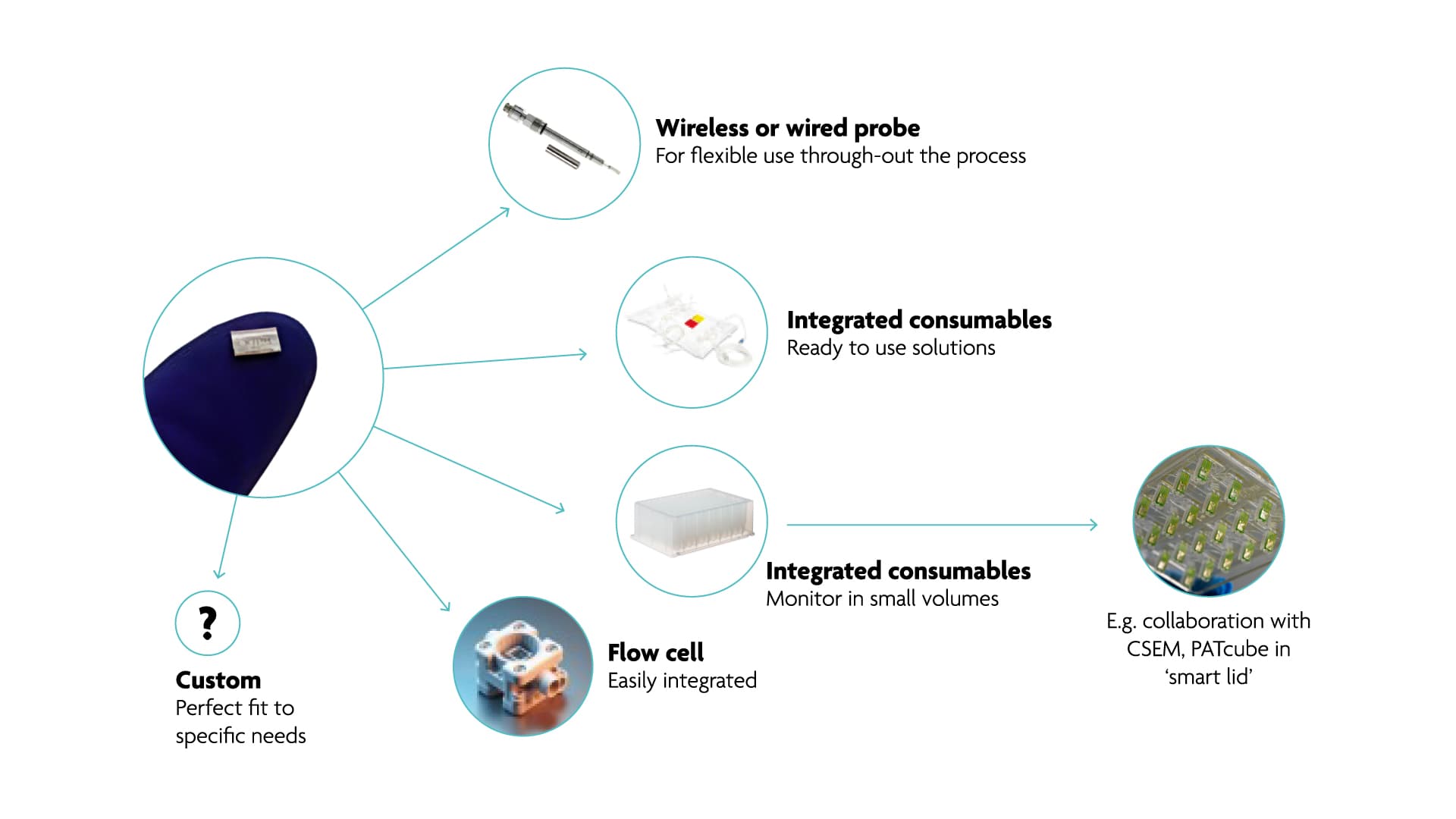
Imec and CSEM are jointly developing a microbioreactor platform that integrates imec’s multi‑parameter PATcube directly into CSEM’s advanced microfluidic well‑plate lids. The sensor measures pH, dissolved oxygen, temperature, glucose, lactate, cell density, and electrical conductivity in real time, enabling automated, closed‑loop control of culture conditions.
For protein engineering, this capability is especially valuable during the expression‑optimization stage. Stable and well‑controlled growth conditions reduce expression variability across large variant libraries, improving data quality for downstream assays and AI model retraining.
The system would operate at micro‑liter scale and support automated medium exchange, allowing high‑throughput screening of culture parameters without the complexity of traditional bioreactors.
Multi-modal biosensing platform
Imec is developing a set of chip‑level building blocks that enable multi‑parameter biosensing in highly compact formats. These components can be combined into application‑specific platforms. Imagine a stack with:
- on-chip photonics, µLEDs or lasers, photodiodes, for optical assays such as ELISA-, fluorescence-, absorbance-, and UV-based yield measurements
- electrical sensing through embedded potentiostats for impedance spectroscopy and voltammetry
- thermally isolated heater-resistance temperature detector (RTD) sensor islands for precise temperature control for differential scanning calorimetry (DSC) workflows
All of these sensing modalities can interface with a microfluidic backbone, allowing compact, automated, and multi‑modal analytical modules.
Conclusion
Chip integration is not just an incremental improvement – it is a platform shift. By embedding fluidics, photonics, and sensing into microchip technology that can be manufactured at industrial scale, imec enables life science tools that operate at the molecular level.
These tools are faster, more automated, and more scalable than traditional instruments, ultimately maximizing efficiency, throughput, standardization, and cost savings in future experiments. Protein engineering is one compelling example, but the same building blocks can accelerate workflows in diagnostics, cell therapy, bioprocess optimization, and synthetic biology.
Imec’s approach is to offer these technologies as modular building blocks or as the foundation for custom co‑developed systems, always with manufacturability in mind.
Want to explore how these chip‑scale building blocks could strengthen your next product? Reach out to the imec team to further discuss your ideas