Deterministic networking
The proliferation of time-sensitive applications calls for networks that offer 100% reliability within strict latency bounds. Imec devises software strategies that help you achieve such deterministic networks.

The digital transformation of our society is far from over. In many ways, it has only just started. To name just two examples:
- The accelerated adoption of teleworking increases the need for digital applications that allow remote yet seamless modes of human interaction.
- In factories and warehouses, the combination of robotics and artificial intelligence leads to flexible collaborations between humans and machines.
In both cases, the consequences of missing, incorrect or belated information can range from extremely annoying to downright catastrophic. That’s why the reliability of data flows is crucial.
The securest way of transferring data is still a cabled network. But that comes at the price of reduced flexibility. Consider the context of Industry 4.0, where production lines need to be rapidly adaptable to enable customized manufacturing. Here, it clearly pays off to use wireless technologies for at least part of the network infrastructure.

How can you ensure that these mixed wired/wireless networks offer the same reliability as wired ones? That’s what imec is working on with its deterministic networking program.
2025 research update: ‘Wi-Fi on steroids’ allows manufacturing industry to cut the cord
What makes a network deterministic?
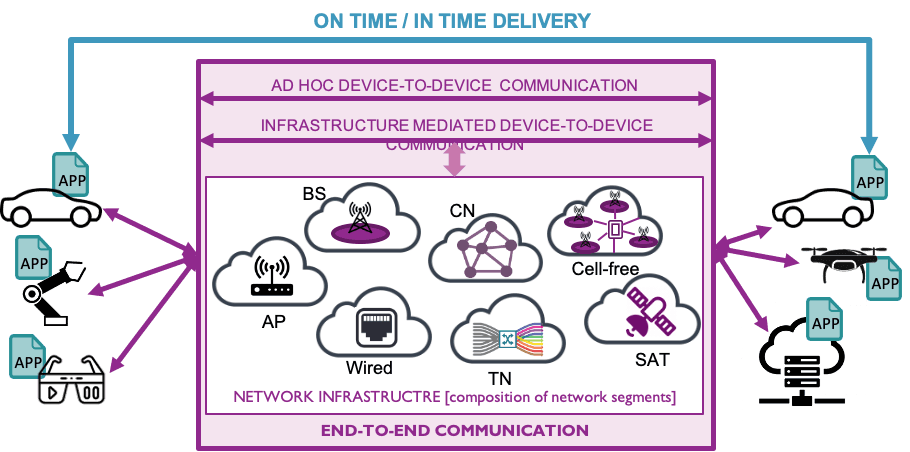
A deterministic network realizes a verifiable end-to-end quality of service (QoS) per application flow.
In other words, the goal is the in-time or on-time delivery of data between the end points of an application – such as the distant locations of a virtual meeting room or fast sensor-actuator interactions in a manufacturing process. Regardless of the intermediate network types, such as Ethernet connections, wireless access points, or 4G/5G base stations.
In this way, deterministic networking answers the need for a guaranteed quality of service by an expanding number of time-critical applications such as industrial control loops, augmented reality, haptic sensors, ...
Time-sensitive and deterministic networking: challenges and strategies
It’s relatively easy to guarantee in- or on-time data delivery when a limited number of applications use the network. But how often does that happen these days?
A large number of very diverse applications has become the default situation. They all make different demands from the network. How do you make sure that each of them gets its dues, instead of contenting yourself with a limited number of aggregated QoS classes?
To enable deterministic networking, imec develops software strategies that run on top of current and future hardware standards. Some examples:
- A rich application-network interface allows the applications and the network to ‘negotiate’ on the data traffic’s demands and priorities within the capacity bounds of the intermediate network(s).
- High-accuracy time synchronization of networking components, also the end-devices, is essential if you want to schedule and measure the in- or on-time delivery of data.
- To enable true end-to-end networking, advanced tools for monitoring, verification and prediction of network performance need to be built in at different points and layers in the network, including the end devices.
- Orchestration across all network segments enables optimal scheduling of the data flows.
'Better than Wired': OpenWiFi-based deterministic networking solution
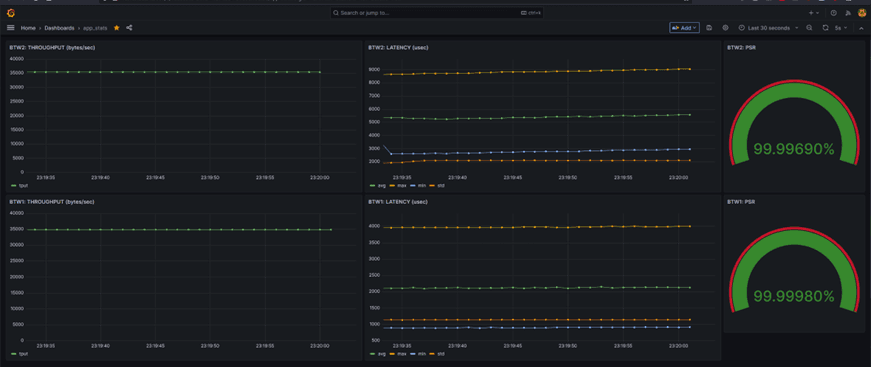
Researchers at imec’s IDLab have developed an OpenWiFi-based application-to-physical-layer networking stack that combines the reliability and low latency of wired networks with the flexibility of wireless solutions, tailored for Industry 4.0.
Better than Wired uses active interference mitigation to boost network reliability and enable plug-and-play deployment. An intuitive management platform allows for easy control, management and feedback.
Even under difficult conditions, the solution reaches 99.999% packet success rate and
an end-to-end bounded latency of 2ms.
Explore this article for more details
How imec can help you build your deterministic network
Imec shares its expertise with network equipment manufacturers, network integrators and developers/users of professional environments that require deterministic networking – for instance in the space of Industry 4.0, vehicular communications or professional entertainment.
Our offering includes:
- knowledge sharing – Contact us for inspiration sessions, ideation workshops or new IoT technology & protocol insights.
- troubleshooting – Call on our testing and configuration knowhow if you run into problems within your new or existing network environment.
- product design – Tap into our experience with design and prototyping of end-to-end systems for feasibility studies, rapid prototyping, customizations and longer-term strategic research
- testing and benchmarking – Count on our independent, objective position and advanced testing infrastructure to assess off-the-shelf and your own technologies – within and outside the lab.
Through its research activities, imec is constantly anticipating networking features and standards that will dominate the market in five to ten years’ time. Partnering with us offers you the opportunity to tailor your products and services to these developments right now.
Some examples of what we've done
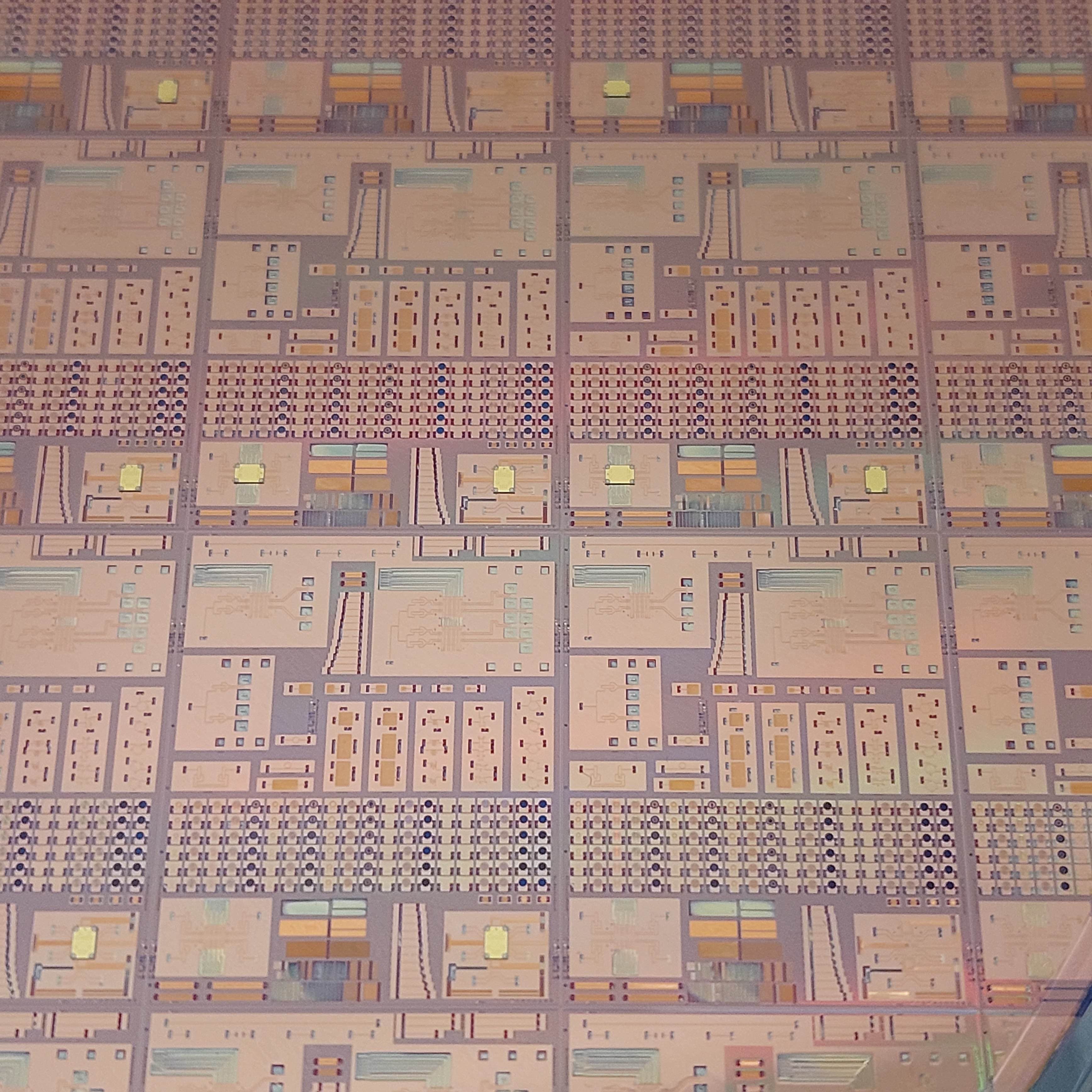
300mm RF silicon interposer platform for chiplet-based heterogeneous integration demonstrates record-low insertion loss at frequencies up to 325GHz
Flexible integration of digital, analog, RF-to-sub-THz CMOS and III/V chiplets on a single carrier paves the way for high-performance RF and mixed-signal applications
Read more
Integrated circuits for high-speed wireline transceivers
If we want optical transceivers to keep up with exploding data rates, all building blocks need to handle higher speeds. Imec’s combined expertise helps you to achieve that +100Gbaud goal.
Read more
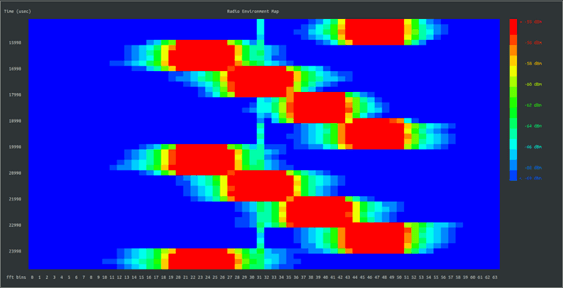
Disruptive ‘Wi-Fi on steroids’ technology allows manufacturing industry to finally cut the cord
What if we could create a wireless network that comes with guaranteed performance? A network that combines the reliability and low latency of wired networks with the flexibility of wireless solutions, thus minimizing factories' downtime and maximizing operational efficiency?
Read more