Hyperspectral art and heritage analysis
From visible to SWIR, and beyond

Peak below the surface of valuable artifacts with compact and user-friendly hyperspectral cameras based on imec's on-chip sensor technology.
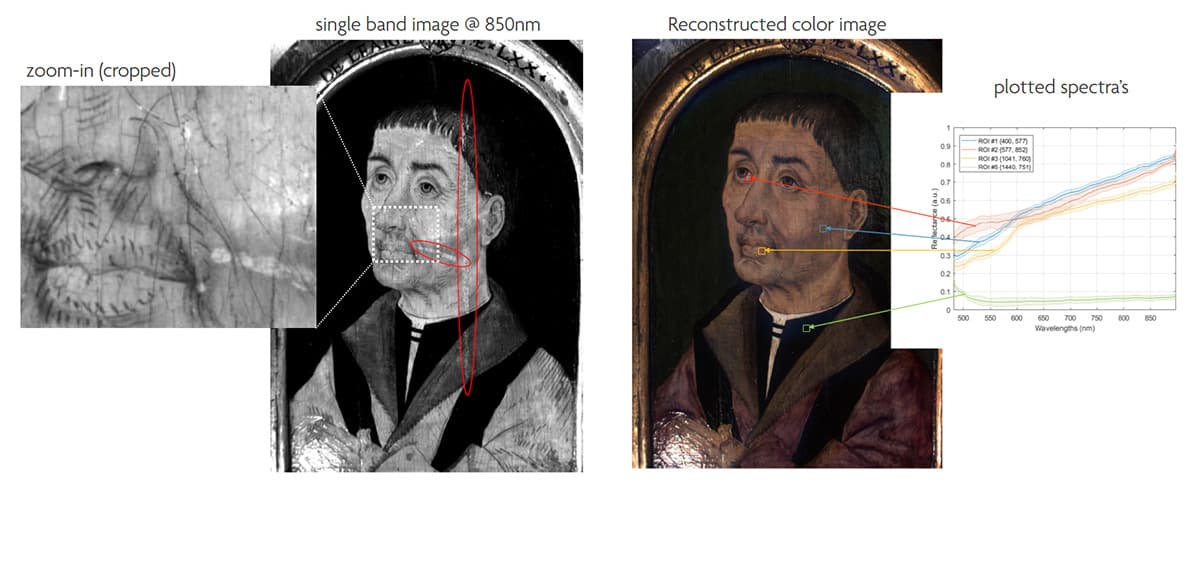
Peeling off the layers of a painting or other artwork is like stepping into a time machine.
- A signature might come into view.
- By analyzing fibers or paint pigments, you can tell how, when and where it was originally made – or subsequently altered.
- The examination of an underdrawing may reveal something about the original intention of the artist.
The challenge is to do all this without damaging the artifact. That precludes too risky or invasive techniques such as taking paint samples, or scanning technologies that are time-consuming.
Hyperspectral imaging enables art historians, forgery experts and restorers to examine the spectral signatures of artworks pixel by pixel. Especially in the infra-red range – where many pigments peak – this reveals tons of information. All without touching or even moving the artifact.
Easy to scan
Traditional artwork analysis uses:
- infrared reflectometry without any fine spectral information
- or hyperspectral push-broom linescan cameras, that are difficult to set up
In a linescan approach, the artwork needs to pass by the camera, for instance on some sort of translating stage. Or it even needs be temporarily removed from its frame.
With a modern, compact hyperspectral camera, such as imec’s SNAPSCAN SWIR (0.8 Mpx) or SNAPSCAN VNIR Mobile (7 Mpx), generating a high-resolution hyperspectral image is almost as easy as pointing and clicking.
Acquiring the image the artwork can take between a few minutes or – when you require micro-meter detail – a few hours.
Easy to analyze
All of imec’s hyperspectral SNAPSCAN cameras come with the HSI SNAPSCAN software to acquire, pre-process and visualize the hyperspectral information. Thanks to its intuitive interface, you don’t need to be an expert in imaging to use it. Just select different wavelengths and see what the image reveals.
Want to try it yourself? Download the software and a reference data cube.
Want a demonstration? Are you interested in using one of our cameras for your research? Or do you have any other questions?
Contact our business development team.
Read more
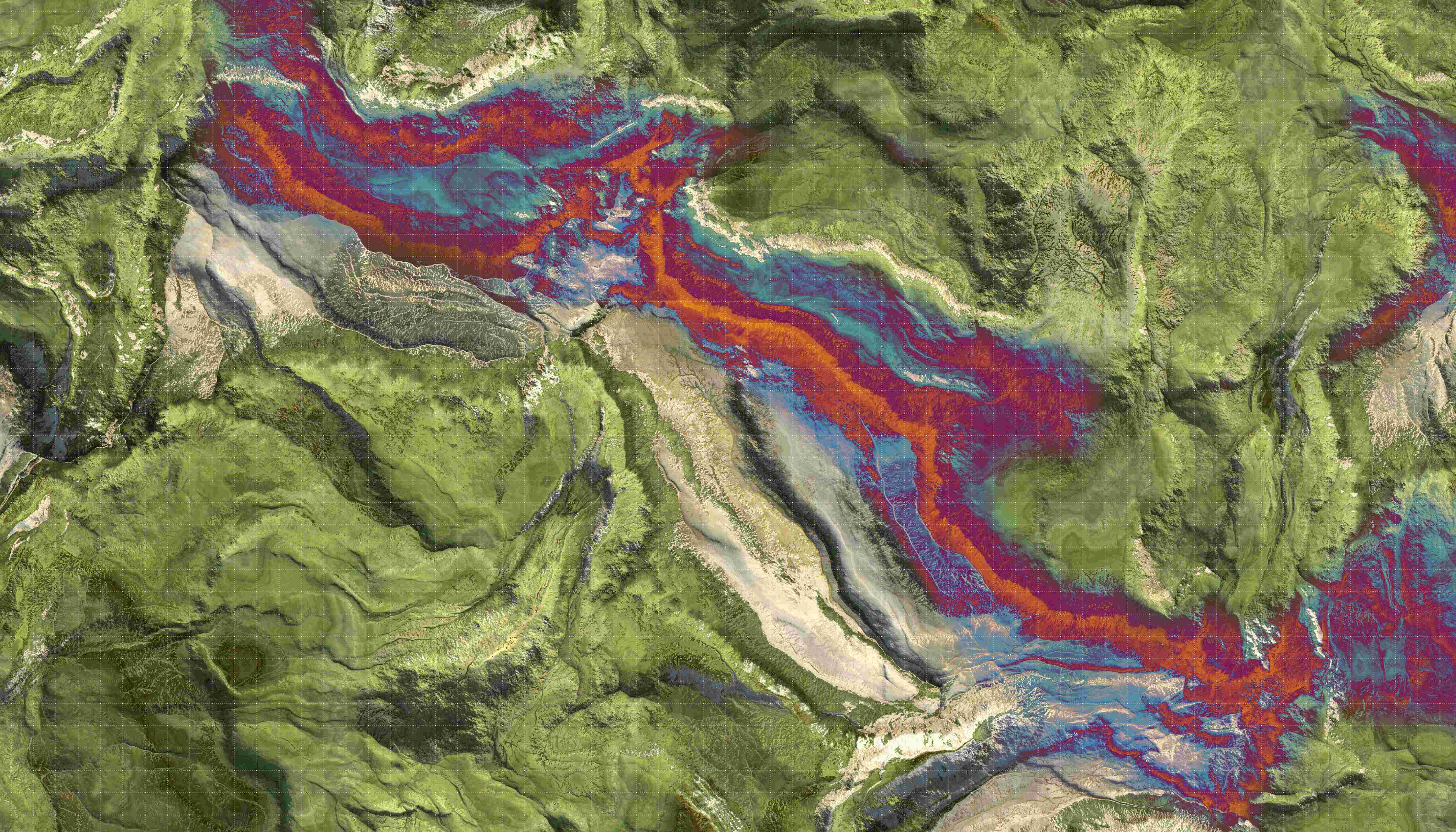
IPERLITE mission launch marks new era in hyperspectral earth observation, with imec technology onboard
Read more
Hypervision Surgical and imec bring real-time AI-enabled spectral imaging to the operating room
By combining real-time AI analytics with video rate on-chip hyperspectral imaging, Hypervision is delivering the first clinically approved platform that gives surgeons live, tissue-level insights for assisted surgery. Imec’s on-chip spectral technology is a cornerstone of this innovation.
Read more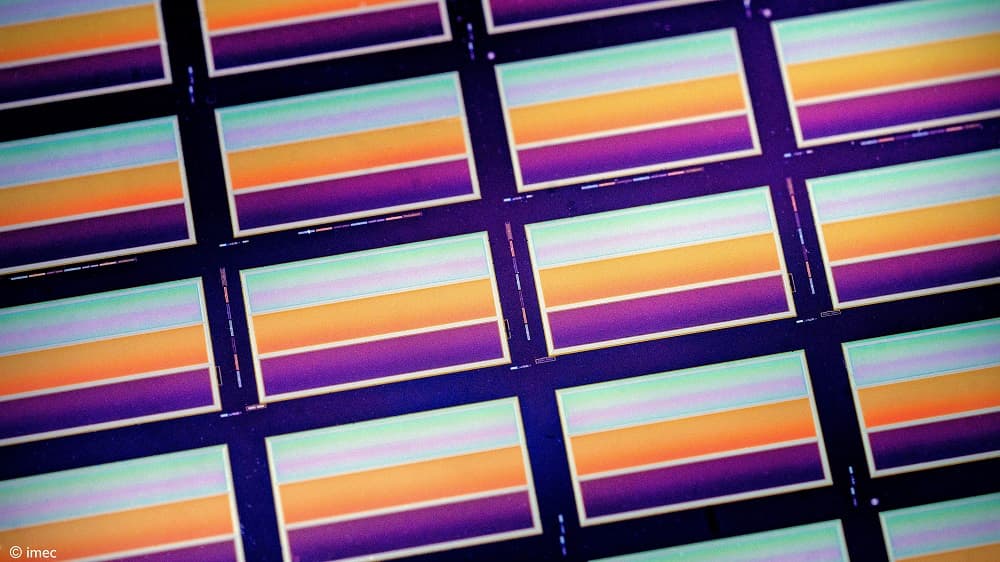
New sensor for spectral imaging from space
For earth observation with high signal-to-noise ratio
Read more