Medical hyperspectral imaging
From visible to SWIR, and beyond

As a safe and easy-to-use technology, hyperspectral imaging benefits medical practitioners and researchers. And imec’s sensors answer the needs of both.
Researchers have long known the possibilities of hyperspectral imaging in medicine. Now, it also finds its way into medical practice.
The reason is that a new generation of hyperspectral snapshot cameras finally allows to make accurate and detailed real-time images – often a necessity when you’re looking at living tissue, for instance during surgery.
Medical hyperspectral imaging for augmented reality surgery
Hyperspectral video cameras can also support surgeons by offering them information that’s invisible to the naked eye – in real time.
That medical hyperspectral image can be displayed on a screen. Or the hyperspectral information can be added as an overlay to the surgeon’s perspective by means of augmented reality glasses. This help surgeons to identify which anatomical structures to preserve when removing sick tissues.
Learn more about surgical imaging

How can spectral imaging advance surgical vision?

Hyperspectral imaging for medical diagnostics
As a component of diagnostic tools, hyperspectral imaging has many advantages:
- In itself, it’s a non-invasive procedure.
- It’s relatively easy to set up, due to the compactness of the new generation of hyperspectral cameras.
Well-documented diagnostic use cases for hyperspectral cameras stem from their ability to detect oxygen saturation. This enables the creation of 2D maps of the blood oxygenation of tissues.
In this way, you can use hyperspectral imaging in a wide array of clinical areas, such as:
- mapping of brain activity
- monitoring of wound healing
- ophthalmologic diagnosis of eye and brain diseases
- detection of blood traces
Watch the video below about how hyperspectral imaging can be used for early biomarker detection of Alzheimer's Disease. Or click here for the in-depth article.
On top of blood volume and oxygenation, medical hyperspectral imaging is able to gather a lot of other information from biological tissues. More particularly, new possibilities are arising by the extension of hyperspectral snapshot imaging in the infrared spectrum. SWIR hyperspectral cameras can pick up the absorption peaks of molecules such as water, lipids, collagens, plastics and minerals.
Want to discuss the possibilities with us?
Want to use imec’s hyperspectral imaging technology for your medical imaging?
Our hyperspectral evaluation systems are ready-to-use systems that include HSI MOSAIC software to acquire and analyze data cubes. They also come with our remote and on-site support, so you can immediately start your hyperspectral application or research.
Additionally, as a world-leading R&D hub for nano- and digital technologies we cover the complete manufacturing process from image sensors to systems. This means we can also develop your tailored hyperspectral imaging system.
Publications
Wirkert “Multispectral image analysis in laparoscopy – A machine learning approach to live perfusion monitoring”, dissertation KIT-Fakultät für Informatik, (2018)
External linkLuthman et al. “Fluorescence hyperspectral imaging (fHSI) using a spectrally resolved detector array”, Biophotonics, (2017)
External linkEwerlöf et al. “Spatial and temporal skin blood volume and saturation estimation using a multispectral snapshot imaging camera”, Imaging, Manipulation, and Analysis of Biomolecules, Cells, and Tissues XV, (2017)
External linkPichette et al. “Intraoperative video-rate hemodynamic response assessment in human cortex using snapshot hyperspectral optical imaging”, Neurophotonics, (2016)
External linkKaluzny et al. “Bayer Filter Snapshot Hyperspectral Fundus Camera for Human Retinal Imaging”, Current Eye Research, (2016)
External linkContact our business development team.
Read more

Surgical imaging
Thanks to imec’s compact, video-rate on-chip spectral sensors, next-gen operating tools can offer surgeons an extra layer of crucial information in real time.
Read more
IPERLITE mission launch marks new era in hyperspectral earth observation, with imec technology onboard
Read more
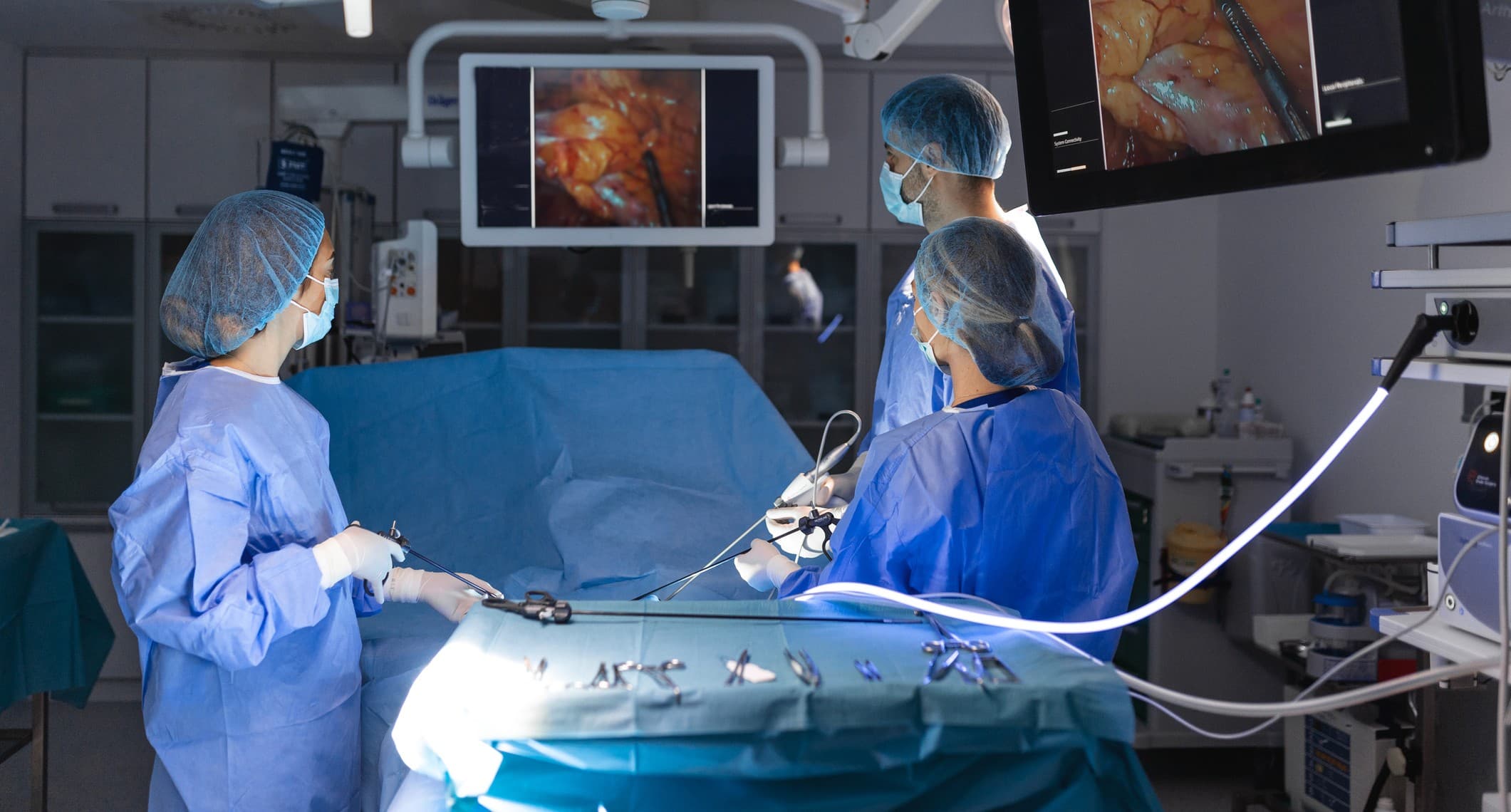
Hypervision Surgical and imec bring real-time AI-enabled spectral imaging to the operating room
By combining real-time AI analytics with video rate on-chip hyperspectral imaging, Hypervision is delivering the first clinically approved platform that gives surgeons live, tissue-level insights for assisted surgery. Imec’s on-chip spectral technology is a cornerstone of this innovation.
Read more