To reap the rewards of 6G, we need to start sowing the seeds now
Michael Peeters, VP R&D connectivity at imec, explains why there is no time like the present to tackle some key technologies that will make or break 6G.

Even if you are involved in the mobile communications industry, you wonder: isn’t it too early to start working on next-generation hardware? After all, standardization of 6G will likely only start around 2025. After that point, there are at least five years left to develop the required technologies. Providing we allocate abundant budget and brains, surely that is not a problem?
It’s true, for many innovations there is ample time. As we have seen with previous generations of mobile connectivity, once there is an agreement on technological requirements, a concerted effort by device manufacturers, system integrators, operators and research institutes can and will make it happen.
But there are also tasks that are time-constrained. Meaning: throwing more money or a larger workforce at them will usually not make them go much faster. A revision of regulations cannot skip any of the steps of due process. The same goes for the creation of a totally new semiconductor technology platform.
That means we need to start tackling these problems right now if we want the solutions to be mature by the time we are laying down the 6G standards. By the way, there is no doubt we will need these innovations. They all target order of magnitude improvements over the current state of the art. Exactly what we need if we want to realize the envisioned 6G performances in terms of speed, latency and energy efficiency.
At imec, we believe that now is the time to start working on hardware innovations to realize:
- sharing of spectrum (and infrastructure)
- cell-free massive MIMO
- convergence of communication and sensing
- shift to higher frequencies
Why do we believe these topics require time to harvest gains? Let us dive into them one by one.
Sharing of spectrum and infrastructure
The success of cloud computing demonstrates that sharing infrastructure is a cost-effective way to increase overall performance and flexibility. But in the world of networking, similar business models have been slow to take off. There are examples of operators sharing infrastructure. In the US, some of them are exploring licensed spectrum sharing for 5G coverage. Nevertheless, spectrum and infrastructure silos are still the norm. Shattering them requires operators and regulators to change their frame of mind – a mission that is more time- than effort-constrained.
Looking towards 6G, it becomes downright foolish to disregard the gains that spectrum sharing can enable. The image below illustrates how an isolated approach wastes a lot of space that can be put to good use if systems collaborate to efficiently tile the time-frequency domain.
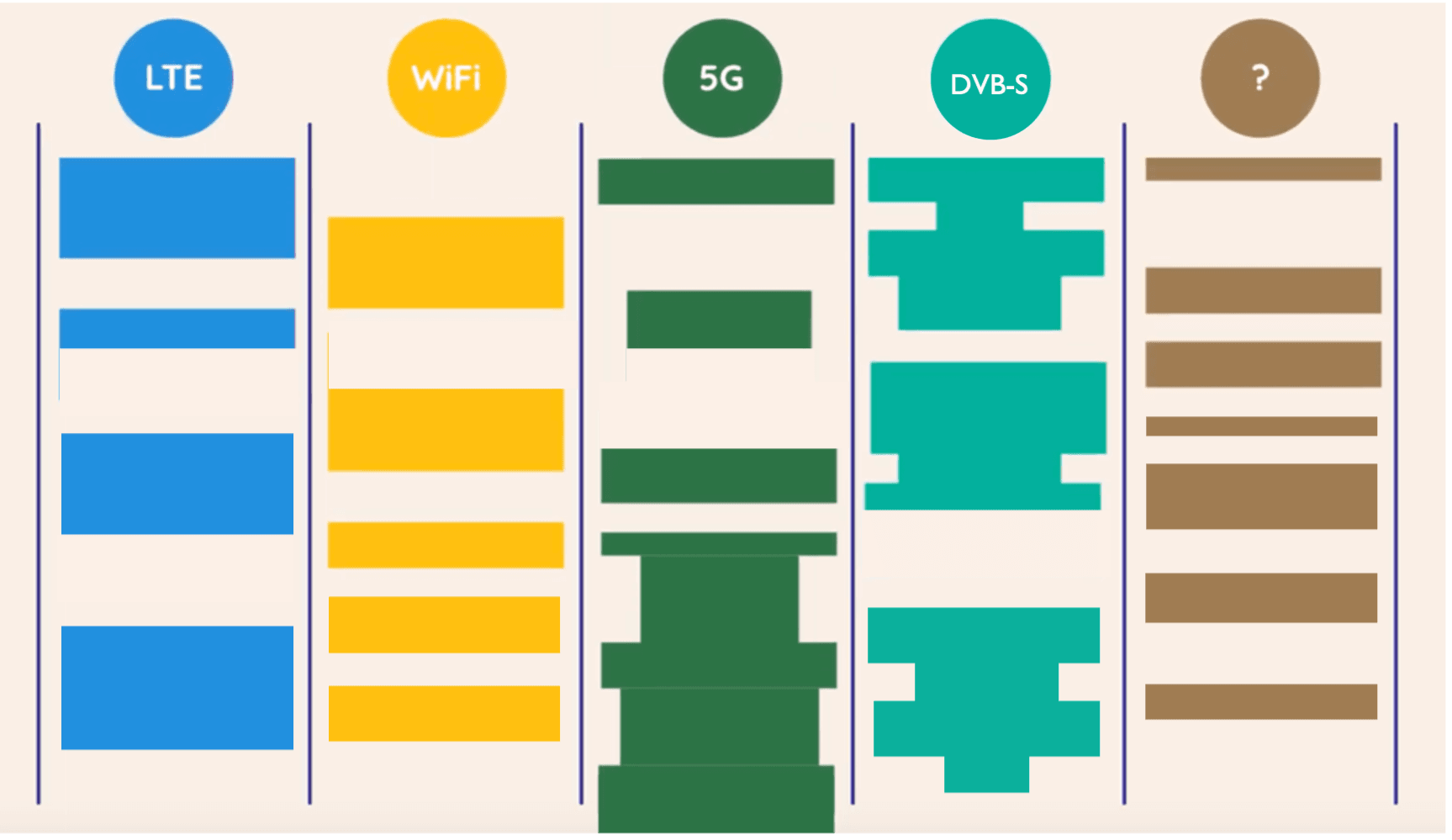
Keep in mind that when we go to systems that operate at extremely high frequencies with very targeted beams and limited scattering, the chances of interference at a particular receiver are a lot smaller. That means there is even more room for resource allocation – and much higher efficiency gains to be made.
Watch this video about the DARPA Spectrum Collaboration Challenge – where a team for imec and Rutgers University made it to the finals – for a demonstration of spectrum sharing in an experimental set-up:
Through this DARPA challenge and the more recent ESA research project CODYSUN, we already have a grasp on the needed machine learning algorithms. But running that machine learning requires quite some improvements on the hardware side. Only a big leap forward in the field of edge AI can make that happen.
Cell-free massive MIMO
Many use cases of 6G are unthinkable without uninterrupted service. Think about a factory floor where machines and humans flexibly work together: even a tiny glitch in the connection would be hard to tolerate and could even lead to safety risks. But because of the ultra-high-frequency signals, total coverage cannot be achieved without an incredibly dense network of access points.
The radio architecture most suited to enable this – cell-free massive MIMO – has long been defined as a central CPU with lots of access points that connect directly to the user equipment. Recently, a promising new model has surfaced that can lighten the infrastructural burden: a shared bus, kind of like a cable strip that connects all the access points. This would dramatically reduce the cost of rolling out cell-free massive MIMO.
For this technology to be ready for 6G, we need to make important design choices concerning integration of the compute in the access points, synchronization, powering, and so on. And we need to build and test the first prototypes and demonstrators. To make this task easier, imec developed its open-source IEEE 802.11 Wi-Fi baseband FPGA design. This also adds time-sensitive networking (TSN) capabilities.
Convergence of communication and sensing
Once that dense distributed infrastructure is rolled out, why not use it for more than communication? After all, wireless sensing and communication are two sides of the same coin. To decipher unknown data, you have to estimate the channel. But if the transmitted data is known, you can use the changes in the data to figure out what’s going on between sender and receiver – such as their mutual distance or the objects in between and around the user.
The sensing data can be used to improve and enrich the communication by providing spatial context. It is an ideal set-up for applications such as smart factories, or augmented and mixed reality in your game room or office.
The concept of joint communication and sensing is brilliant in its simplicity. But its implementation will prove to be complex, not least on the hardware side. We need to start right now at addressing issues such as carrier and clock synchronization, CPU complexity, power consumption and distribution, and duplex operation.
Shift to higher frequencies
All these gains pivot on what might be the biggest challenge of all: the move towards ultra-high frequencies – beyond 100 GHz. This will mean higher bandwidths, more directionality, more opportunities for dynamic spectral sharing and – because of smaller antennas – much higher antenna gain in the same space.
To enable all these benefits, we need fundamental improvements at the most basic hardware level: that of the transistors in our RF devices. Most importantly, we have to face the fact that good old silicon cannot cost-efficiently handle the elevated frequencies we crave.
The power model we developed at imec outlines the challenge in stark relief. If we imagine an RF front-end module that
- is small enough to fit into a form factor such as fashionable smart glasses – limiting the possible number of antennas,
- limits its power consumption to 10W, or preferably even lower,
then the only valid material is indium phosphide (InP).
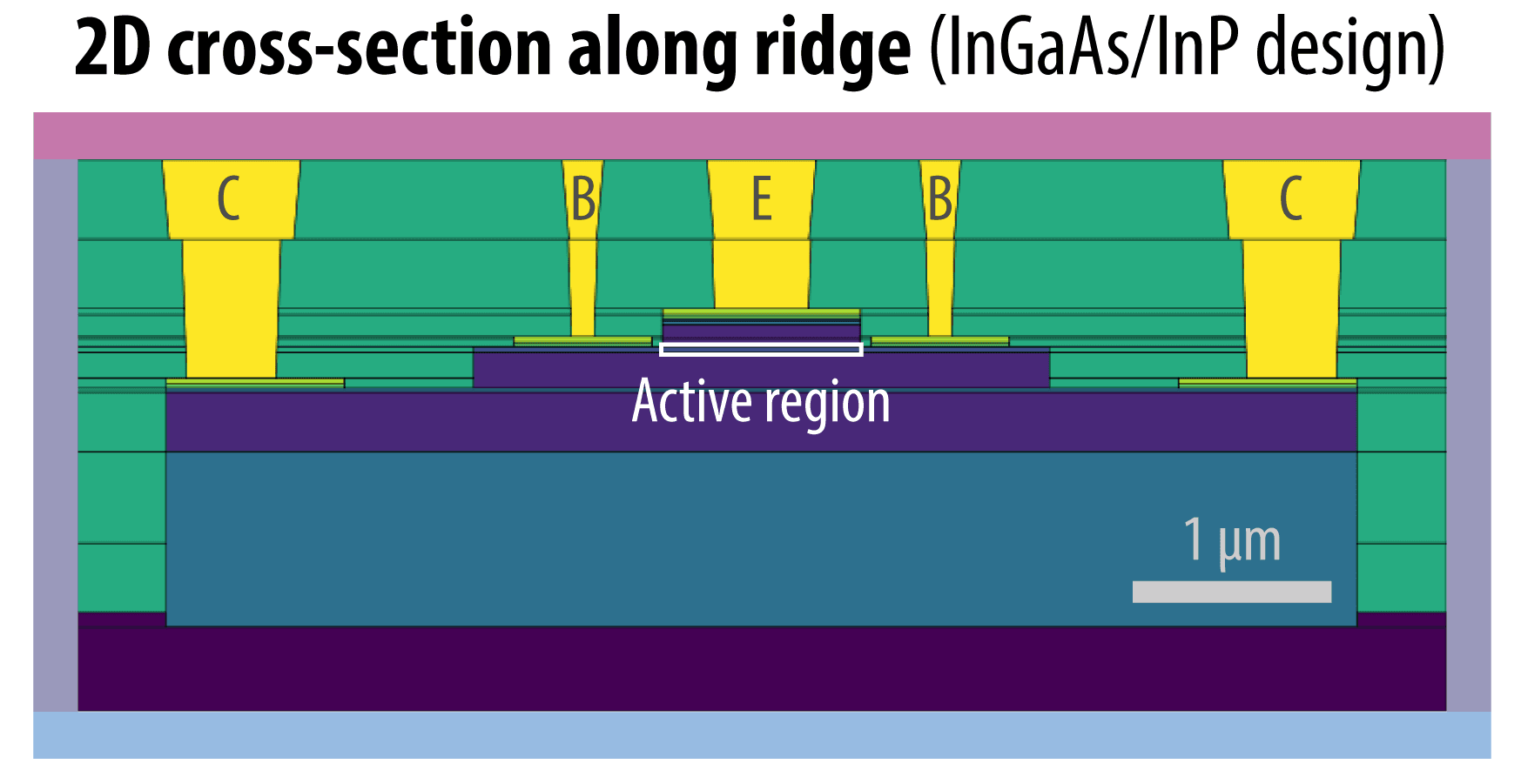
Today, mature and cost-efficient InP technology for mobile applications does not yet exist. Once it does, we will still face the challenge of integrating it with CMOS, which remains the best option for components such as the digital signal processing (DSP).
In its Advanced RF program, imec is working on these challenges. The goal is to develop a mature, low-cost, high-volume and silicon-compatible InP RF device. It is a process that takes several learning cycles on levels such as epitaxy, device, circuiting, ... Again, waiting is not an option.
Let’s make it happen
A truly disruptive 6G offers almost unimaginable societal benefits beyond mere communication. To realize this, we need technologies that offer order-of-magnitude gains and take time to develop. That is why imec has decided to start tackling them right now. Want to stay up to date with our progress? Click here to sign up for regular news. Or check out our PhD and postdoc opportunities if you want to become a fellow traveler on this exciting journey.
Authors

Michael Peeters
“If you can't explain it simply, you don't understand it well enough.” This quote, attributed to Einstein, Feynman, and others, encapsulates the key element in achieving success in every endeavor in research and development. Whether it pertains to technical or business aspects, this principle drives the three skills that Michael constantly aims to improve: understanding, communicating, and focusing on reducing things to their core.
Currently, Michael Peeters serves as the Vice President and Sector lead of Connected Computing at imec, focussing on creating new approaches to computing, connectivity and their joint architecture, and pushing existing approaches to their utmost performance, to enable continued sustainable growth and the positive impact of computing on society in the coming decade. Previous experiences as CTO for respectively the Wireline and Wireless business lines at what is now Nokia were built on the culture, enthusiasm, and love for technology and science fostered during time as a departement director at Bell Labs, as well as the principles of Free Inquiry instilled by his Alma Mater, the Vrije Universiteit Brussel (VUB).
Throughout their research career, which began with a Ph.D. in Applied Physics and Photonics from the Vrije Universiteit Brussel, Michael has authored more than 100 peer-reviewed publications, numerous white papers, and holds patents in the access and photonics domains. Trained as an electrotechnical engineer, he is a senior member of IEEE and a Fellow of the VUB.
Outside of work, Michael Peeters (imec) balances their quest to discover the perfect lasagna recipe with long-distance running to offset the inherent caloric intake. They accept both (he/him) and (they/them) pronouns.