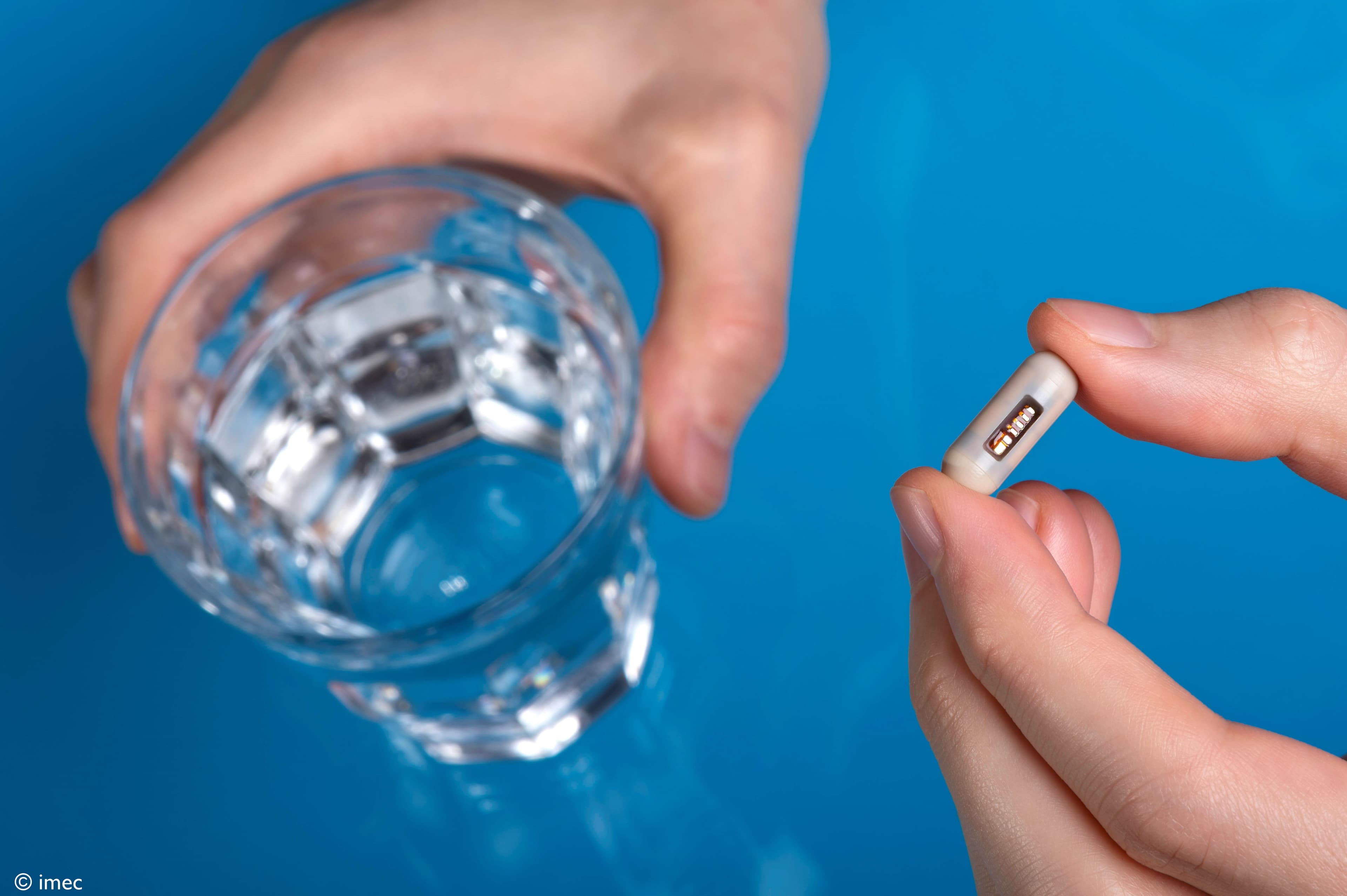
From pills to pulses: bioelectronic medicine using the peripheral nervous system
Electrical stimulation of peripheral nerves modulates activity in the organs and the brain
Imec develops miniature implants for the PNS, tackling challenges for precise targeting, packaging and powering
Further research goes into closed-loop stimulation and alternative modalities such as ultrasound for powering and stimulation

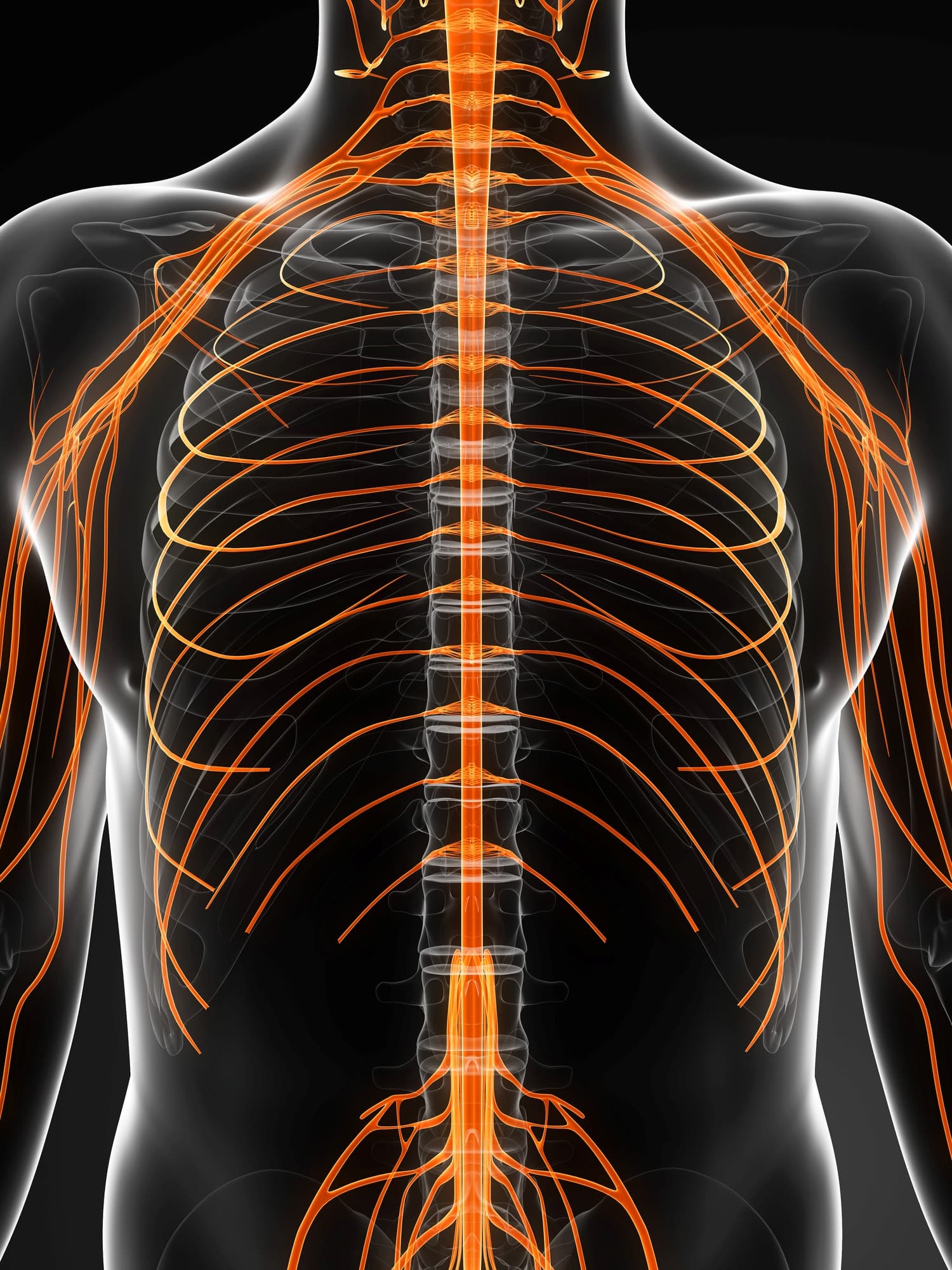
The central (CNS) and peripheral (PNS) nervous system work together to coordinate and regulate the functions of our body in addition to hosting our human intelligence.
The CNS is the control center and includes the brain and the spinal cord. While the brain processes information, makes decisions, and sends out instructions, the spinal cord and the associated PNS is the communication highway that carries nerve signals to and from the brain.
The PNS consists of a vast network of nerves that branch out from the brain and spinal cord to our organs, limbs, and tissue. By relaying signals, the PNS and the brain provide communication between the CNS and the rest of the body. The PNS may not have the same rock star reputation as the brain, but it is the backbone of our daily lives. It plays a pivotal role in our sensory experiences, reflexes, and even autonomic functions such as digestion and heartbeat.
Because of all these critical functions, diseases affecting the PNS can significantly impact daily life by causing limitations in mobility, sensation, and coordination. They disrupt communication in specific types of nerves, such as motor nerves responsible for muscle control, sensory nerves responsible for transmitting sensations of touch, temperature, and pain, or autonomic nerves that regulate the balance in our cardiac, pulmonary and inflammatory response.
New medicinal solutions are normally developed to treat a very specific condition, and the development of a new drug typically takes years to go through all the stages before it is approved and brought to market. Enter bioelectronic medicine, a novel approach that harnesses the language of electrical pulses to speak directly to the intricate network of nerves in the PNS.
Bio-electronic medicine: electricity as a therapy
Bioelectronic medicine stimulates electrically active tissue such as nerves or muscles to suppress undesired conditions in the body, or to facilitate desired conditions. The best known example already on the market is the cardiac pacemaker, which stimulates the heart muscle.
The peripheral nervous system is of particular interest in modern research on bioelectronic medicine because it is the bidirectional highway that carries signals from the brain to the organs and vice versa. By stimulating the PNS, both the organs and the brain can be addressed.
One of the advantages is that the therapy can be controlled by smart electronics: instrumentation that is adaptive and can be tuned by a doctor or even the patient after implantation. It can be switched on and off instantly with a remote control, which is not possible with orally administered drugs. In addition, the treatment can be automatically adjusted based on environmental factors or internal markers that reflect a person’s health status. Today, a number of chronic diseases such as rheumatoid arthritis, chronic pain and epilepsy are targets for this therapy.
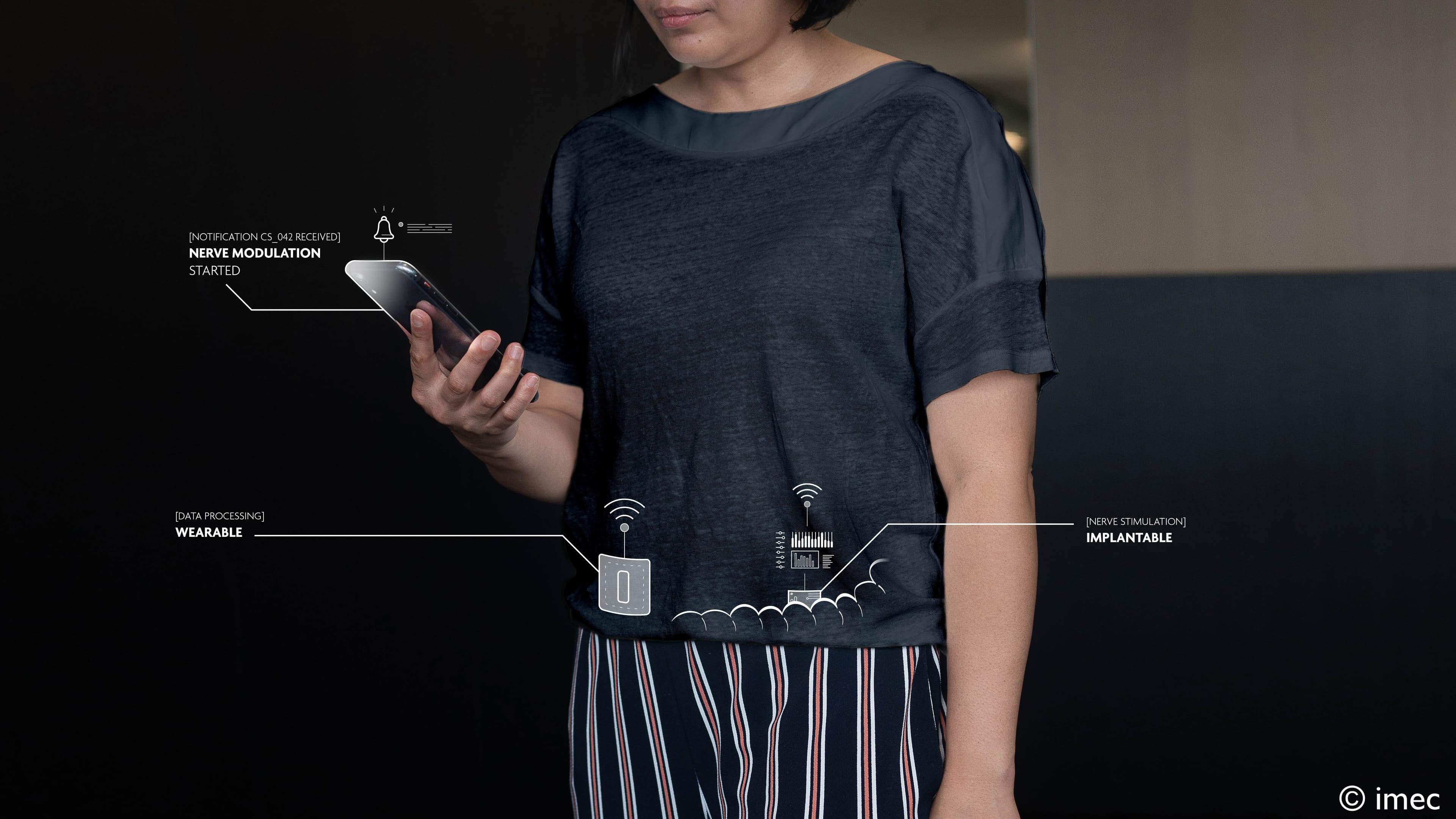
Imec employs nanotechnology to develop small, low-power stimulating implants for various PNS applications, similar to its miniature brain implants for sensing. In fact, both brain and PNS implants share similar future goals.
First, devices for both targets are exploring solutions for increasingly detailed sensing and/or stimulation. Second, new encapsulation methods based on extensive materials research will allow the implants to function optimally in the body for months and years. Third, they both aim to combine electrical stimulation and readout in real time to eventually close the loop: stimulation in response to sensed information. Finally, researchers are looking at combining the implant technology with different modalities, such as ultrasound, for stimulation purposes but also for energy transfer to the implant.
Read the remainder of the article on EETimes Europe.
Want to know more?
- Read more about the recent PNS projects: (Neurogyn) (NerveRepack)
- Imec’s website contains an overview of both PNS and ultrasound technology.
- Read the full paper on implant packaging: Rik Verplancke et al 2020 J. Micromech. Microeng. 30 015010, doi: 10.1088/1361-6439/ab5df2
- Read the full paper on data compression: Y. He et al., "An Implantable Neuromorphic Sensing System Featuring Near-Sensor Computation and Send-on-Delta Transmission for Wireless Neural Sensing of Peripheral Nerves," in IEEE Journal of Solid-State Circuits, vol. 57, no. 10, pp. 3058-3070, Oct. 2022, doi: 10.1109/JSSC.2022.3193846.
Authors

Geert Langereis
Geert Langereis studied electrical engineering and ergonomics at the University of Twente, Enschede, The Netherlands. He received the Ph.D. degree in lab-on-a-chip technologies from the University of Twente in 1999. From 1999 to 2009, he worked at the industrial research laboratories of Philips and NXP on MEMS silicon technology and photonics in combination with data science. From 2009 to 2020, he was a Professor and a Coordinator of research lines with the Technical University of Eindhoven, Eindhoven, The Netherlands, and the School for Applied Sciences. This was in the area of smart sensors and associated data science for the measurement of human behavior and physiology. He is currently the Program Manager for the health research line with imec, Eindhoven, on neuro and photonic technologies for bioelectronic medicine. He holds a parttime position at the department of electrical engineering of the Technical University of Eindhoven.

Vojkan Mihajlović
Vojkan Mihajlović is a senior researcher at imec. He received his Ph.D. degree from the University of Twente, Enschede, The Netherlands and has worked as a senior scientist at Philips Research from 2006 to 2012. Since 2012 he has been working on system level and biomedical algorithms at imec. He has extensive experience and leads research activities in the area of wearable brain monitoring and noninvasive neuromodulation. He is also coordinating connected health solution innovation activities.
Discover more
Imec and Feinstein unveil novel concept for neuromodulation with intermittent interferential current stimulation
Read more
Neural telemetry breakthrough: new chip delivers ten-fold compression while preserving signal integrity
Read more