Meet imec fellow Liesbet Lagae
“You can make things happen by working just a little bit harder, day by day.”

In short
- Obtained a PhD in nanoelectronics (spintronics, MRAM, spin transfer torque) in 2003
- Started at imec as team leader spintronics in that same year
- Pivoted the team to create the first life sciences technology group at imec as an R&D manager LST in 2006
- Appointed program director life sciences in 2016
- Occupies the position of associate professor at KU Leuven’s biophysics department since 2008
- Became an imec fellow in 2020
Liesbet Lagae began her imec career about 20 years ago. First, she took up the role of team leader in imec’s spintronics group, which focused on research on spin transfer torque and magnetic biosensors. She then pioneered the research area in which she operates to this day: technologies for life sciences. Moreover, imec’s life science activities were co-founded by Liesbet, and she helped to grow that department into the mature business line it is today. Now, she endeavours bringing innovative chip-based tech projects and strategies to imec and its partners with the goal of creating better life science tools.
Establishing imec’s life sciences department
After having a brief look at Liesbet’s resume, it goes without saying that life sciences are a common thread and passion in her life and work. So, it comes as no surprise that co-founding imec’s LST department is a major highlight for her.
“One of the most important achievements of my career, is starting imec’s life science group. We initially explored a few technologies with PhD students and other collaborators from a very multidisciplinary background, from biology to physics. It was a highlight to slowly figure out what these technologies could mean for health, life science, and patients.”
Meaning something to patients
Liesbet cares about creating chips for life sciences and health. In fact, it’s especially important for her to mean something for the patients she’s doing research for. “I’m passionate about meaning something to cancer patients, and about trying to save lives from this very deadly disease. At imec, we’ve got so many technologies that can mean something for early diagnostics, but also for better treatments.”
An example of those technologies is the cell sorter technology. Liesbet received an ERC grant for that research, which aims to find cancer cells in blood, and simultaneously sorts T cells that may help treat cancer patients.
Connecting with the different departments at imec
Developing such technologies can hardly be done by the LST department itself. Collaboration between teams is key. “As an imec fellow, I hope to reach out to other departments,” Liesbet affirms. “At imec, we’ve got so many research skills that can mean something for health. To reach our full potential and to discover the right application, we need to work together.”
A message to junior researchers
Liesbet is convinced that building confidence is a key characteristic for aspiring researchers. “I would like to say you should believe in yourself. You can make incredible things happen by working just a little bit harder, day by day. Next, and the following goes especially for young female researchers, is that having confidence is very important. Believe in yourself and in your female power.”
Ready to set off on your own imec journey?
Authors
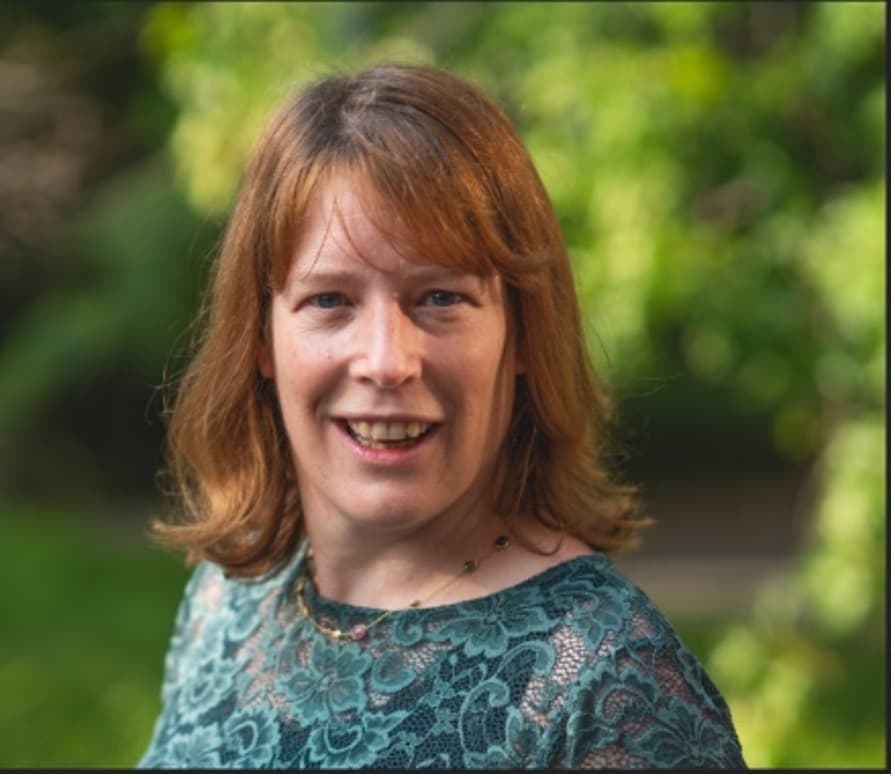
Liesbet Lagae
Liesbet Lagae is imec Fellow and co-founder and Program Director of the Life Science Technologies in imec. In this role, she oversees the emerging R&D, the public funded activities and early business creation. She holds a PhD degree from the KU Leuven, Belgium for her work on Magnetic Random Access Memories. As a young group leader, she has initiated the field of molecular and cellular biochips leveraging silicon technologies at imec, Belgium. The life science program has grown from emerging activities to a mature business line that provides smart silicon chip solutions to the life science industry. Applications include medical diagnostics, point-of-care solutions, DNA sequencing, cytometry, bioreactors, neuroprobes, implants. She holds a prestigious ERC consolidator grant for developing a platform on single cell analysis and sorting. She has (co-) authored 125 peer-reviewed papers in international journals and holds 15 patents in the field. She is also part-time professor in nanobiotechnology at KU Leuven/Physics department.
Discover more