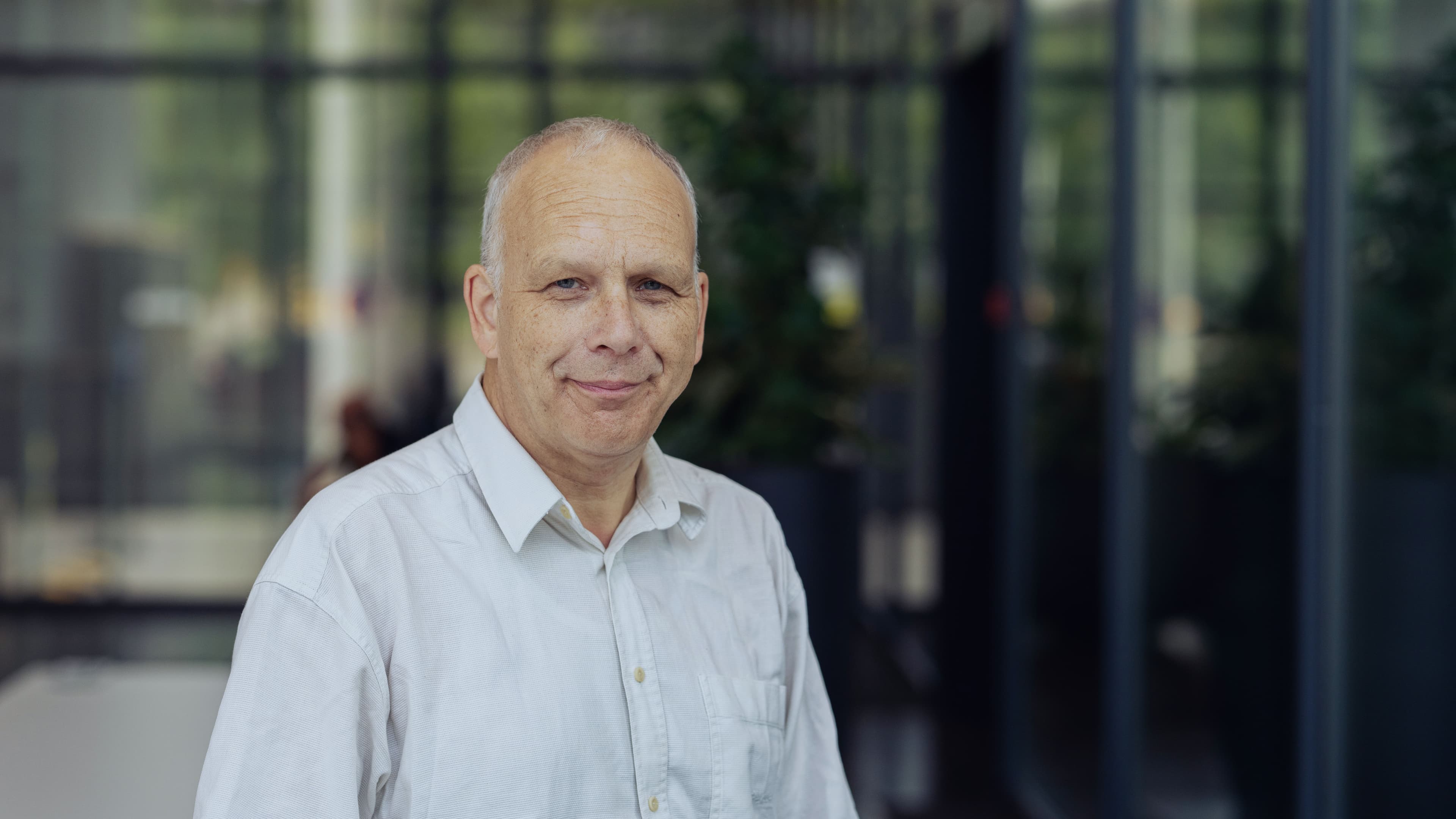
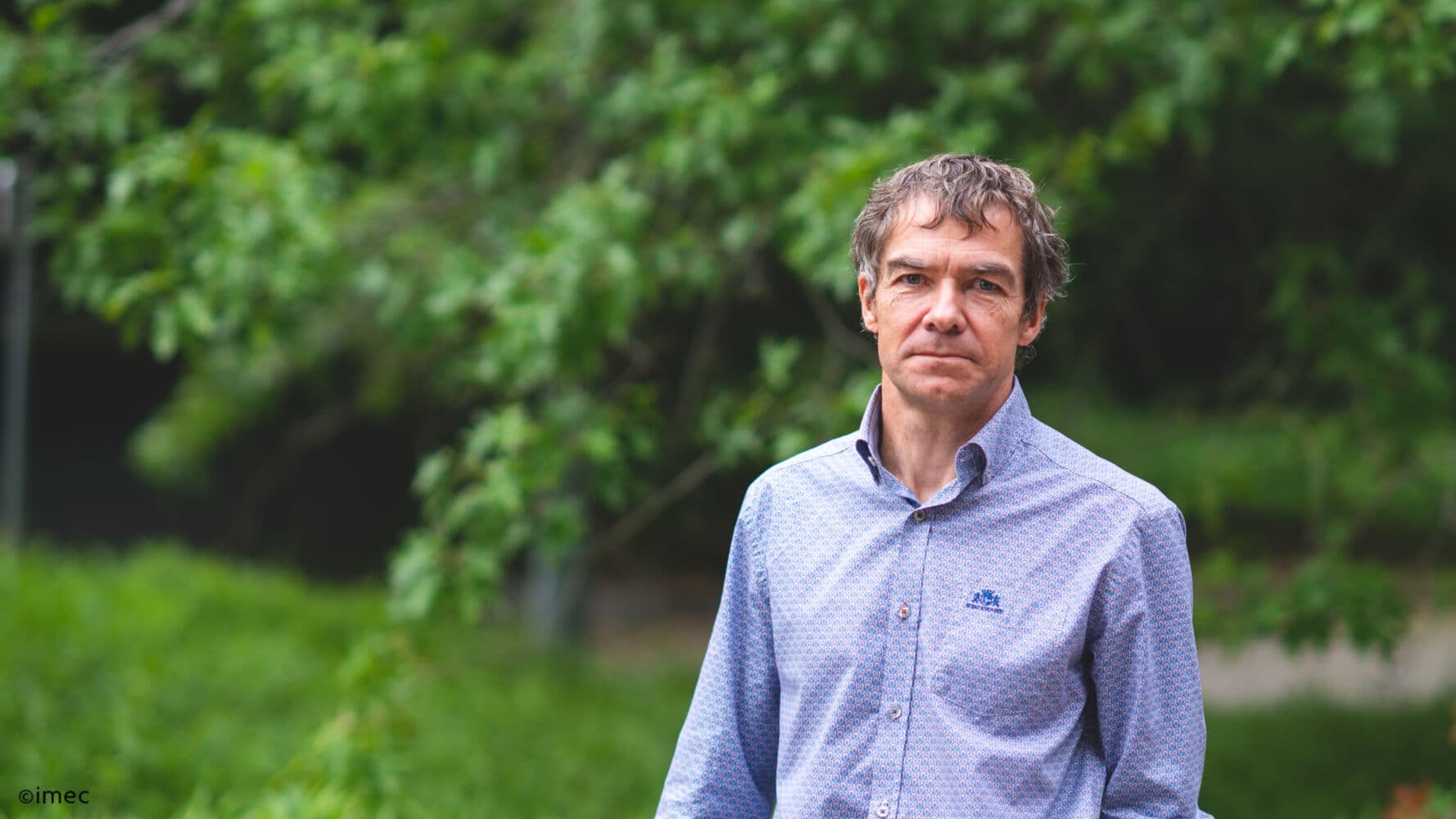
Meet imec fellow Philippe Vereecken
“Use your imagination, it’s one of your most powerful assets.”
In short
- Obtained a PhD in Chemistry in 1998
- Postdoctoral associate at The Johns Hopkins University, Baltimore, MD until 2001
- Research staff member at IBM Research in Yorktown Heights, NY
- Joined imec in 2005
- Appointed scientific director in 2018
- Professor at the Faculty of Bioscience Engineering of the KU Leuven since 2009
- Imec fellow since 2022
Philippe received a PhD in semiconductor electrochemistry from Ghent University in 1998, after which he joined the group of professor Peter Searson as a postdoctoral associate in the Department of Materials Science and Engineering at The Johns Hopkins University, working on magnetic and magneto-resistive thin films. He continued his work in the US as a research staff member at IBM Research working on next generation copper interconnect technologies for almost four years before returning to Belgium in 2005. His first contribution to imec involved research into synthesis of nanostructured materials for microelectronics. He was then promoted to principal scientist, focusing on setting up imec’s solid-state battery activities. In 2018, Philippe took up the responsibility of imec’s electrochemical storage and conversion activities as scientific director. His current research focuses on nanocomposite materials for solid electrolytes and CO2 sorption, large surface area nanomesh electrodes and thin-film interphase coatings for batteries, electrolyzers, and fuel cells. His work won him the title of imec fellow in 2022.
A detailed look at Philippe’s career
Before joining imec, Philippe got his PhD and travelled to the US to pursue a research career, resulting in a memorable highlight. “I started with a PhD in the niche field of semiconductor electrochemistry at Ghent University. Afterwards, I moved to the US where I started as a postdoc at The Johns Hopkins University, and where I was introduced to the wonderful world of nanomaterials. Then, I was hired by IBM in Yorktown Heights. There, we developed a direct plating process for 300 mm wafers, as a first in the world. In parallel, I was involved in a project where we built a miniature electrochemical liquid cell for operation in high vacuum TEM. This was never done before, and we were able to show real-time imaging of an electrochemical nucleation and growth process.”
Philippe crossed the Atlantic again in 2005 – this time in the other direction – and landed in Leuven, where he launched his imec career. “Marc Heyns and Karen Maex convinced me to join imec’s nano group, which was freshly established at the time. We pioneered nanowires and carbon nanotubes for post CMOS applications. The nanomaterial research evolved into our current activities in energy. First, we worked on solid-state batteries, building on imec’s expertise in microfabrication and thin films. We developed a nanocomposite material which is further developed as a solid electrolyte in lithium metal batteries with our spin-off SOLITHOR.”
“Today, we’re applying our nanotechnology for electrolyser technology such as water electrolysis. Our first target is hydrogen production, and we’re already working on scaling up our nanomesh electrodes together with our start-up HYVE. Our next target is the conversion of CO2 from waste streams to valuable chemicals such as syngas, and eventually methanol. Together with the PhD students and postdocs, we’re already exploring our nanomaterials for new type of gas-diffusion-electrode technology which will allow efficient conversion even at low CO2 gas concentrations.”
Philippe’s drivers
When asked about his passions, Philippe smiles: “The nerd answer is science and technology”.
He continues: “I guess I’m very lucky to have a job in which I can do what I like. If you can find a profession which is the same as your hobby, you’re not really working. Next to that, I like working with students. They challenge me in my daily work, and the interactions with them is my intellectual nourishment, so to speak.”
A message to young researchers
Philippe calls upon junior researchers’ creativity to generate impact. “Use your imagination as it’s one of our most powerful assets. It’s pretty hard for young researchers today to separate the wheat from the chaff in the flood of publications and with all the information made available. Being able to recognize realistic ideas is key and then you can use your imagination to develop them further. I find realistic imagination a necessary skill for good innovation.”
Ready to set off on your own imec journey?
Authors
Philippe Vereecken
Philippe Vereecken obtained a PhD in physical chemistry in 1998 from Ghent University. After a stay at The Johns Hopkins University as a postdoctoral researcher, he worked at IBM Research (New York) as research staff member (RSM) for several years. In 2005, he joined imec, first in the nanomaterials group. In 2009, he was appointed Associate Professor at the Center for Surface Chemistry and Catalysis, Faculty of Bioscience Engineering, KU Leuven. In 2010, Philippe Vereecken started the energy storage activities at imec. Currently, his work is focused on the development of solid-state Li-ion batteries.
Discover more