InSiDe, a European R&D project targeting mobile early-stage cardiovascular disease diagnosis - using Laser Doppler Vibrometry
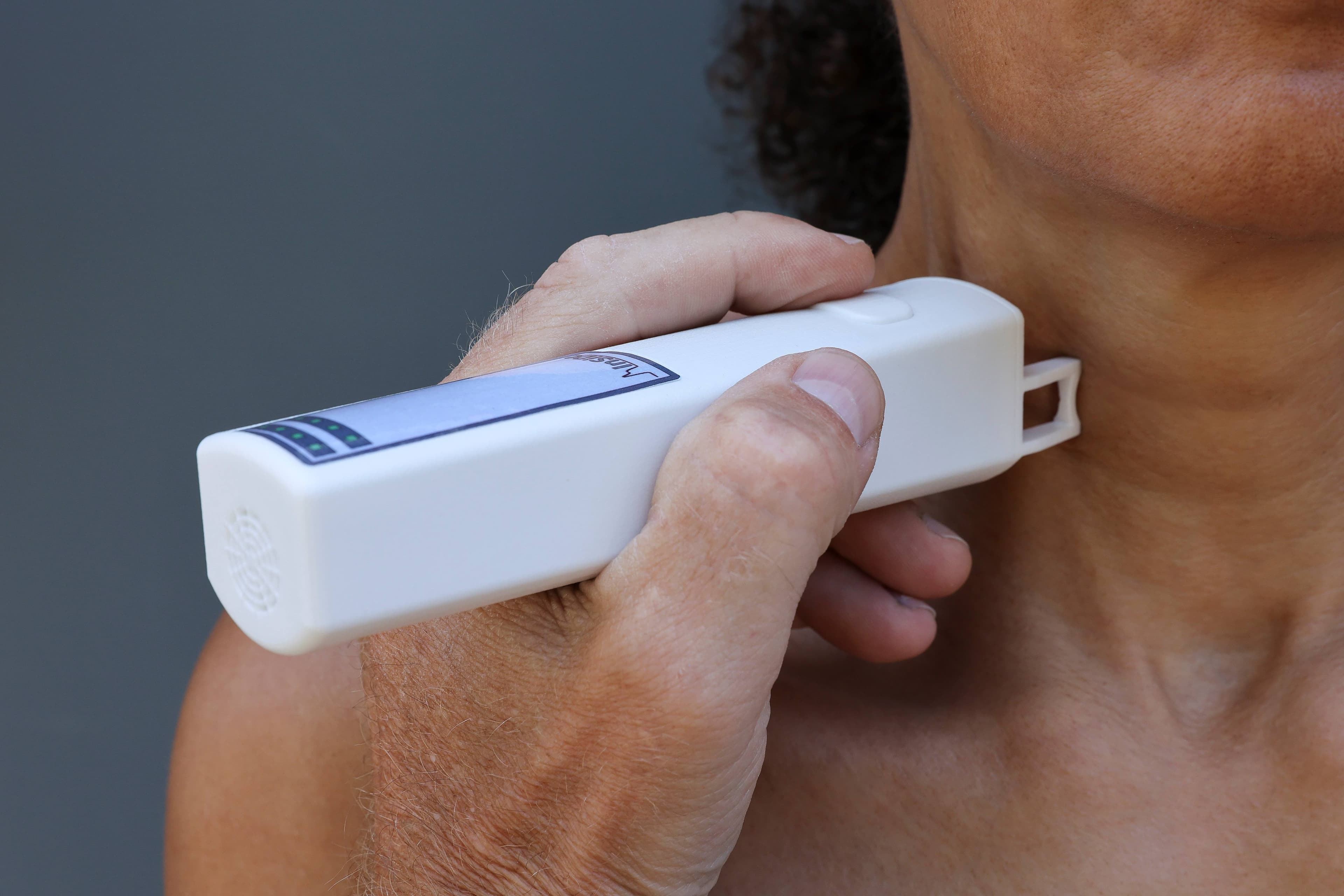
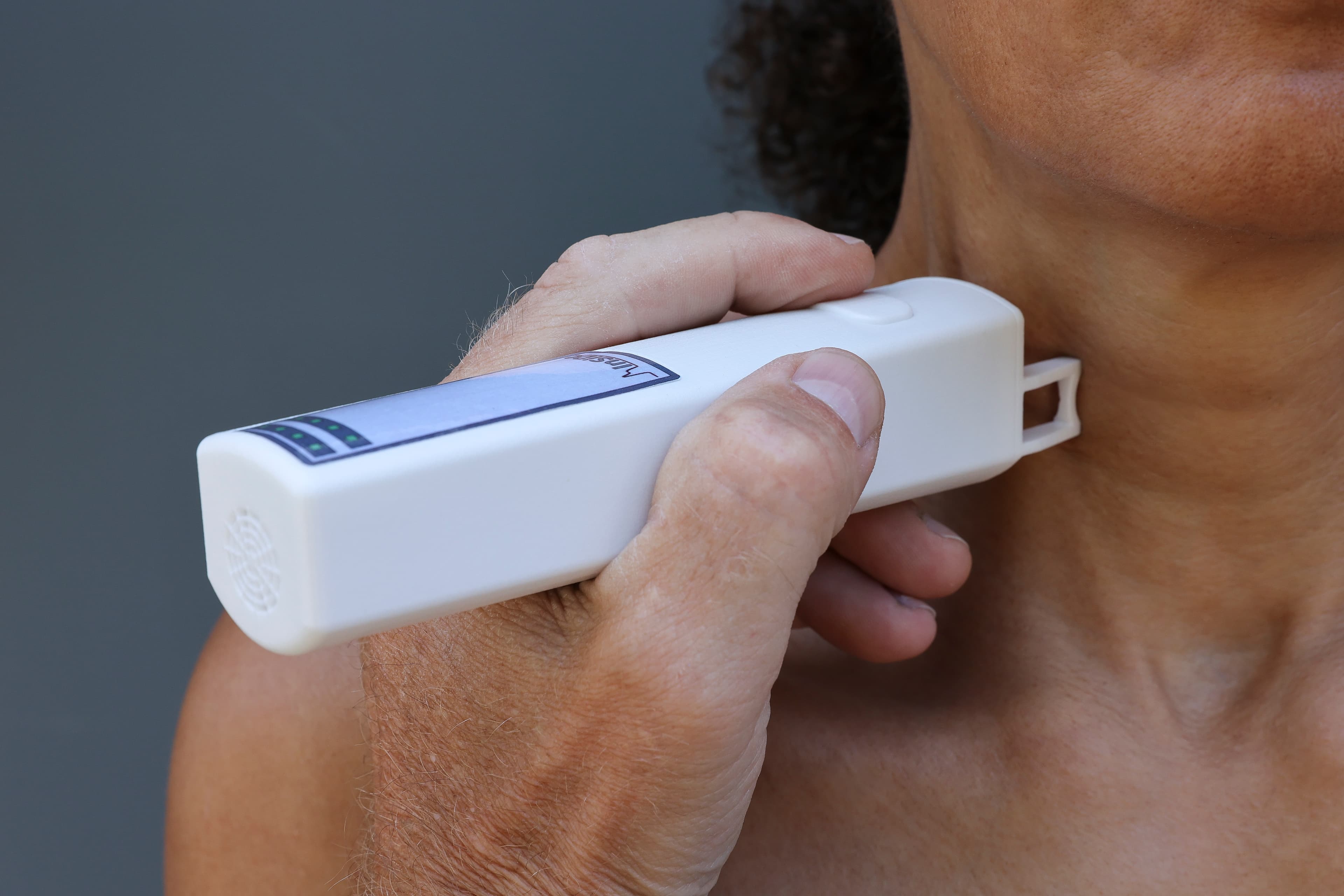
Leuven (Belgium), March 24, 2025 – Imec, the world-leading research and innovation hub in nanoelectronics and digital technology and Ghent University, together with Medtronic and their partners within the European H2020 project InSiDe, have developed a prototype of a mobile diagnostic device based on silicon photonics, to identify and characterize different stages of cardiovascular diseases.
Cardiovascular diseases (CVDs) are disorders of the heart and blood vessels and include coronary heart disease, cerebrovascular disease, valvular disease, cardiac dyssynchrony and other conditions. CVDs take the lives of 17.9 million people every year, 31% of all global deaths. Early identification of individuals at risk allows for early intervention to halt or reverse the pathological process.
Arterial stiffness is an early marker for hypertension and can be used to guide treatment in individuals with elevated BP and intermediate CV risk. It can be assessed by measurement of aortic pulse wave velocity (aPWV). Early identification of arterial stenosis, valvular disease and heart desynchrony can improve CVD risk classification. However, no tools are available today to screen a large population under primary care for these indicators, and individuals that are considered to be at intermediate risk are too often undiagnosed.
The InSiDe project aimed to providing a solution for monitoring/diagnosing presymptomatic cardiovascular diseases (CVD) as well as CVD disease progression while enabling patients to stay in their home environment.
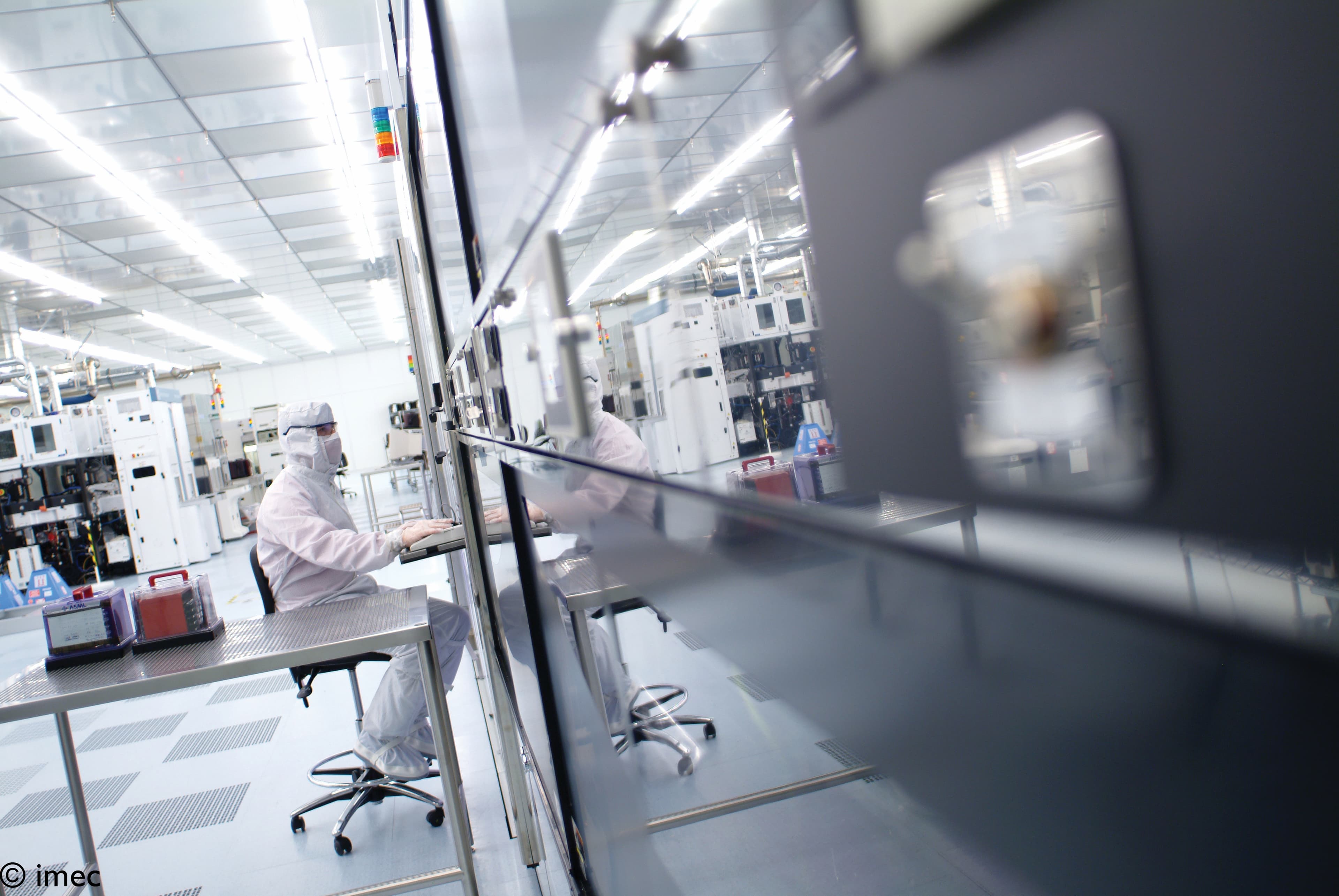
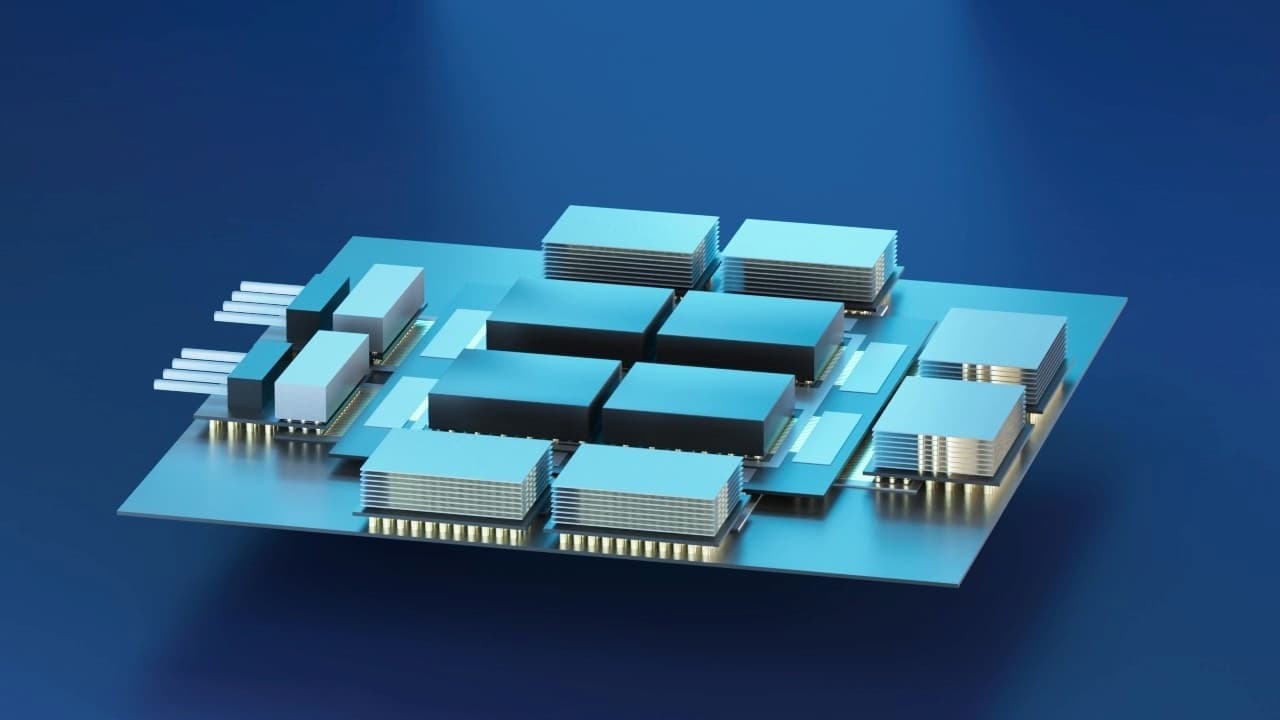
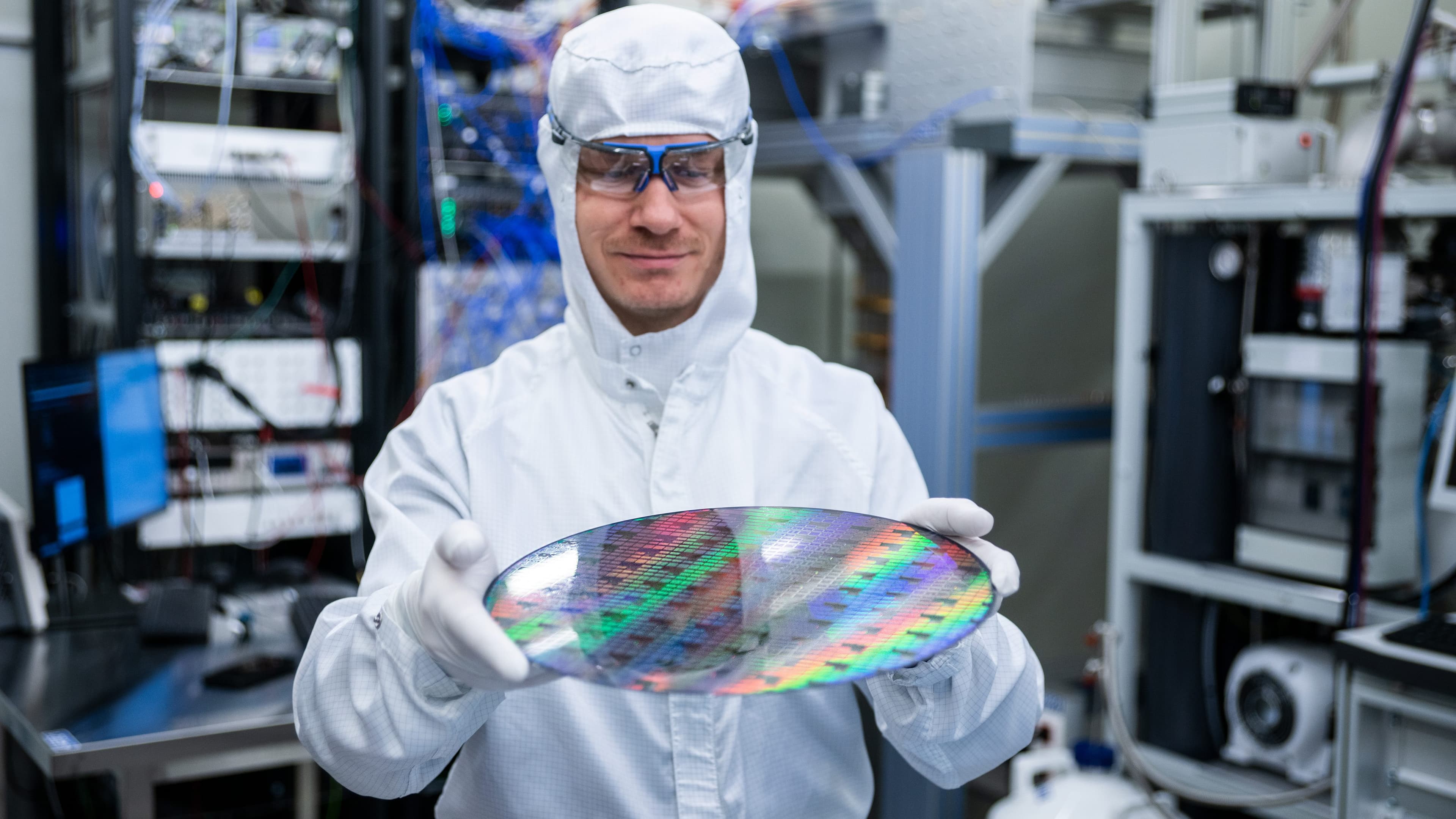
The core sensing unit of the prototype device is a laser Doppler vibrometer (LDV): A low-power laser beam is directed towards the skin overlying an artery. The skin’s vibration amplitude and frequency, resulting from the heartbeat, are extracted from the Doppler shift of the reflected beam. The key underlying technology is silicon photonics, which allows the implementation of advanced optical functionality in a silicon chip produced in a CMOS fab environment. Thanks to the CMOS-compatible fabrication process, we can implement a multi-beam LDV system in a compact device, enabling simultaneous measurements at multiple locations. This simplifies the measurement by eliminating the need for complex mechanical scanning, thereby enhancing accuracy and efficiency in cardiovascular assessment.
Engineering prototypes were fabricated and used to show the feasibility to conduct operator and patient-friendly measurements with the device positioned directly on the skin, without the use of a retroreflective patch attached to the skin to reflect the laser light. In addition, the devices are operated wirelessly. ‘The omission of the retroreflective patch is a gamechanger and paves the way for a user-friendly device accepted by the medical community’ states Prof. dr. ir. Patrick Segers from Ghent University.
Next to the prototype device development, InSide also focused on the development, calibration and testing of algorithms for automated LDV measurement of carotid-femoral and heart-carotid PWV, for the assessment of heart sound features from LDV which may provide a novel diagnostic tool to assess cardiac dyssynchrony and heart valve defects and for the detection of carotid artery stenosis from LDV data features.
Finally, clinical feasibility studies for the validation of LDV measurements in patients have been conducted at the Georges Pompidou European Hospital in Paris (France) and at the Maastricht University Medical Center (Netherlands) for assessing cardiac contraction, carotid artery stenosis, therapy adherence in patients with resistant hypertension, cardiac valve dysfunction, as well as the effect of COVID-19 infection. “The clinical device was well accepted by all patients, and it was considered useful and well tolerated”, states Prof. Dr. Rosa Maria Bruno in charge of the feasibility studies in Paris. “Feasibility of signal acquisition is good, the time to get useful signals was less than 10min, and patients barely noticed that a measurement was performed”, confirms Prof. Frits Prinzen from Maastricht University”.
Soren Aasmul, Senior Principal R&D Engineer responsible for Early Feasibility & Sensors Technology at Medtronic, concludes: “Participating in the InSiDe H2020 project has been of great value to Medtronic as we would otherwise not have access to the unique knowledge and new technology developed in InSiDe”
InSiDe is supported by the European Union’s Horizon 2020 Framework Programme for Industrial leadership in Information and Communication Technologies (H2020) under grant agreement No 871547 and by the Photonics Public Private Partnership Photonics21. InSiDe has been managed by imec’s associated laboratory located at Ghent University (Photonics Research Group in the Department of Information Technology). Medtronic Bakken Research Center (Netherlands) was responsible for the scientific and technical coordination of the project: Other industrial, academic and clinical partners have brought their expertise to the project: Ghent University (Belgium), Politecnico de Torino (Italy), Tyndall National Institute (Ireland), Microchip Technology (United Kingdom), Argotech (Czech Republic), National Institute for Health and Medical Research – INSERM (France), Universiteit Maastricht (Netherlands) and Fundico (Belgium).
About imec
Imec is a world-leading research and innovation center in nanoelectronics and digital technologies. Imec leverages its state-of-the-art R&D infrastructure and its team of more than 6.000 employees and top researchers, for R&D in advanced semiconductor and system scaling, silicon photonics, artificial intelligence, beyond 5G communications and sensing technologies, and in application domains such as health and life sciences, mobility, industry 4.0, agrofood, smart cities, sustainable energy, education, … Imec unites world-industry leaders across the semiconductor value chain, Flanders-based and international tech, pharma, medical and ICT companies, start-ups, and academia and knowledge centers. Imec is headquartered in Leuven (Belgium), and has research sites across Belgium, in the Netherlands, the UK and the USA, and representation in 3 continents. In 2023, imec's revenue (P&L) totaled 941 million euro.
Further information on imec can be found at www.imec-int.com.
The imec group holds a global trademark portfolio, including word marks and combined figurative registered and unregistered trademarks, across national, regional, and international territories. Its lawful use requires prior written consent of IMEC in compliance with the IMEC branding guidelines, which may be updated periodically. The latest version is available upon written request.
About Photonics Research Group
The Photonics Research Group in the Department of Information Technology of Ghent University is an associated lab of imec and performs research in the field of photonic integration – more specifically silicon photonics – and its applications in information and communication technology, in sensing and in life sciences. With its 80 researchers the group has a leading international role in the field and is also very active in graduate education in photonics and in industrial spin-off resulting from its research. More information can be found at www.photonics.intec.ugent.be.
Bold thinking. Bolder actions. We are Medtronic. We lead global healthcare technology, boldly attacking the most challenging problems. Our Mission — to alleviate pain, restore health, and extend life — unites a global team of 90,000+ people, and our technologies transform the lives of two people every second, every hour, every day. Expect more from us. Medtronic. Engineering the extraordinary.
The Medtronic Bakken Research Center (BRC) of Medtronic, established in 1987 in Maastricht, is a significant center for research and innovation with a rich history and a diverse group of highly educated and talented employees. Originally starting with 45 employees, it now comprises over 360 international professionals representing more than 35 nationalities. Over the years, BRC has played a crucial role in generating many important innovations.
About Ghent University
Ghent University (UGent) consists of 85 departments across 11 faculties and offers high-quality research-based educational programs in virtually every scientific discipline. UGent distinguishes itself as a socially committed and pluralistic university in a broad international perspective. The motto of the university is ‘Dare to Think’. The university’s appeal is growing every year, with about 50,000 undergraduate and PhD students in 2025, of whom 7400 are international. Numerous research groups, centers and institutes have been founded over the years, becoming world-renowned in disciplines such as biotechnology, aquaculture and micro-electronics.
Ghent University is ranked 90th in the Shanghai and 112rd on the Times Higher Education ranking. The University has participated in numerous EU-funded projects and counts 150 ERC grant holders. The university provides excellent training opportunities to both young and experienced researchers, and is one of the fastest growing European universities in terms of research capacity and productivity. Besides the Photonics Research Group from the Department of Information Technology of Ghent University, other research teams involved are IBiTech-bioMMeda (Biophysical Models for Medical Applications) and the IDLab (Internet Technology and Data Science Laboratory) from the Department of Electronics and Information Systems. IBiTech-bioMMeda, already partner in CARDIS, has recognized expertise in cardiovascular physiology, arterial hemodynamics and biomechanics and is a.o. known for its role in Europe in establishing reference and normal values of arterial stiffness and assessment and validation of methods to measure arterial stiffness. IDLab is a new partner in InSiDe and will bring in their signal processing expertise for the real-time assessment of cardiovascular function using InSiDe technology
About Tyndall National Institute
Tyndall is a leading European deep-tech research centre in integrated ICT (Information and Communications Technology) materials, devices, circuits and systems and a research flagship of University College Cork. Tyndall is Ireland’s largest Research and Technology Organisation (RTO) specialising in both electronics and photonics. Tyndall works with industry and academia to transform research into products in its core market areas of electronics, communications, energy, health, agri-food and the environment. With a network of over 200 industry partners and customers worldwide, Tyndall is focused on delivering human and economic impact from excellence in research. Tyndall is home to a multidisciplinary research community of over 600 people of 52 nationalities, including over 160 postgraduates. For more information, visit www.tyndall.ie.
About Politecnico di Torino
Politecnico di Torino was founded in 1906 and has its roots in the Technical School for Engineers created in 1859. It is internationally ranked among the most important universities in Europe for engineering and architecture studies, with 33,000 students (out of which 15% are international students coming from over 100 different countries).
Politecnico is a center of excellence for education and research in engineering, architecture, design and planning and it works in close cooperation with the socio-economic system. It is a comprehensive Research University where education and research complement each other and create synergies in order to address the needs of the economic system, of the local community and, above all, of its students.
Politecnico is committed to a strong internationalization process of its teaching, research and technology transfer activities: not only does it work in cooperation with the best universities and research centers in world, but it has also been signing agreements and contracts with important international corporations, as well as local businesses, meaning to be for the latter a focal point for innovation. For more information go to www.polito.it.
About Microchip Technology
Microchip Technology Inc. is a leading provider of smart, connected and secure embedded control and processing solutions. Its easy-to-use development tools and comprehensive product portfolio enable customers to create optimal designs which reduce risk while lowering total system cost and time to market. The company’s solutions serve over 100,000 customers across the industrial, automotive, consumer, aerospace and defense, communications and computing markets. Headquartered in Chandler, Arizona, Microchip offers outstanding technical support along with dependable delivery and quality. For more information, visit the Microchip website at www.microchip.com.
About Argotech
Argotech a.s. is a private company located in the city of Trutnov in the Czech Republic. The company was founded in 2006, based on a tradition of microelectronics fabrication in the region, after the restructuring of Siemens, and later Infineon.
Argotech focuses on manufacturing, engineering, and development services for photonics and micro-electronics. It provides a unique technology-chain, starting from wafer-level packaging to full optical subassembly, and customized packaging solutions.
For custom packaging of optoelectronics components, such as OSAs, micro-modules, etc., Argotech acts as a CM (contract manufacturer) or an ODM (original design manufacturer). For ODM work, Argotech provides optical, electronic, RF, mechanic and thermal management design services.
Argotech has a 15-year track-record of serving customers from the datacom, telecom, airspace, defense, life-science, and final-customer markets, and has a highly experienced team, with a 15-year track-record in packaging & micro-assembly activities, and generating solutions for customers focused on wafer-scale assembly. Argotech has deployed a micro-assembly approach for wafer-level carriers that enables the packaging scale-up of optoelectronics components to higher volumes, as well as reaching very compact component sizes, both of which are required for wearable electronics and medical applications.
Argotech has an experience in RF design of packaging & assembly beyond 100GHz applications, optical coupling of 450nm blue lasers to 2.5μm-SMFs, and customization of packaging processes when off-the-shelf components do not provide the required functionality or performance, etc.
Argotech has been involved in Silicon photonics assembly and packaging activities including development of the related key processes with track record over 7 years of experience.
Argotech offers sample and pilot production, with a fast capacity ramp-up, and flexible shift model to meet the demands of mass production, when needed. For mass production, Argotech has the capacity to span the full value-chain from feasibility studies, to product design, to prototyping, to product qualification.
Argotech is constantly working to incorporate and improve the level of automated assembly in its production-chain, to increase both capacity and yield for customers.
About INSERM
Founded in 1964, the French National Institute of Health and Medical Research (Inserm) is a public scientific and technological institute which operates under the joint authority of the French Ministry of Health and French Ministry of Research. As the only French public research institute to focus entirely on human health, in 2008 Inserm took on the responsibility for the strategic, scientific and operational coordination of biomedical research. This key role as coordinator comes naturally to Inserm thanks to the scientific quality of its teams and its ability to conduct translational research, from the laboratory to the patient’s bed. From the outset, Inserm has forged close partnerships with the other public and private research establishments as well as hospitals to fulfil its missions. 80% of Inserm’s 318 research units are currently set up in university hospitals or cancer research centers. Universities are also key partners of Inserm. As the main actor in French biomedical research, Inserm is responsible of 35% of scientific publications and is the #1 applicant for patents in France in the biomedical field.
The INSERM Paris-Cardiovascular research Center (PARCC) was created in 2009 at the Georges-Pompidou European Hospital (Paris, France). The 14 PARCC research teams are conducting projects spanning basic molecular and cellular biology to integrated physiology and pathophysiology, biomarkers, genetics and epidemiology, with the goal of furthering the understanding of major cardiovascular disease, including atherosclerosis, hypertension, heart failure and sudden cardiac death. Translational research is an integral part of the mission of the PARCC, in close connection with clinical laboratories and departments of HEGP. INSERM PARCC team 3 studies arterial diseases in a multidisciplinary approach, spanning from genetics to pathophysiology, diagnosis and treatment, with a specific focus in arterial diseases in women. It is a world-renowned leader in the study of arterial function (arterial stiffness, endothelial dysfunction) and remodeling (arterial wall thickness and enlargement), which supposes to measure in vivo with high precision the geometric and functional properties of large arteries, at different levels of the arterial tree, in humans.
About Universiteit Maastricht
Within the 40 year-young Maastricht University the Cardiovascular Research Institute Maastricht (CARIM) integrates all research in the cardiovascular field. CARIM has an annual budget of ~20 M€, employs ~200 fte of researchers and 70 fte of technical and supporting staff, divided over 13 departments/disciplines. Together they produce more than 500 scientific papers annually. Within CARIM Prof. Frits Prinzen is a well-known investigator in the field of pacemaker therapies for heart failure, using pre-clinical and clinical research for these purposes. Within CARDIS he will evaluate the use of the newly developed products in patients with cardiac resynchronization therapy (CRT). Goal is to demonstrate the clinical feasibility of using the new product and to validate the technical concept for optimizing the application of CRT.
About Fundico
Fundico bv, located in Zwijnaarde, Belgium, is a consultancy company with the objective to assist industrial companies and research organisations with the submission of financing proposals for research and development, mainly in the field of information and communication technologies. These financing proposals are submitted to regional public authorities or to the European Commission. In the latter case these proposals are submitted in response to an official call for proposals issued by the European Commission. In case of project proposals for which financing is granted, Fundico will also, in many cases be involved in the management and coordination of the research and development project.