For the first time four terminal perovskite-silicon PV tandem devices hit 30% efficiency
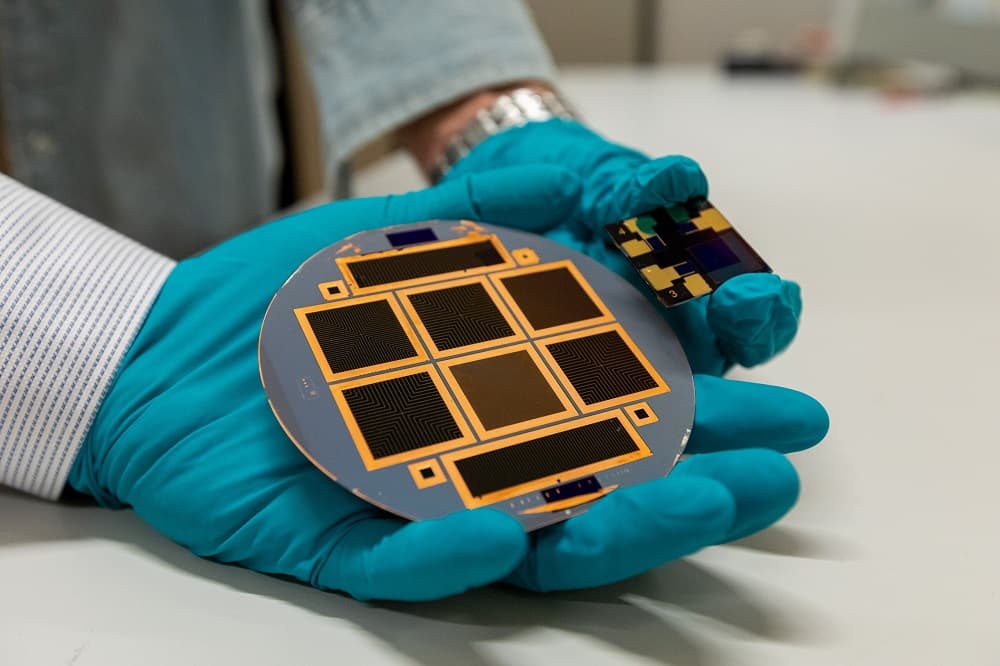
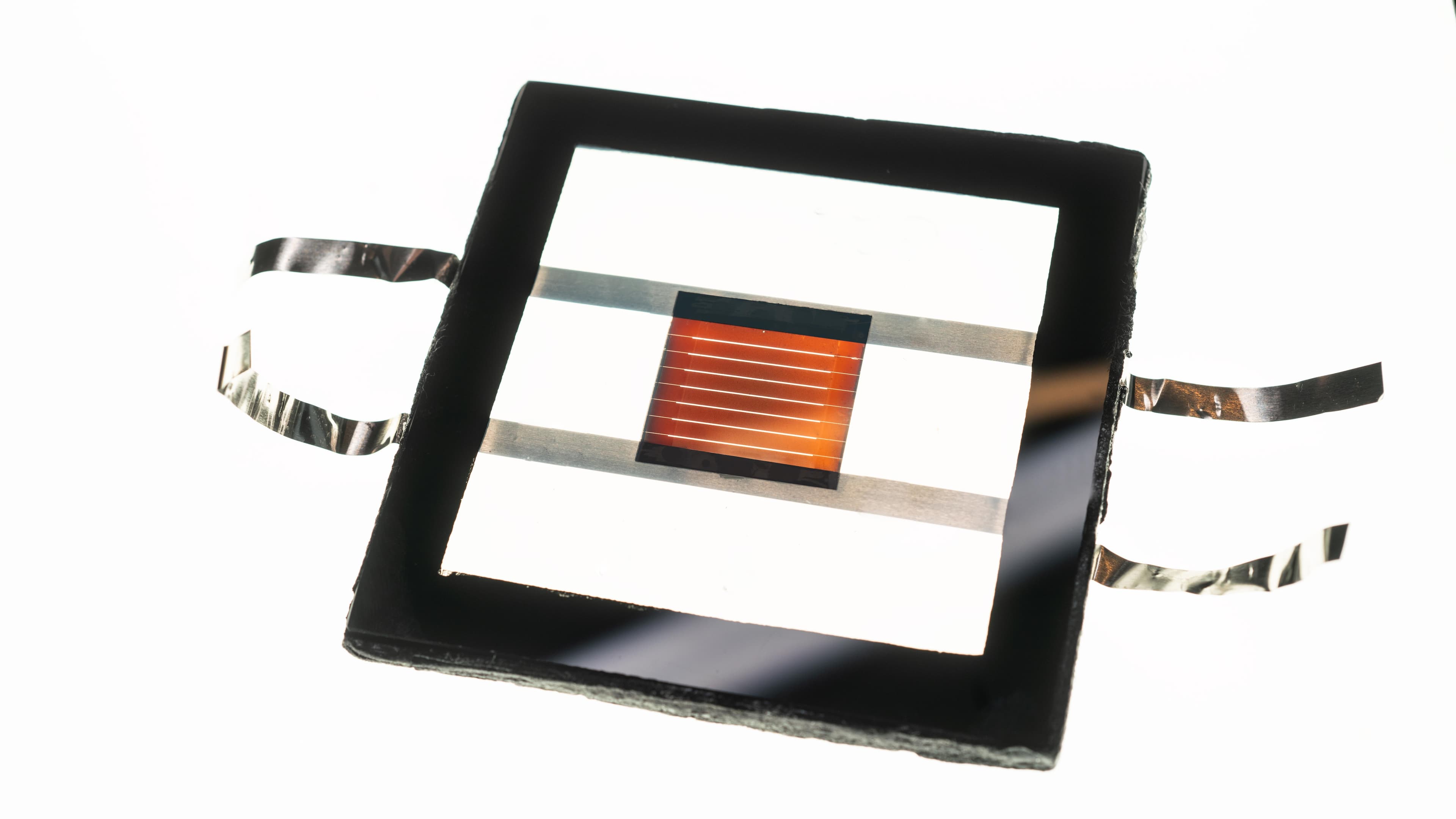
TNO, TU Eindhoven, imecand TU Delft, partners in Solliance, joined forces to further push the conversion efficiency of tandem solar cells to beyond the limits of today’s commercial photovoltaic (PV) modules. For the first time, four-terminal perovskite/silicon tandem devices pass the barrier of 30%. Such high efficiency enables more power per square meters and less cost per kWh. The result is presented during the 8th World Conference on Photovoltaic Energy Conversion (WCPEC-8) in Milan and has been achieved by combining the emerging perovskite solar cell with conventional silicon solar cell technologies. The perovskite cell that features transparent contacts and is part of the tandem stack has been independently certified.
Additionally, achieving high-power density will create more opportunities to integrate these solar cells into construction and building elements, so that more existing surface area can be covered with PV modules. Breaking the 30% barrier is therefore a big step in accelerating the energy transition and improving energy security by reducing the dependency on fossil fuels.
The best of both worlds
Tandem devices can reach higher efficiencies than single junction solar cells because of a better utilization of the solar spectrum. The currently emerging tandems combine commercial silicon technology for the bottom device with perovskite technology: the latter featuring highly efficient conversion of ultraviolet and visible light and excellent transparency to near infrared light. In four-terminal (4T) tandem devices the top and bottom cells operate independently of each other which makes it possible to apply different bottom cells in this kind of devices. Commercial PERC technology as well as premium technologies like heterojunction or TOPCon or thin-film technology such as CIGS can be implemented in a 4T tandem device with hardly any modifications to the solar cells. Furthermore, the four-terminal architecture makes it straight forward to implement bifacial tandems to further boost the energy yield.
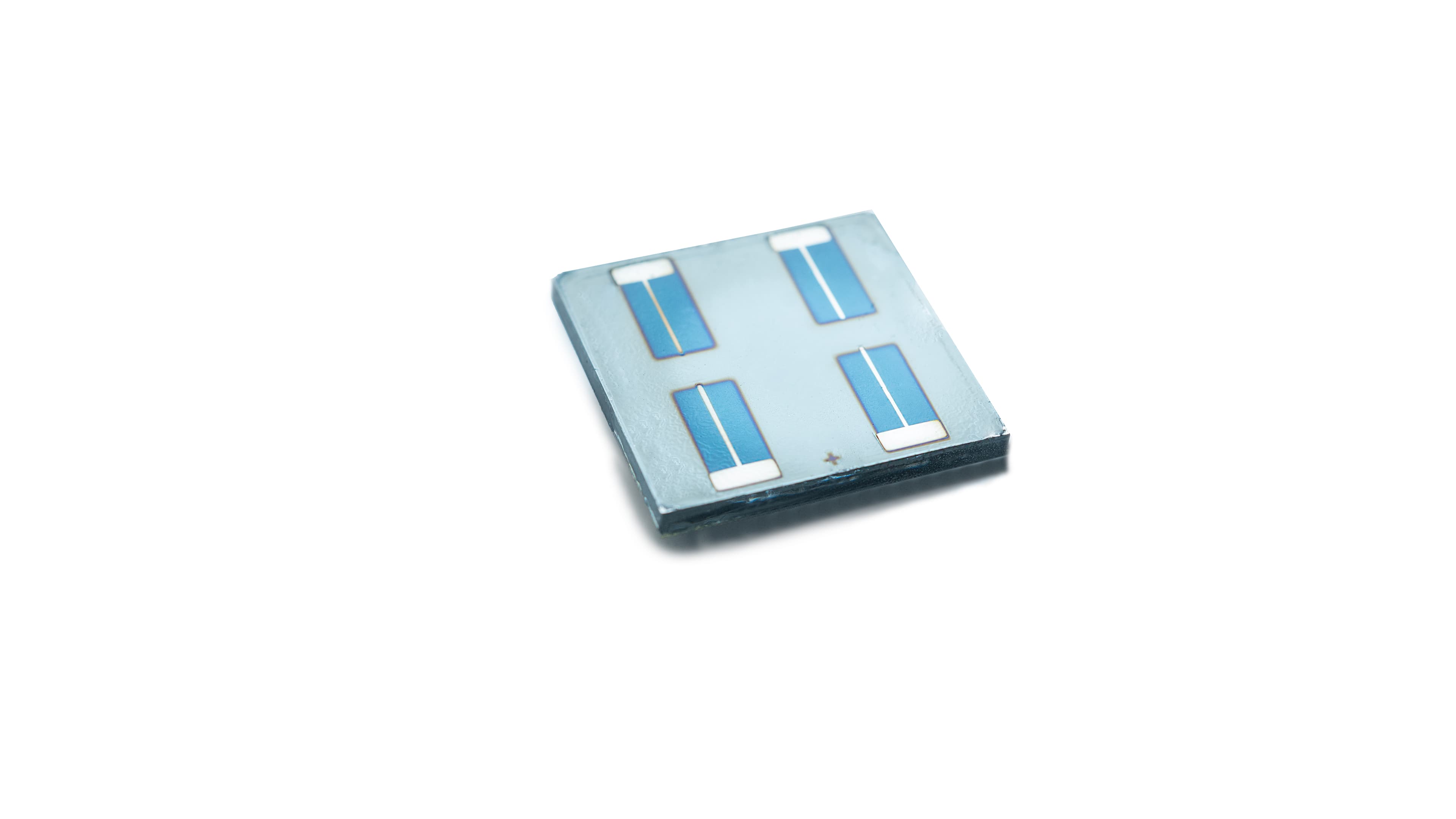
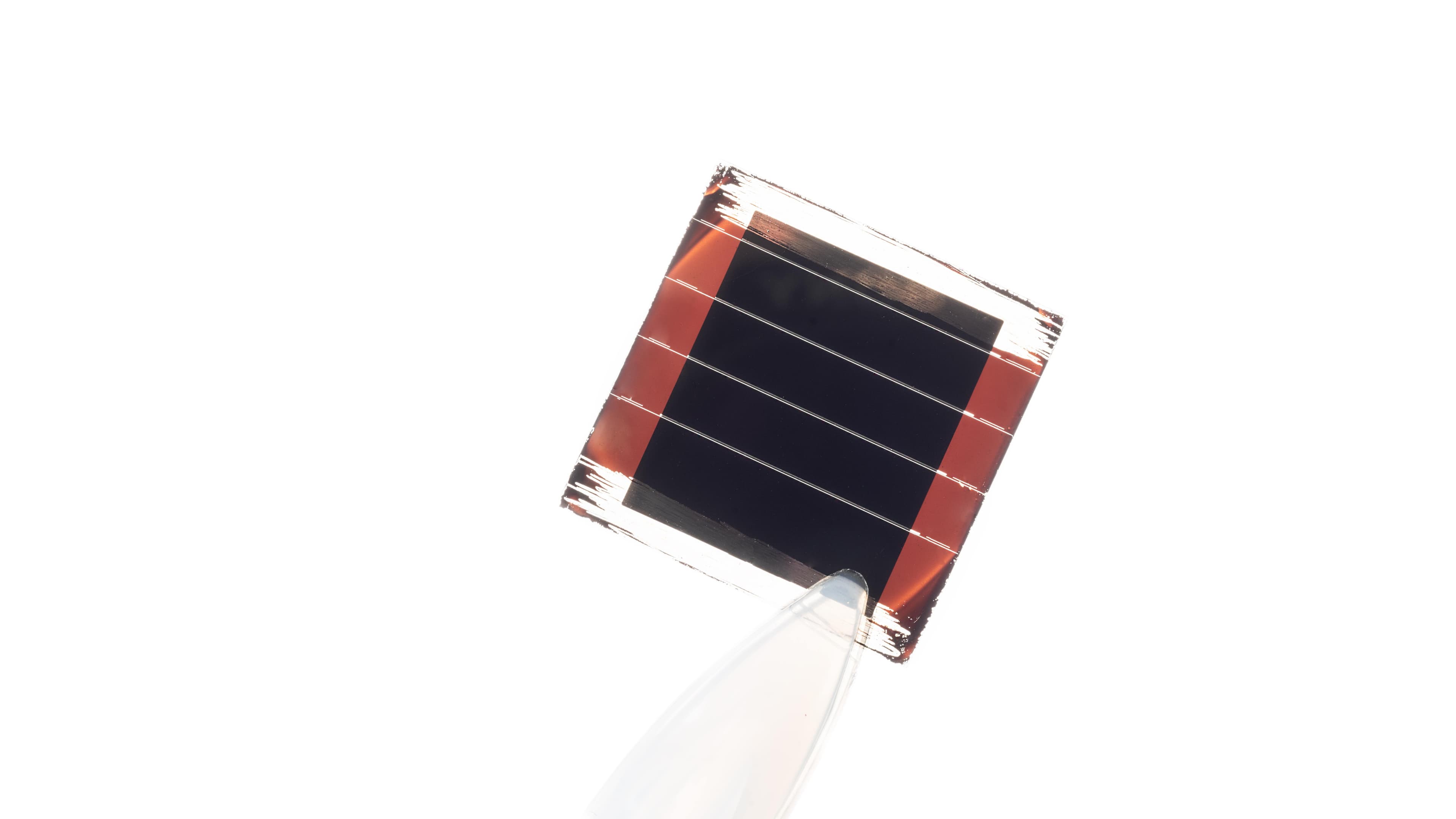
Researchers from the Netherlands and Belgium have successfully improved the efficiency of the semi-transparent perovskite cells up to 19.7% with an area of 3x3 mm2 as certified at ESTI (Italy). “This type of solar cell features a highly transparent back contact that allows over 93% of the near infrared light to reach the bottom device. This performance was achieved by optimizing all layers of the semi-transparent perovskite solar cells using advanced optical and electrical simulations as a guide for the experimental work in the lab.” says Dr Mehrdad Najafi of TNO. “The silicon device is a 20x20-mm2 wide, heterojunction solar cell featuring optimized surface passivation, transparent conductive oxides and Cu-plated front contacts for state-of-the-art carrier extraction” says Yifeng Zhao PhD student at TU Delft, whose results have been recently peer-reviewed. The silicon device optically stacked under the perovskite contributes with 10.4% efficiency points to the total solar energy conversion.
Combined, 30.1% is the conversion efficiency of this non-area matched 4T tandem devices operating independently. This world’s best efficiency is measured according to generally accepted procedures.
Future of four terminal tandem PV modules
This is not all, combining this highly transparent perovskite cell with other silicon-based technologies such as back contact (metal wrap through and interdigitated back contact cells) and TOPCon solar cells has also delivered conversion efficiencies approaching 30%. This demonstrates the potential of highly transparent perovskite solar cells and their flexibility to be combined with already commercialized technologies.
These world best efficiencies obtained on a multitude of incumbent technologies is a further milestone towards industrial deployment.
“These impressive results confirm the high potential of perovskite technology to substantially boost the performance in such tandem configuration,” says Dr. Tom Aernouts, head of the imec/imo-imomec Thin-Film PV Technology team, from their labs in EnergyVille. “Now, we will focus on scaling up this tandem to larger dimensions, which will become relevant for the PV industry. We’ve already demonstrated perovskite solar modules up to sizes of 35x35cm2, as well as 4T tandem modules of similar size. We hope to confirm industrial scalability of these results on short term.”
About the partners:
Imec
Imec is a world-leading research and innovation center in nanoelectronics, digital technologies and energy. Imec leverages its state-of-the-art R&D infrastructure and its team of more than 5,000 employees and top researchers, for R&D in advanced semiconductor and system scaling, silicon photonics, artificial intelligence, beyond 5G communications and sensing technologies, and in application domains such as health and life sciences, mobility, industry 4.0, agrofood, smart cities, sustainable energy, education, … Imec unites world-industry leaders across the semiconductor value chain, Flanders-based and international tech, pharma, medical and ICT companies, start-ups, and academia and knowledge centers. Imec is headquartered in Leuven (Belgium), and has research sites across Belgium, in the Netherlands, and the USA, and offices in China, India, Taiwan and Japan. In 2021, imec's revenue (P&L) totaled 732 million euro.
Further information on imec can be found at www.imec-int.com.
Imec is a registered trademark for the activities of imec International (IMEC International, a legal entity set up under Belgian law as a “stichting van openbaar nut”), imec Belgium (IMEC vzw supported by the Flemish Government), imec the Netherlands (Stichting IMEC Nederland), imec Taiwan (IMEC Taiwan Co.), imec China (IMEC Microelectronics (Shanghai) Co. Ltd.), imec India (IMEC India Private Limited), imec San Francisco (IMEC Inc.) and imec Florida (IMEC USA Nanoelectronics Design Center Inc.).
EnergyVille
EnergyVille is a collaboration between the Belgian research partners KU Leuven, VITO, imec, UHasselt in the fields of sustainable energy and intelligent energy systems. EnergyVille develops technology and knowledge to support public and private stakeholders in the transition to an energy efficient, decarbonised and sustainable urban environment. The unique complementarity of the research partners allows us to integrate the energy system value chain in its entirety, ranging from materials and components to the level of entire energy systems, business models and strategies. Our activities are clustered in eight interdisciplinary domains: solar energy, battery storage, power electronics, Power-to-Molecules, thermal systems, electrical networks, energy for buildings and districts, and energy strategy and markets.
With approximately 400 researchers and state-of-the-art research facilities, EnergyVille is a top European innovation hub in the energy field. It bundles research, development and training under one roof and collaborates closely with local, regional, national and international partners from industry as well as public authorities.
As an energy R&D innovation hub, located in the industry-oriented ecosystem of Thor Park (Genk, Belgium), EnergyVille offers an attractive environment for energy research, industrial product development and business creation. The collaboration is supported by the city of Genk, the Province of Limburg, LRM, Nuhma, POM Limburg and the European structural funds.
Imo-imomec
Imo-imomec brings together chemists, physicists and engineers to conduct multidisciplinary materials research. This with a focus on advanced material systems for a sustainable and healthy society. Our core domains: energy conversion, energy storage, sustainable materials, sensors & healthcare materials, and quantum technologies.
The Institute for Materials Research (IMO), based at the Hasselt University campus in Diepenbeek, has built a vast expertise in the field of materials science since its foundation in 1990. In 2001, a strategic alliance was established with imec, based in Leuven. Imec founded IMOMEC, an associated laboratory within the premises of IMO. As such, imo-imomec is a joint research institute where fundamental research, strategic basic research, and application-oriented research is conducted. In 2015, UHasselt/imo-imomec joined EnergyVille in Genk to carry out its energy-related research.
TNO
The Netherlands Organisation for Applied Scientific Research (TNO) is an independent research organisation. We connect people and knowledge to create innovations that boost the sustainable competitive strength of industry and well-being of society. Now and in the future. Together with our partners, we focus on the societal challenges of a safe, healthy, sustainable and digital society. This is our mission, and it is what drives us, the over 3.500 professionals at TNO, in our work every day.
Eindhoven University of Technology
TU/e profiles itself as a leading, international university specialized in engineering science & technology, with major research activities in the field of solar energy. Within the field of hybrid perovskite solar cells and in collaboration with Solliance, research is carried out at the departments of Chemical Engineering and Chemistry (Prof. R.A.J. Janssen) and Applied Physics and Science Education (Prof. M. Creatore). The research encompasses the synthesis and characterization of hybrid perovskite solar cells as well as interface engineering by atomic layer deposition.
Delft University of Technology
Delft University of Technology is the largest technical university in the Netherlands. Founded in 1842, it is among the first 20 technical university in the world for its outstanding research and teaching quality. The university has 8 faculties in all major fields of science and engineering, accommodating more than 26,000 students. The Photovoltaic Materials and Devices group (PVMD), led by prof. dr. Olindo Isabella, focuses on the development of photovoltaic technologies and applications throughout the value chain. In its research facilities, the PVMD group has established state-of-the-art processes for the fabrication of high-efficiency crystalline silicon-based solar cells. The PVMD group aims to deeper understand the solar cell device physics using advanced characterization and modelling tools and to use this knowledge for designing and fabricating advanced solar cells with higher efficiencies.
Discover more