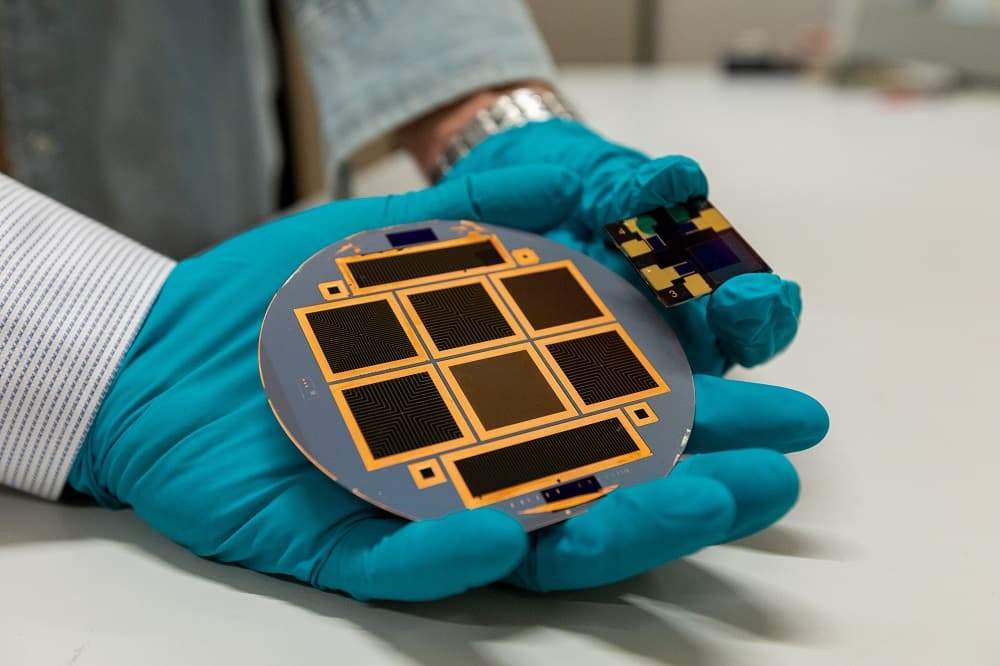
Advancing efficiency and scalability of thin-film tandem solar cells
Increased efficiency and new uniform coating techniques for perovskite-on-CIGS tandems
In short
The article highlights the potential of perovskite/CI(G)S tandem solar cells. Imec is working on closing the efficiency gap and developing scalable manufacturing processes to bring these tandems closer to commercialization.
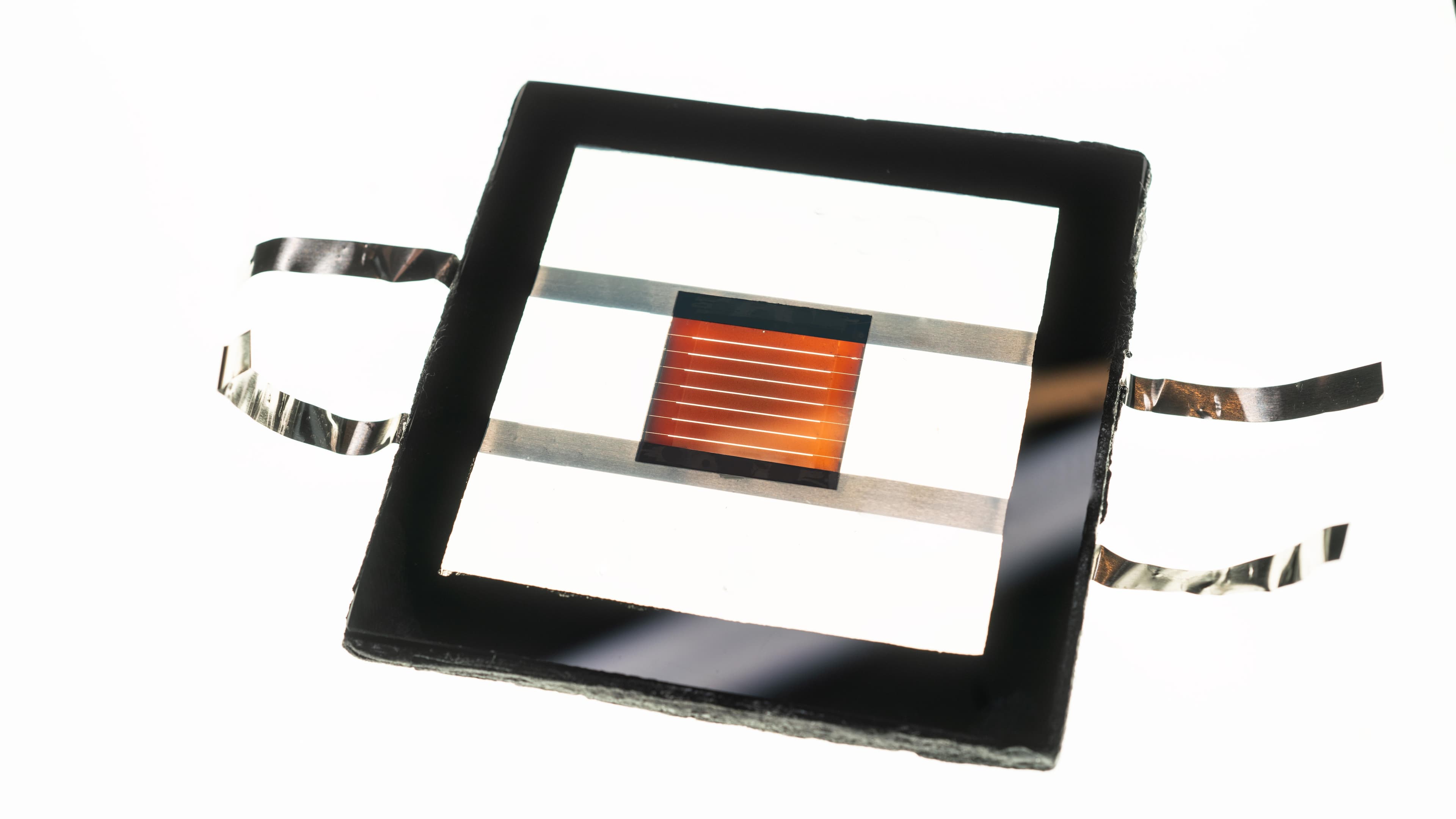
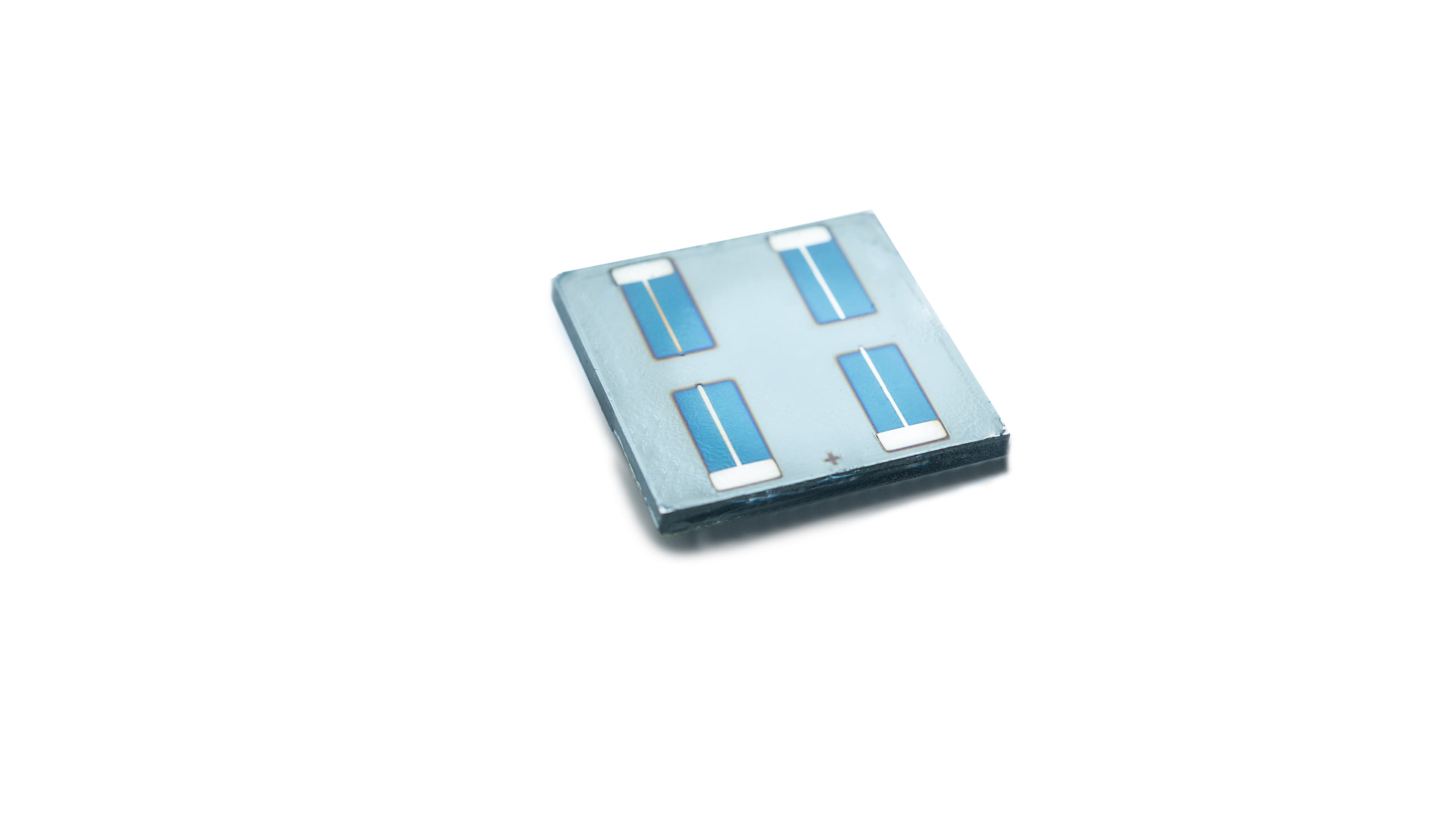
Imec together with partners in the PERCISTAND-project (H2020) has demonstrated stable perovskite-on-CIGS tandem solar cells with efficiencies nearing 30% for small cells and 21% for larger modules.
The article presents the ultrasonic spray coating technique, which creates uniform monolithic perovskite/CI(G)S cells, resulting in increased performance.
Additionally, the article showcases ultra-thin uniform coatings (<15nm) achieved with spray-on-screen technology, capable of depositing on areas of several square meters.
This article was previously published in PV Magazine.
Current silicon solar cells are nearing their theoretical efficiency limits which is at around 30 percent, and further improvements face substantial costs. However, the combination of different materials holds the promise of more cost-efficiently achieving higher efficiencies. Multijunction solar cells consist of two (tandem) or more layers of distinct materials, each with different bandgaps optimized to absorb different parts of the solar spectrum thereby reducing losses and increasing the overall efficiency. This combination can theoretically push energy conversion efficiencies to around 60 percent (for three or more layers), though initial commercial options are targeted to achieve realistic efficiencies of 30-35 percent.
One promising combination for tandem solar cells is perovskite and silicon. However, while perovskite has made remarkable progress in terms of stability and scalability, silicon presents a significant limitation to tandem cells, restricting them primarily to flat surfaces. Integrating solar cells into existing building materials would enable energy generation without sacrificing valuable space. Yet, to maximize solar energy potential, cells would need to seamlessly integrate with various shapes and surfaces of existing materials, not only flat surfaces. Achieving this flexibility requires a completely new manufacturing process.
Thin-film solar cells for integrated solar power
Enter thin films. Thin-film solar cells use a very thin layer (typically 1-3 µm) of photovoltaic material deposited onto a substrate, such as flexible plastic or lightweight metal. Combining two thin-film materials with different bandgaps on the same surface can increase energy conversion efficiency while maintaining flexibility and lightness.
An interesting thin-film combination is perovskite and Cu(In,Ga)Se2 (CIS, or CIGS with Gallium included), which consists of copper, indium or gallium, and selenide. Unlike traditional silicon solar cells, CI(G)S’ composition (e.g., changing the gallium content) can be adjusted to finetune the photovoltaic properties. It enables the CI(G)S solar cell to be perfectly matched with the accompanying top or bottom cell (in this case, perovskite) to maximize the absorption and conversion of sunlight across the spectrum into electricity. With the perovskite/CI(G)S combination of materials, researchers at imo-imomec (an imec research group at the university of Hasselt)/EnergyVille in collaboration with PERCISTAND partners have succeeded in creating stable tandem solar cells with world records in efficiency: close to 30 percent for cells smaller than 1 cm² and 21 percent for modules measuring 5 x 5 cm². While these efficiencies are still lower than for perovskite/silicon tandems (which can go as high as 34 percent), there is still room to raise the efficiency by careful optimization of the device.
Ultrasonic spray coating for deposition on irregular surfaces
Aside from closing the efficiency gap, another crucial factor to bring perovskite/CI(G)S tandems towards commercialization is scalable manufacturing. The majority of the reported record efficiencies are obtained using spin coating of perovskite, a method that allows precise control of crystallization and uniform deposition in lab-scale but is not suitable for industrial manufacturing, where roll-to-roll processing is privileged. Being a batch process, it does not lend itself to high-throughput, reproducible production, and the irregular surface of CI(G)S creates a technical challenge for depositing a uniform layer of perovskite.
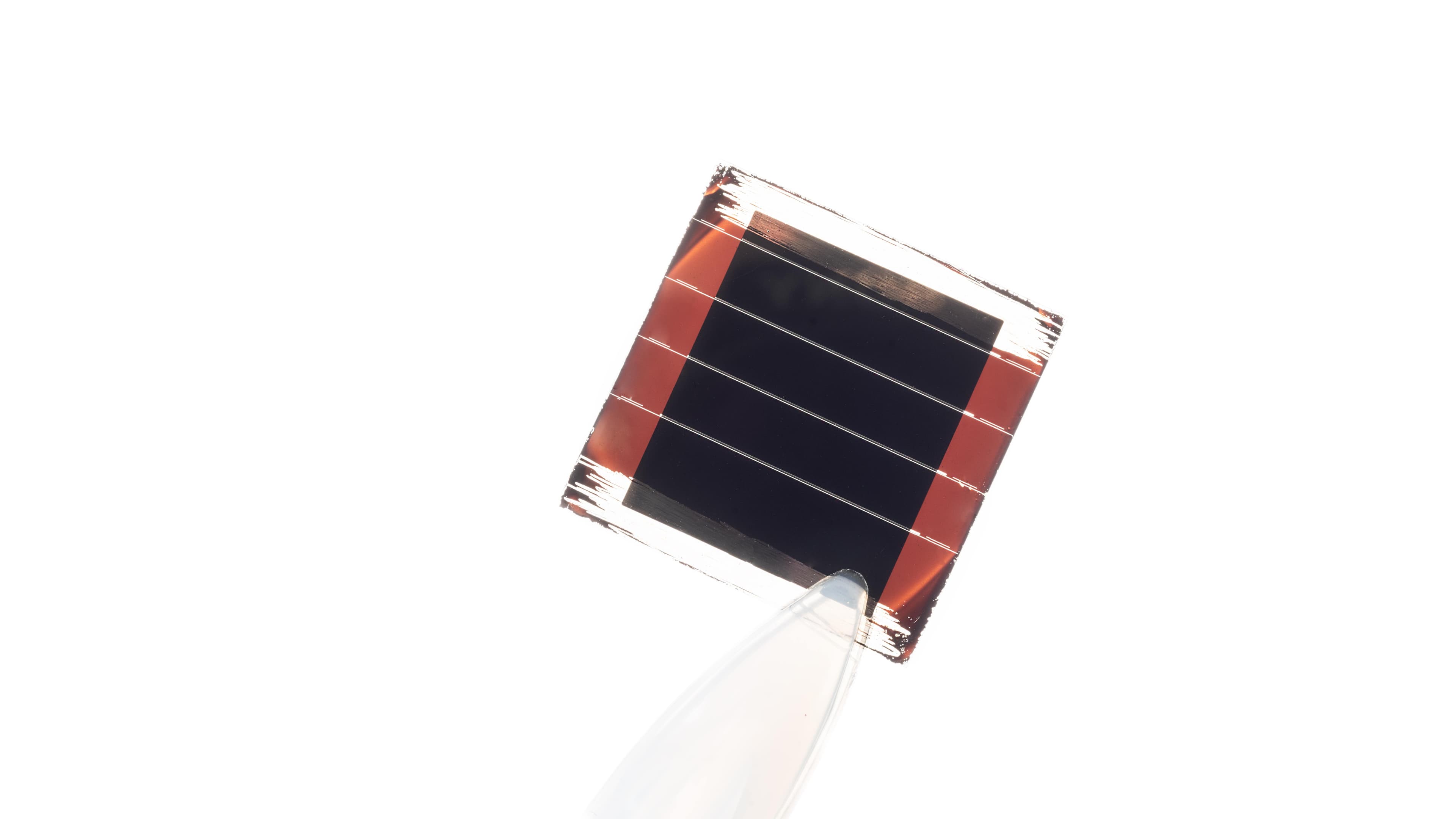
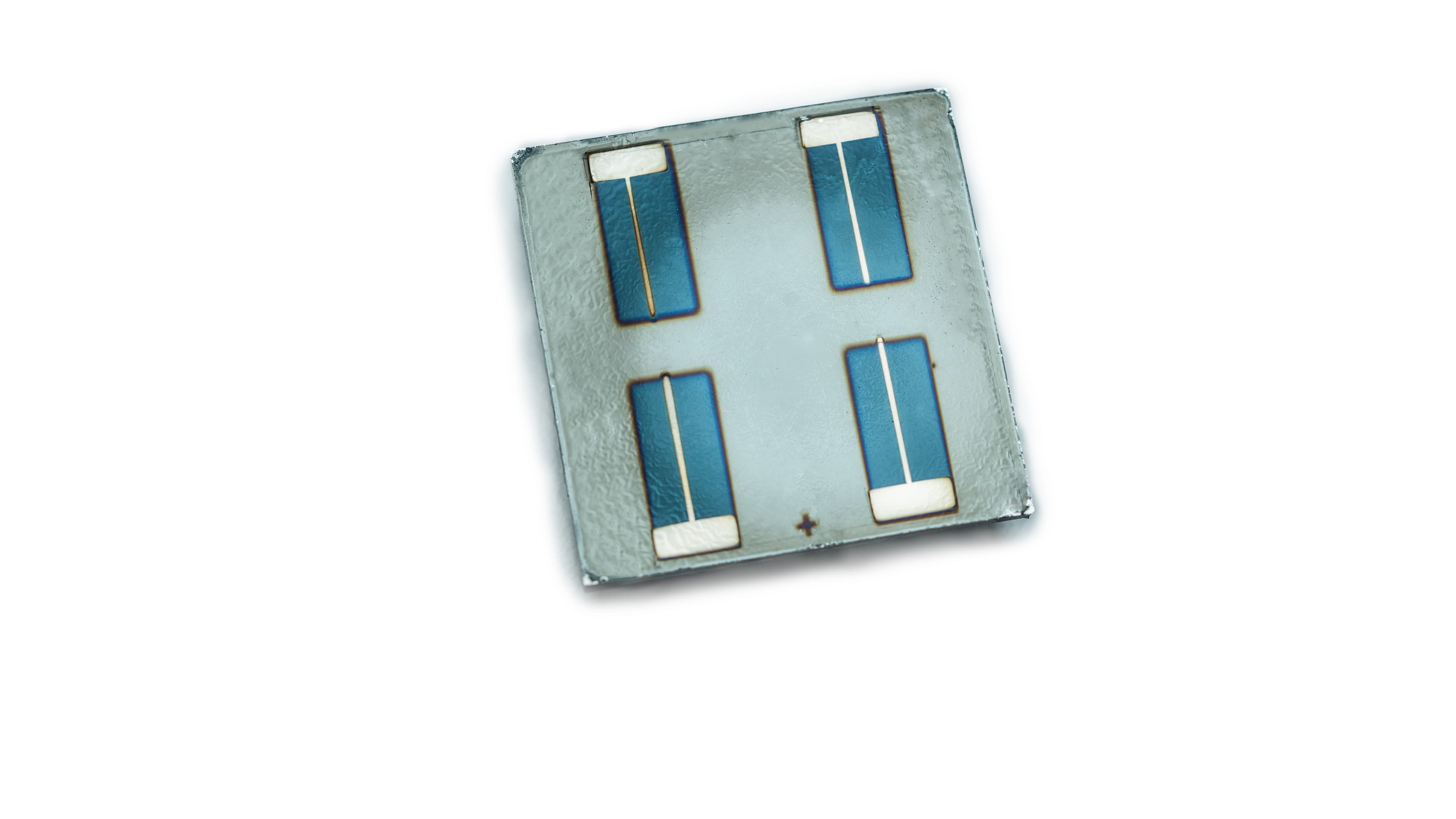
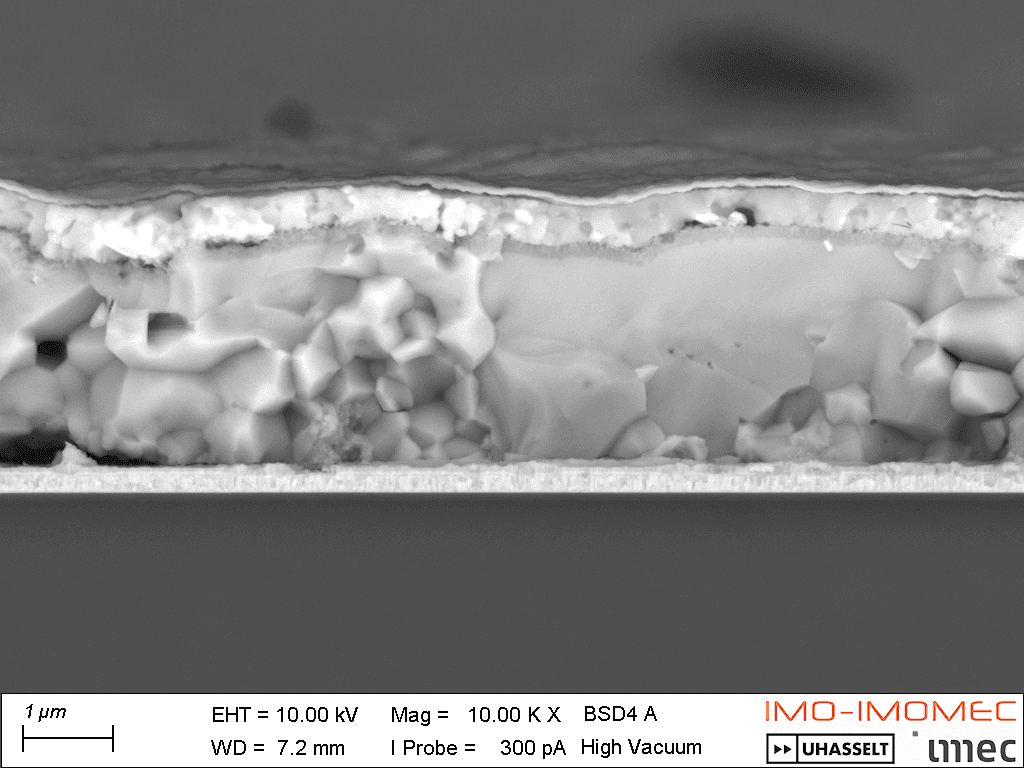
To address these challenges, imo-imomec/EnergyVille researchers turned to a technique called ultrasonic spray coating (USSC) to create uniform monolithic perovskite/CI(G)S cells. USSC employs an ultrasonic nozzle that transfers high-frequency sound waves into a liquid to create standing waves, dispersing the liquid into a fine mist of micron-sized droplets. By combining this nozzle with a jet shaping system, thin films of functional ink can be coated uniformly onto a multitude of substrates, including rough surfaces such as those from CI(G)S bottom cells. Additionally, it is a non-contact technology that doesn't exert pressure on underlying layers, unlike other solution processing technologies such as blade coating. The resulting monolithic perovskite/CIGS cell coated with this technique shows increased performance compared to the individual cells, with champion devices achieving a power conversion efficiency of 20.1 percent.
The results underscore the promising capabilities of ultrasonic spray coating in producing high-performance monolithic tandem devices. Further optimization, for example at the interface between the perovskite and hole transport layers, will boost this efficiency even more.
Ultrathin, large-area deposition with spray-on-screen coating
Nevertheless, USSC is still limited in depositing ultra-thin coatings without heat treatments of the materials to be deposited, which is not suitable for temperature-sensitive substrates. Moreover, certain functional layers in the photovoltaic stack, such as interface layers, passivation layers, or very thin transport layers, require a more precise thickness control. To address these challenges, imo-imomec/EnergyVille researchers adapted USSC into the spray-on-screen (SoS) technology, specifically for these ultra-thin layers in the stack. The technique applies USSC on a screen before bringing the screen into contact with the substrate, enabling the precise deposition of <15 nm coatings across substrates. SoS is currently also the only solution processing technology that can deposit uniform layers this thin on larger areas of several square meters, whereas spin coating, for example, is limited to 5x5 cm².
Thin-film solar cells as sustainable option for solar energy production
USSC and SoS coating techniques contribute to the sustainable production of thin-film tandem solar cells. These methods are recognized for their scalability and energy efficiency when compared to vacuum processing techniques. Unlike vacuum-based processes, USSC and SoS operate at ambient conditions, avoiding the high energy demands of creating and maintaining a vacuum environment.
Overall, thin-film tandem cells offer a more sustainable option for future solar energy production. Compared to traditional silicon panels, the production of thin-film tandem solar cells requires less energy and raw materials, leading to a similar Levelized Cost of Energy (LCOE) and a lower carbon footprint.
Want to know more?
- The tandem perovskite/CIS results were achieved in the PERCISTAND-project, a H2020 initiative led by imec.
- The USSC results were recently presented at the 2024 Tandem PV International workshop. Read more about the technique in following recent articles:
- J. Silvano, S. Hamtaei, P. Verding, B. Vermang, W. Deferme, “Investigating the fabrication of perovskite solar cells by ultrasonic spray coating: a design of experiments approach.” ACS Appl. Energy Mater 6, 7363−7376 (2023).
- J. Silvano, G. Birant, T. Oris, J. D’Haen, W. Deferme, B. Vermang, “Ultrasonic spray coating for the scalable fabrication of perovskite-on-chalcogenide monolithic tandem devices: approaching the 20% efficiency.” Solar Energy 277, 112738 (2024).
- Read more about the spray-on-screen technology:
- R.S.N. Kumar, A.V. Ramirez, P. Verding, P. Nivelle, F. Renner, J. D’Haen, W. Deferme, “Deposition of ultra-thin coatings by a nature-inspired Spray-on-Screen technology.” Commun Eng 2, 42 (2023).
Authors

Bart Vermang
Bart Vermang received his M.Sc. degree in physics from the University of Ghent and a Ph.D. degree in electrical engineering from the University of Leuven, both in Belgium. He performed his M.Sc. final research project at the Norwegian University of Science and Technology (NTNU), where his interest in renewable energy was triggered. After that, he obtained a Ph.D. for research in silicon photovoltaics (PV) at Imec - Belgium, followed by two personal Postdoctoral fellowships to work on thin-film PV. A Marie Skłodowska-Curie individual fellowship moved him to the University of Uppsala in Sweden, and a fellowship from the Flemish Research Foundation (FWO) returned him to imec. In 2016, Bart acquired a European Research Council (ERC) starting grant and became a professor at Hasselt University in Belgium. Currently, he is also coordinating Horizon 2020 project PERCISTAND, with a consortium of 13 international partners and a budget of 5 million EUR. Bart is a member of the Operational Board of EnergyVille, the Belgian Energy Research Alliance (BERA) board, the editorial board of the Solar Energy Materials & Solar Cells journal (Elsevier), and the Young Academy of Flanders.

Wim Deferme
Wim Deferme obtained an engineering degree in Applied Physics at the Technical University of Eindhoven in The Netherlands in 2003. He obtained a Ph.D. in Materials Physics at Hasselt University in 2009 on the surface termination of synthetic diamond. In 2009, as a postdoc, he started research in the field of Printable Electronics. Since February 2014, he is a Professor at Hasselt University, heading a group of 2 post-docs, 6 Ph.D. students, one full-time researchers, and several bachelor and master students in the field of “Engineering of Functional Materials.” His research activities are focused on the printing of functional materials on a wide variety of substrates by applying techniques such as inkjet printing, screen printing, ultrasonic spray coating and spray-on-screen printing. It is the aim of his research to optimize printing and coating techniques in combination with the engineering of functional materials for applications such as Organic Electronics, printed sensors for health monitoring, and stretchable electronics applications.

Gizem Birant
Gizem Birant is a physicist specializing in photovoltaic (PV) technology. She completed her B.S. in Physics Education in 2014 and M.Sc. in Physics in 2017 at Middle East Technical University (METU, Ankara), where she focused on silicon photovoltaics and published her first research paper. She then moved to Belgium for her PhD at Hasselt University, contributing to the ERC project "Uniting PV." Her research in thin film technology resulted in 26 published articles, including five as the first author. During her PhD, she has actively participated in numerous conferences and workshops, delivering four oral and five poster presentations.
Currently, as an FWO Postdoctoral fellow at Hasselt University—a highly competitive fellowship—Gizem Birant focuses on Tandem PV technology, merging and expanding her expertise in silicon and thin film technologies. In addition to her research, she supervises master and PhD students, fostering the next generation of scientists. Known for her commitment to innovation and collaboration, Gizem Birant continues to drive forward the understanding and application of photovoltaic technologies.
Discover more