Successful incorporation of highly efficient silicon heterojunction-based solar cells in curved surfaces
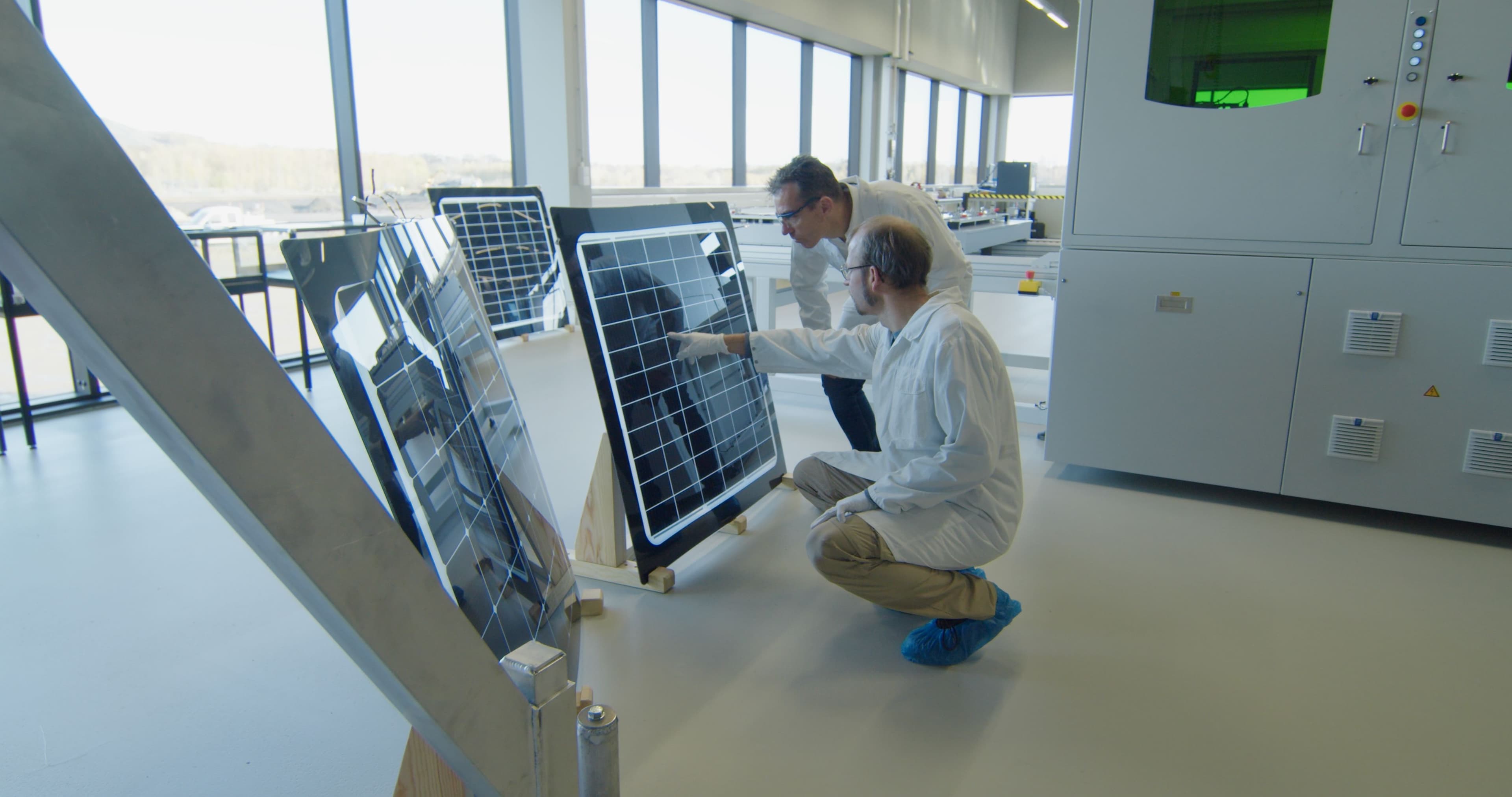
Imec, together with research and industry partners, has successfully integrated highly efficient silicon heterojunction-based solar cells into curved glass for solar roofs of electric vehicles.
Within the SNRoof project, researchers achieved an increase in efficiency of 6 percent compared to a conventional reference laminate, and a more uniform appearance.
Furthermore, these results offer promise for further efficiency gains and integration in applications ranging from roofs of electric vehicles up to integration into buildings (BIPV).
Solar panels have become an integral part of our urban environment. This marks a positive development, as the EU's target for renewable energy was raised to 45 percent by 2030 in March, effectively doubling the current European level of 22 percent. Concurrently, sales of electric passenger vehicles are growing exponentially. Once again, this signifies a positive evolution for our urban environment, as the automotive industry can play a key role in reducing global CO2 emissions - with a goal of reducing emissions by a third by 2030.
A green synergy between markets
The market already sees a synergy between these two trends: the integration of solar cells into an electric vehicle’s roof, allowing the car to partially charge itself in an environmentally friendly manner. An efficient ‘solar roof’ can enhance the driver’s comfort by reducing the dependency on the primary battery (i.e. less frequent charging, a longer battery life) and simultaneously relieve the electricity grid.
However, current solar roofs in passenger vehicles have limited power output, partly because of their small surface. Therefore, the additional driving range is only a few kilometers and grid unburdening relatively low. More efficient solar roofs are still under development and require, besides efficiency gains, a significant surface extension.
New generation of highly efficient solar panels
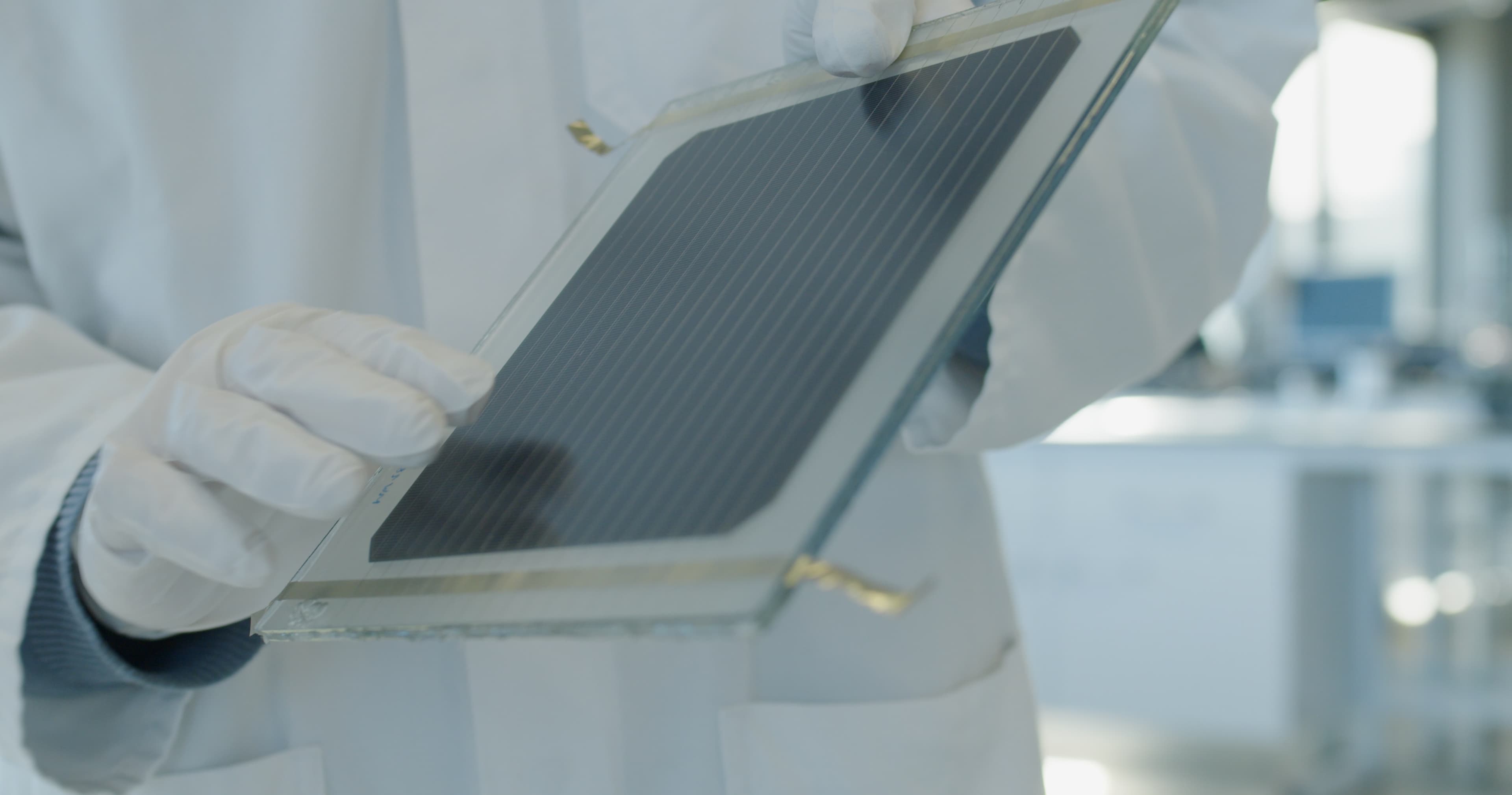
Imec and UHasselt (partners in EnergyVille), as well as industry partners AGP eGlass, IPTE Factory Automation, Arkema Franse Sa, and the Michiels Group joined forces to examine the reliability and safety of a new generation of highly efficient solar panels, for use in curved glass car roofs. Aesthetics, which are not to be neglected in the automotive industry, were also considered.
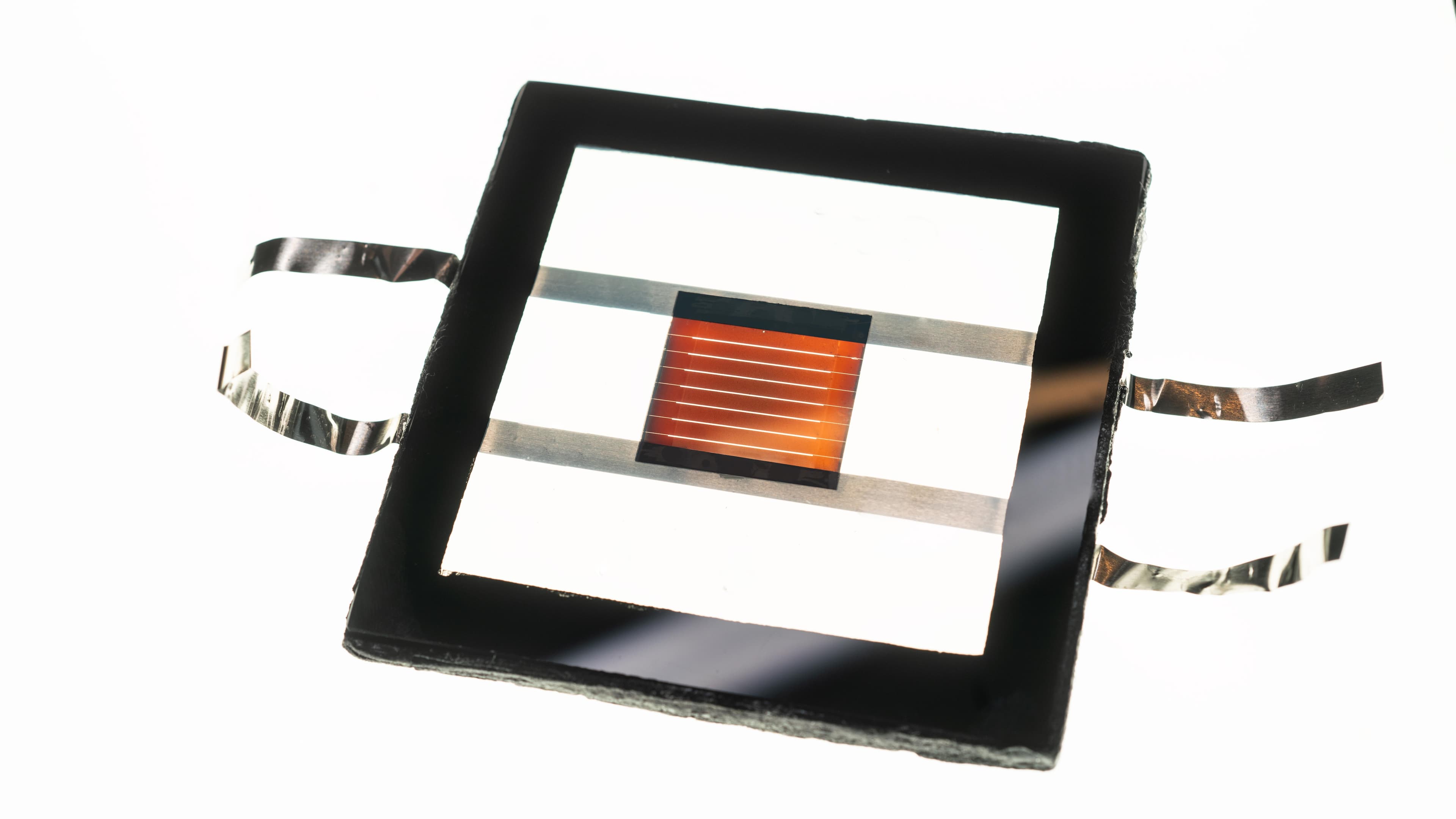
The result is a successful integration of imec's ‘multi-wire’ interconnection in curved glass solar panels, employing silicon heterojunction-based (SHJ) solar cells and a low-temperature process (below 180°C). Unlike traditional series configurations, the new setup provides significant freedom in the (electrical) layout of the solar panel. This allows the available surface to be maximally utilized and thus generate maximum electrical energy, with a minimum of additional materials and/or costs. Furthermore, the multi-wire configuration allows for a parallel connection of solar cell circuits, maximizing the energy production of cells with different orientations to the sun (due to the curved surface) and achieving energy gains in the shade. As a result, the innovative interconnection achieved an efficiency gain of 6 percent, compared to a more conventional setup of laminate, based on half-cut PERC strings.
A wide range of applications
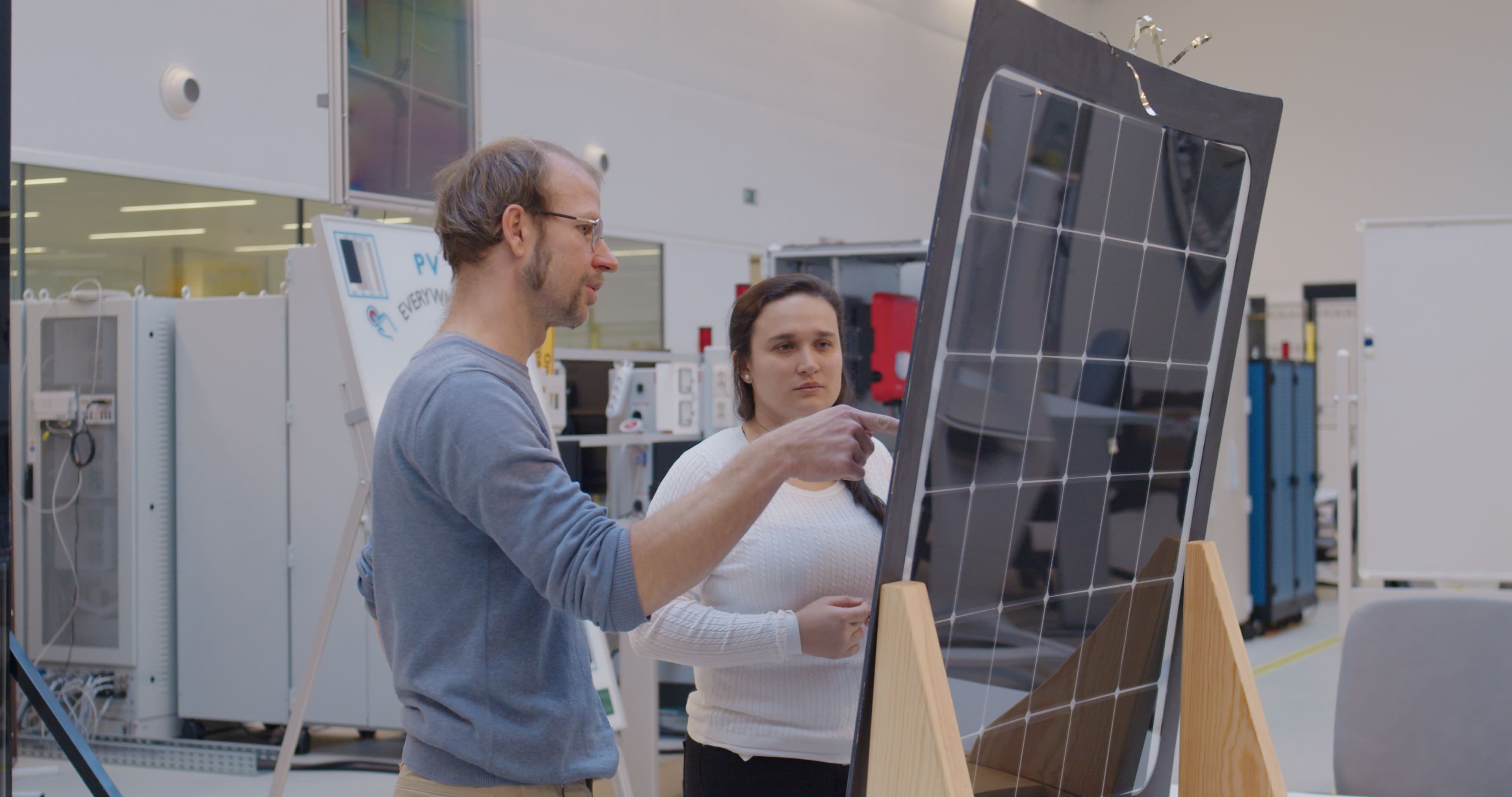
Thanks to the collaboration with industry experts in car glass manufacturing (AGP eGlass), factory automation (IPTE Factory Automation), specialty materials (Arkema France Sa) and optical coating (Michiels Group), viable outcomes were demonstrated for highly efficient solar roofs. The consortium explored the addition of optical coatings, further increasing efficiency, while also combating the heating of the solar panels and the cabin. This increases passenger comfort and reduces air conditioning consumption. Furthermore, the integration of promising tandem cells was demonstrated, combining the electricity production of silicon and perovskite solar cells. The automation of the (originally manual) production process of the multi-wire interconnect foils was also achieved, allowing current and future innovations to be implemented cost-effectively in glass solar panels.
"Further upscaling is absolutely necessary," says Jonathan Govaerts, project coordinator and senior researcher at imec and UHasselt within EnergyVille. "But what makes this project so unique is the proof-of-concept for a wide range of applications. The flexibility of the multi-wire interconnection for the integration of solar cells into different surfaces and various configurations, is impressive. Combined with the next generation of solar cells, solar roofs on trucks are not far off, and the technique also opens the door to other applications, such as integration into metal hoods, lightweight structures, or challenging architectural forms."
Combined, these results facilitate the necessary output gains in next-generation solar cells for integration in roofs and other surfaces of electrical vehicles.
Towards a climate-neutral environment
While current grid arrangements of solar panels are not likely to disappear from the urban landscape, progress in solar cell efficiency and module design enable new schemes for seamless integration, leveraging thin-film PV technologies and multi-junction architectures, as we work towards a climate-neutral future.
This article was published earlier in PV magazine.
SNRoof in an imec.icon research project funded by imec and the Flemish Agency for Innovation & Entrepreneurship. The imec.icon SNRoof consortium consisted of industry partners AGP eGlass, IPTE Factory Automation, Arkema France Sa, and Michiels Group, as well as the research centers imo-imomec and imec/EnergyVille (TFPV, PVCM, Energy systems research groups).
Authors
Jonathan Govaerts
dr. Jonathan Govaerts received his Ph.D. in electrical engineering in 2009 from Ghent University, Belgium. Since then, he has been working in Si PV at imec on interconnection and encapsulation of wafer-based silicon solar cells. With technical interests relating to both cells and modules in topics across the full range from fabrication, characterization and simulation to reliability and application, he is currently involved as senior researcher at imec-UHasselt/EnergyVille in various projects developing technologies towards the ubiquitous integration of photovoltaics.