Belgium is gearing up for the quantum internet
January 17 marks the kick-off of an extensive project on quantum communication infrastructure (QCI) in Belgium, which will be carried out by the BeQCI consortium that unites different university research groups, research centers, governmental agencies and private companies (*see the full list below). In a period of 30 months the consortium will deploy a quantum communication network in Belgium, with several quantum links along dedicated optical fibers, between different nodes all over the country (Brussels region, Leuven, Ghent, Hasselt, Redu) and potentially even across the borders with Luxemburg and the Netherlands. This will allow the validation, development and assessment of the practical usability of different systems and protocols for quantum key distribution. The BeQCI project has an allocated budget of 6 million euros and is co-funded by the EU through the Digital Europe program and the Federal Science Policy Office (Belspo) through the Federal restart and transition plan.
Quantum communication is one of the new emerging quantum technologies that taps directly into quantum physics, which is the physics of the microscopic world. In recent times our physical grasp on this microscopic world has reached a new level, with the ability to control and detect individual particles, like atoms, electrons and photons. This makes it possible to foster the different quantum principles and phenomena - often at odds with our everyday experience – for developing new technological applications. Specifically, in the context of quantum communication, it was discovered that quantum physics allows for quantum key distribution (QKD), a new type of cryptography.
The essence of QKD protocols is that the natural laws of quantum physics itself, with for instance the ‘no-cloning principle,’ according to which quantum information cannot be copied, provide a framework for secure communication. In our global digital world secure communication is of course of primordial importance. Furthermore, future quantum computers could break some of the classical cryptographic schemes that are currently widely used. This motivated the EU to launch EuroQCI, a massive technological and scientific effort for developing a global European QKD network, for which BeQCI forms the Belgian branch. In the short term this network will primarily involve QKD applications. The longer term vision is that such network could serve as the backbone for a quantum internet, providing long-distance connections between quantum devices like quantum computers and quantum sensors.
BeQCI is inviting governmental agencies, non-profit institutions and private companies to realize different test cases for QKD communication of sensitive information, between datacenters, hospitals and banks. Moreover, the BeQCI consortium combines a world leading expertise in integrated photonics and in both classical and quantum cryptography. This will allow to contribute to the development of new QKD systems and protocols and to provide a sober evaluation of the pros and cons of QKD, considering issues like cost, security and scalability. Finally, from a broader perspective, the BeQCI project provides a substantial impetus for the emerging field of quantum technologies in Belgium.
(*) Participating organizations: imec, BELNET, MULTITEL, BELSPO (research centers & governmental agencies), UGent, KULeuven, UCL, ULB, UHasselt, RMA (academic institutions), Thales (company).
Discover more


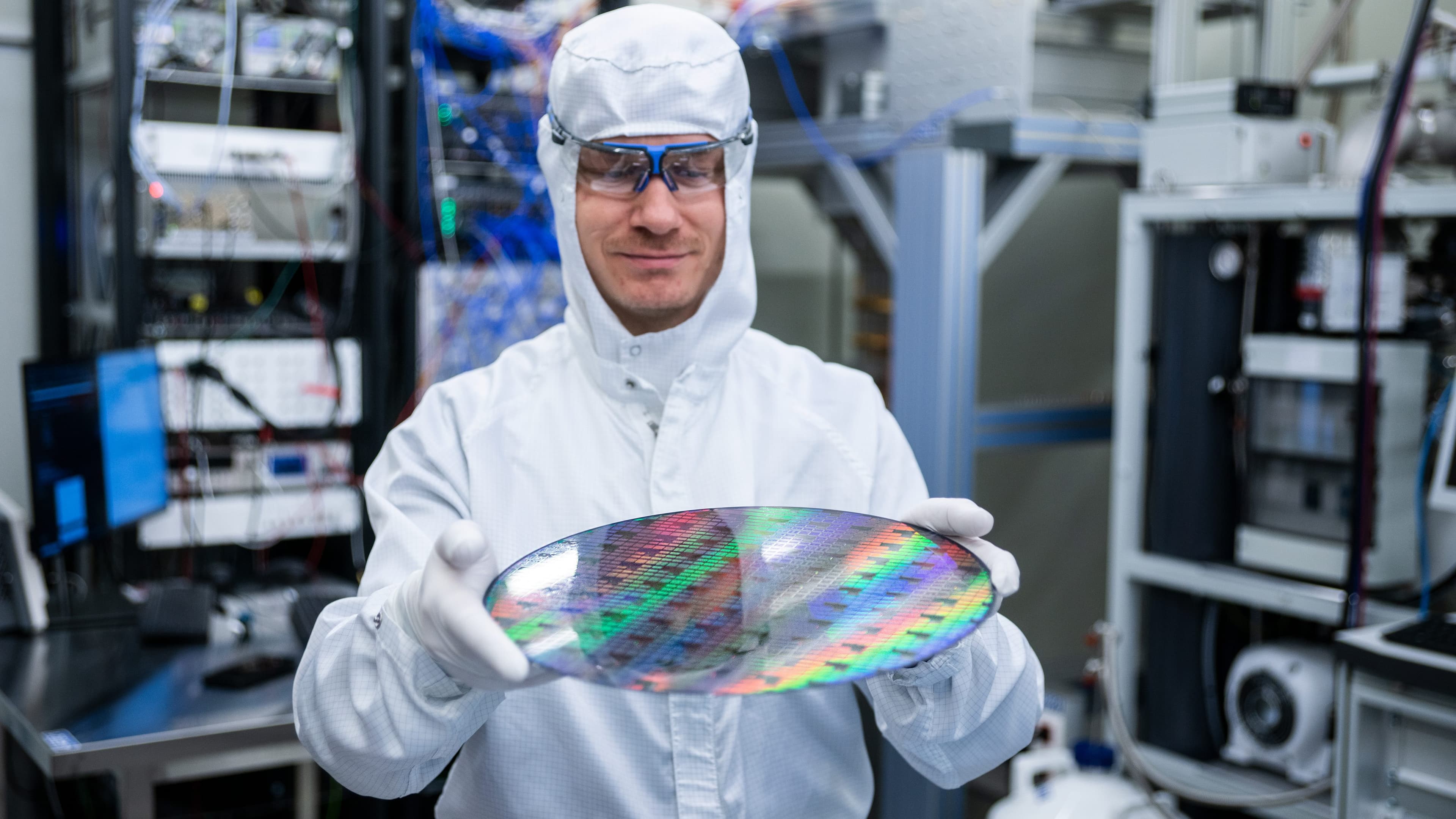
Anton Potočnik receives prestigious ERC Consolidator Grant to enable scalable superconducting quantum computers with qubit readout at near absolute zero (milliKelvin) temperatures
Read more
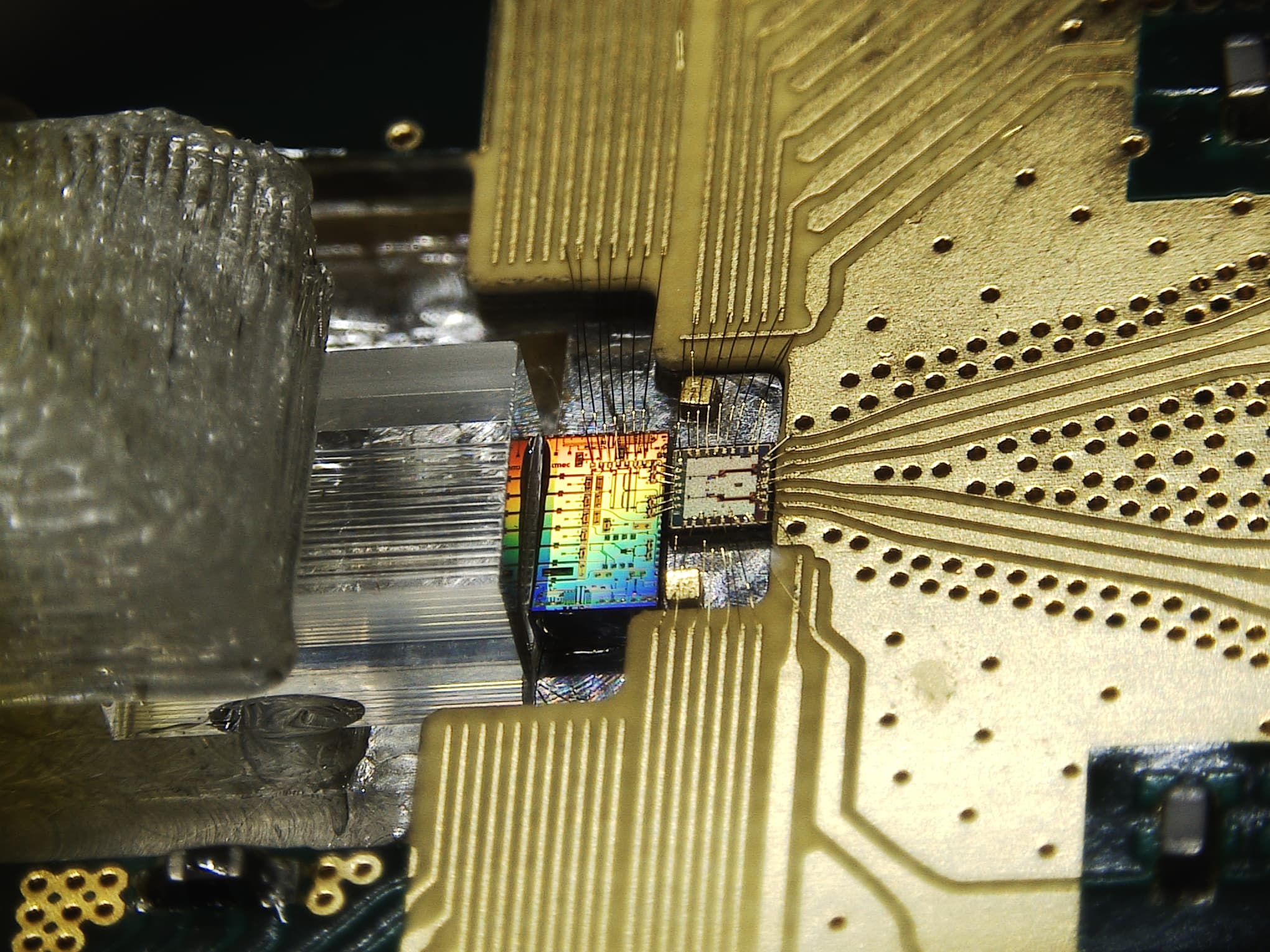
New leap in Belgian quantum communication infrastructure: imec, UGent and Belnet realize first QKD links
Read more