The consumption of digital media is increasing – but is this synonymous with problematic use?

Introduction
Newly launched research from imec - Ghent University shows that almost everyone in Flanders has one or more devices enabling them to be constantly online, wherever they go: less than 7% indicate that they have no smart devices in their homes. On the downside of things, more than one in three Flemish citizens is heavily dependent on their smartphone and/or social media. And 13% claims to suffer from ‘digibesity’ (depending on both, and often reporting a significant impact on their daily activities – such as time loss at work / school). We asked Lieven De Marez (imec - mict - Ghent University), the author of imec’s annual digimeter report, to shed some light on how the 'homo digitalis' uses digital media. Moreover, his colleague Tony van Rooij (imec - mict - Ghent University) explains how the use of digital media affects us, and how we can deal with this.
Digital is the ‘new normal’…
“The annual digimeter report is an initiative of imec.livinglabs and its researchers in the department of Media, Innovation and Communication Technologies (mict) from imec - Ghent University. Each year, it reports on media usage in Flanders. A first remarkable outcome of the new digimeter is that almost everyone in Flanders now has the capability to be online whenever, wherever. Less than 7% say they have no smart, connected devices in their homes,” says Lieven De Marez.
Meanwhile, the use of social media is still on the up. Eight out of ten Flemish people use at least one social media channel every month (as opposed to 72% in 2015), 26% use as many as four each month. Facebook is still at number one (69% use Facebook monthly).
And those figures are pretty similar to what is happening in other countries: a study from the Pew Research Center, for example, shows that – in 2016 – approximately seven in ten American adults used at least one social media channel, with Facebook being the biggest player: about 68% of the adult population uses it (and over 90% of them do this at least on a weekly basis).
Lieven De Marez: “For many people – in Flanders and beyond – digital is the new normal. But that makes us raise the question: do we actually use all these smart services and devices in an intelligent way?”
… but the ‘digibesity’ trend is worsening
When looking at how we deal with this new digital reality, there is still quite some work to do: in line with the growing number of smartphones and the increasing use of social media, the digibesity trend (characterized by an overconsumption of digital media) is also continuing apace.
“In the 15 to 39-year-old category, for example, one in three digimeter respondents indicate that they are dependent on their smartphone; and four in ten feel dependent on social media. One quarter are dependent on both, and suffer from digibesity; across all age categories, digibesity impacts 13% of Flemish people,” says Lieven De Marez.
“Foreign studies as well show that many people respond positively to the question whether they are addicted to their smartphone or social media,” adds Tony van Rooij. “But obviously, lower numbers of ‘problem users’ will be recorded when factors are taken into account such as a lack of sleep or not doing homework due to smartphone usage. In that case, the number of problem users is more likely to fluctuate around 3 to 5%. And if you zoom in on serious performance problems caused by digital media usage, you will end up with numbers well below 1%. In other words: not all digimeter respondents claiming to suffer from digibesity should be considered actual patients.”
According to Tony van Rooij, the digimeter results are absolutely no reason to suddenly unleash a kind of 'moral panic': “Revoking children’s access to the internet or to digital devices, for example, is not a good idea: it hinders them in the development of digital skills they need badly. Which doesn’t mean, however, that parents shouldn’t keep an eye out. It's all about finding a healthy balance...”
The remedy: skills and self-regulation
Obviously, the use of digital media has an impact on us. Smart devices and services make good use of a number of mechanisms – such as push notifications – to stimulate the creation of habits.
“These push messages train us to respond to impulses – and this has both a physical and a psychological impact. Incoming messages disturb our concentration, and a lot of willpower is required to not directly have a look at them,” Tony van Rooij says.
“On the other hand, no causal link has been established yet between techno-stress and burn-outs. High-quality and open international research indicates that media usage does not necessarily have a linear relationship with the occurrence of mental problems. It's just a matter of avoiding any extremes and teaching people to consciously deal with the technology that surrounds us. After all, let’s not forget that most of the time this is not an issue. For us, the digital revolution might have been a world innovation, but for children – for example – technology simply is part of their lives. For them, it is as common as using a car which comes with all its advantages and disadvantages.”
On the upside of things, Lieven De Marez and his team have noticed a form of self-regulation emerging.
“Teenagers, in particular, are already displaying far more awareness of these issues – for example by cutting themselves off from the digital tsunami during exam periods (in the library),” he says. “And people in their twenties and thirties as well – who have proven to more likely have a problematic relationship with digital media – have started to actively face their ‘digital demons’.”
“They actually need to regain control of digital technology. However, they too are starting to adapt their behavior, for example by putting away their smartphones during meetings and conversations or turning off push messages,” he concludes.
Want to know more?
The digimeter report is an initiative of imec.livinglabs and its researchers in the department of Media, Innovation & Communication Technologies (mict) of imec - Ghent University. The digimeter is produced based on self-reported data from an annual survey that is presented to a – statistically representative – group of more than 2,100 respondents in Flanders (aged 15 years and older). The data are used in the context of independent scientific research, and are therefore not shared for commercial purposes. More info: www.imec.be/digimeter
Authors

Lieven De Marez
Lieven De Marez is a professor ‘Media, Technology & Innovation’ & ‘User-centric innovation research’ at the department of communication sciences at Ghent University. At the department he is heading the multidisciplinary research group for Media, Innovation & Communication Technologies (MICT), affiliated to imec, the world-leading R&D and innovation hub in nanoelectronics and digital technologies. Within imec, Lieven is the founding father of the Digimeter (http://www.imec-int.com/en/digimeter) and methodological innovator for user involvement, testing and validation in all stages of innovation development. Leveraging on the combination of imec’s panels and insights, and the broad methodological expertise of social science research methodologies (self-reporting, ideation, computational social sciences, network analysis, digital methods, forecasting, physiological measures, human-computer interaction, quality of experience, adoption potential assessment, willingness-to-pay …) Lieven and his team are widely recognized for assessing the potential and impact of technological innovations in a broad diversity of markets. He published >100 articles, was already the promotor of 10 PhD’s.

Tony van Rooij
Tony van Rooij holds a PhD in Psychiatry/Clinical Psychology from the Erasmus University Medical Centre/IVO Addiction Research Institute in Rotterdam (2011). His PhD dealt with excessive use of video games and was titled ‘Online Video Game Addiction: Exploring a New Phenomenon’. In his current research projects at imec - mict - UGent, he focuses on the use of video games for health, responsible online gambling, and parental control of children’s gaming behavior.
Discover more


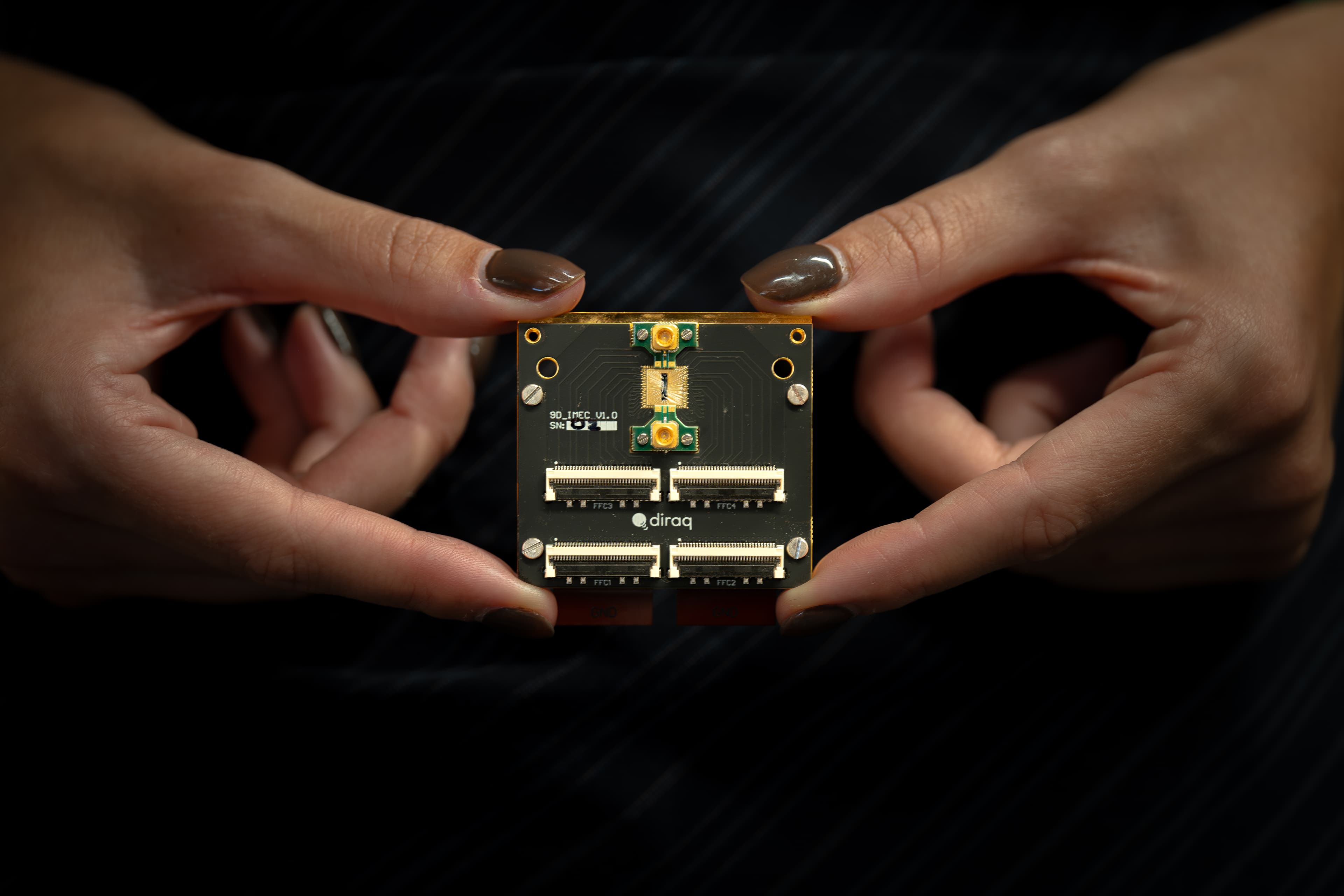
Imec and Diraq demonstrate first coherent operation of eight silicon MOS spin qubits fabricated in a 300mm CMOS-compatible foundry process
Read more
Neural telemetry breakthrough: new chip delivers ten-fold compression while preserving signal integrity
Read more