Technical Pride: Measuring blood oxygen levels using integrated photonics
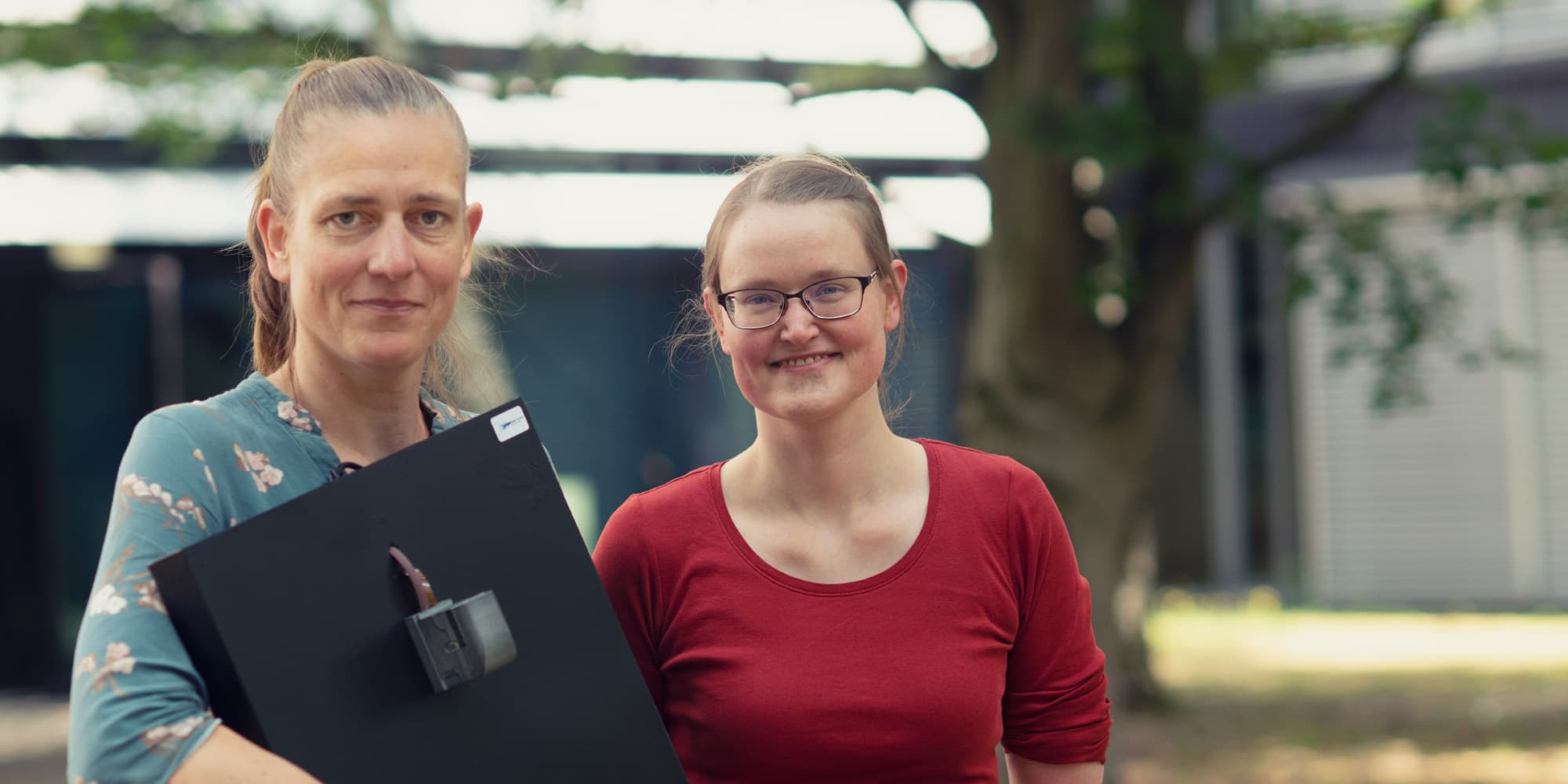
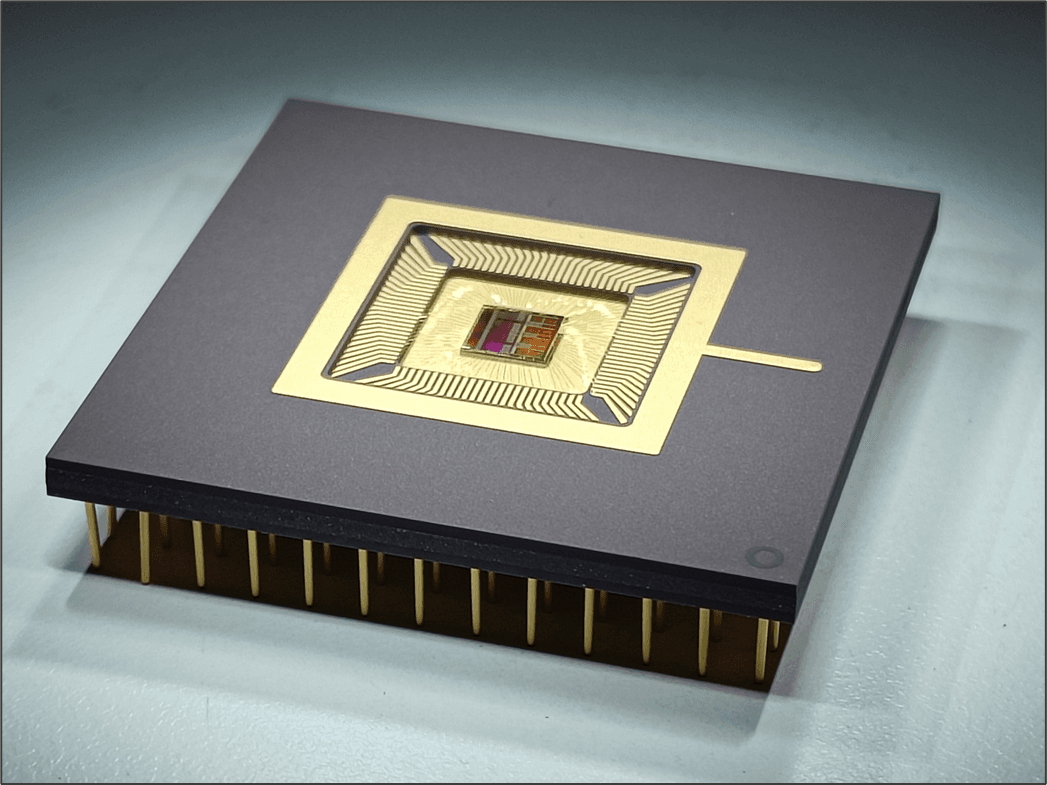
In this article, we take a dive into the work of some of our researchers. This time, we will be highlighting the work carried out by Evelien Hermeling, Principal Member of Technical Staff at imec at the Holst Centre, and her team on the “speckle monitor.” This innovative optical device measures heart rate and blood oxygen levels independently of light absorption. Evelien presented the technology, which is based on integrated photonics, during Dutch King Willem-Alexander’s working visit to the Holst Centre in April this year.
Wavy pattern
“Current saturation meters, such as the finger clips doctors use in hospitals, measure the amount of oxygen in the blood, based on the amount of red and infrared light your finger absorbs. For every heartbeat, you get more and less blood in your finger, resulting in a wavy pattern, allowing you to determine the blood oxygen level. It is an easy and non-invasive method. However, during the Covid pandemic, it was found that high values were incorrectly measured in people with darker skin color. A saturation of 95 percent or higher is normal. On the other hand, if this oxygen saturation of your blood falls below 90 percent, that means there is a deficiency. In someone with a darker skin tone and a low saturation of 80 percent, the finger clip then measures a higher value of, say, 93. This may result in that person being treated later than they should have been, given that the severity of their condition has not been properly assessed.”
A more robust measurement method
The speckle monitor measures independently of light absorption. Even if the bright light from a smartphone were to shine into the monitor, it would not affect the measurement. “Our method is based on speckle, a kind of noise pattern, a ‘scattering’ that occurs when you use a laser instead of an ordinary light. If you quantify that, you get a similar wavy pattern that changes under heart rate impulse.”
“With current meters, people with darker skin tones are often presented with incorrect results. This is because you get less light back when you shine a light on them. This makes sense because their skin is darker. However, because speckle is insensitive to absorption, skin color doesn’t affect any results. The technology therefore provides an opportunity to develop a more robust method for measuring blood oxygen levels.”
Making a real difference
Evelien is working with a full team to develop the speckle monitor. Optical engineer Lena Schnitzler, who has been with imec since last September, has also been studying the principle. Lena: “I am mainly responsible for the optical components, or, in other words, for the design of the complete setup. When I started last year, the essential components were already there. Building on that foundation, I began to refine and expand the setup to enable higher resolutions and produce enlarged images. The current setup is about the size of a shoebox. I am focused on both reducing the size and exploring the integration of additional features, such as using different wavelengths to gain additional insights.”
Lena received her Ph.D. in multi-model microscopy and holography, before going on to complete a postdoc in optical spectroscopy and microscopy at Ruhr University Bochum, Germany. She chose to work at imec because it offers the perfect mix of research and close collaboration with industrial partners. Lena: “At imec, you get the freedom to explore your research interests, while at the same time working towards creating working prototypes. It is a great feeling to be working on projects that can make a real difference in people’s lives.”
Getting the most out of yourself through collaboration
Another difference from academia is that Lena is able to pool other people’s knowledge to develop prototypes together. She explains: “As an academic, you carry out most of your work independently, from writing code to building the electronics. here, however, our team comprises a biomedical engineer, who focuses on measurements, software engineers, who go from physiological data to interpretations and algorithms, and hardware engineers, who work on minimizing a large laser to some kind of finger clip or some other application. We support each other and can always come to one another if we have questions. This not only accelerates our research, but it also gives us a broader base to innovate and explore different possibilities.”
This collaboration is what Evelien values most. As a basketball player, she understands the significance of teamwork. “Each individual has a distinct role and unique qualities. Mutual appreciation is essential.” In her profession, Evelien takes pleasure in bringing people with different areas of expertise together and motivating them. “To get the most out of themselves and achieve great results together. That’s what it is all about for me.”
Authors
Evelien Hermeling
Evelien Hermeling received her PhD degree in 2009 at the Maastricht University, the Netherlands. After a few years of post-doc at Maastricht University, she started as senior researcher at imec in 2015 and became principal scientist in 2019. Her drive is to bridge the gap between hardware-, software- and biomedical engineers and the medical doctors. She is leading the competence team biomedical algorithms and models within imec-Netherlands.
Discover more
Neural telemetry breakthrough: new chip delivers ten-fold compression while preserving signal integrity
Read more

Next-gen UWB radio technology to enable radar sensing, data streaming, and advanced ranging applications
Read more