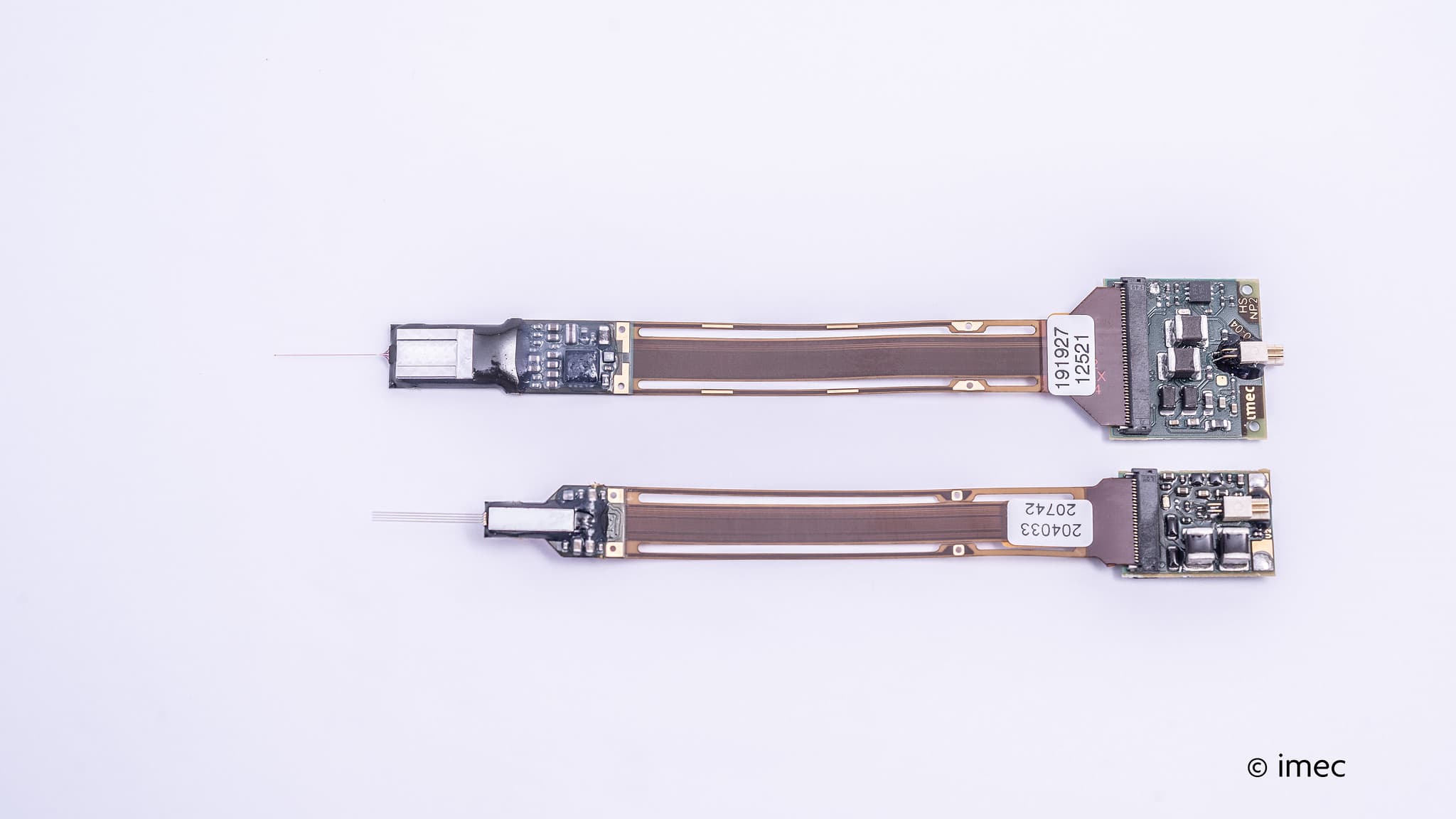
Latest Neuropixels probes can track neurons over weeks
A new generation of miniature recording probes can track the same neurons inside tiny mouse brains over weeks — and even months.

LEUVEN (Belgium), April 16, 2021 — The new tools build on the success of the original Neuropixels probes released in 2017 and currently used in more than 400 labs. Neuropixels 2.0 are much smaller — about a third the size of their predecessors. They’re designed to record the electrical activity from more individual neurons and have the unique ability to track this activity over extended time periods. That makes them especially useful for studying long-term phenomena like learning and memory in small animals such as mice, says Tim Harris, a senior fellow at HHMI’s Janelia Research Campus who led the project. Harris and his colleagues describe the advance in a paper published online April 16 in the journal Science.
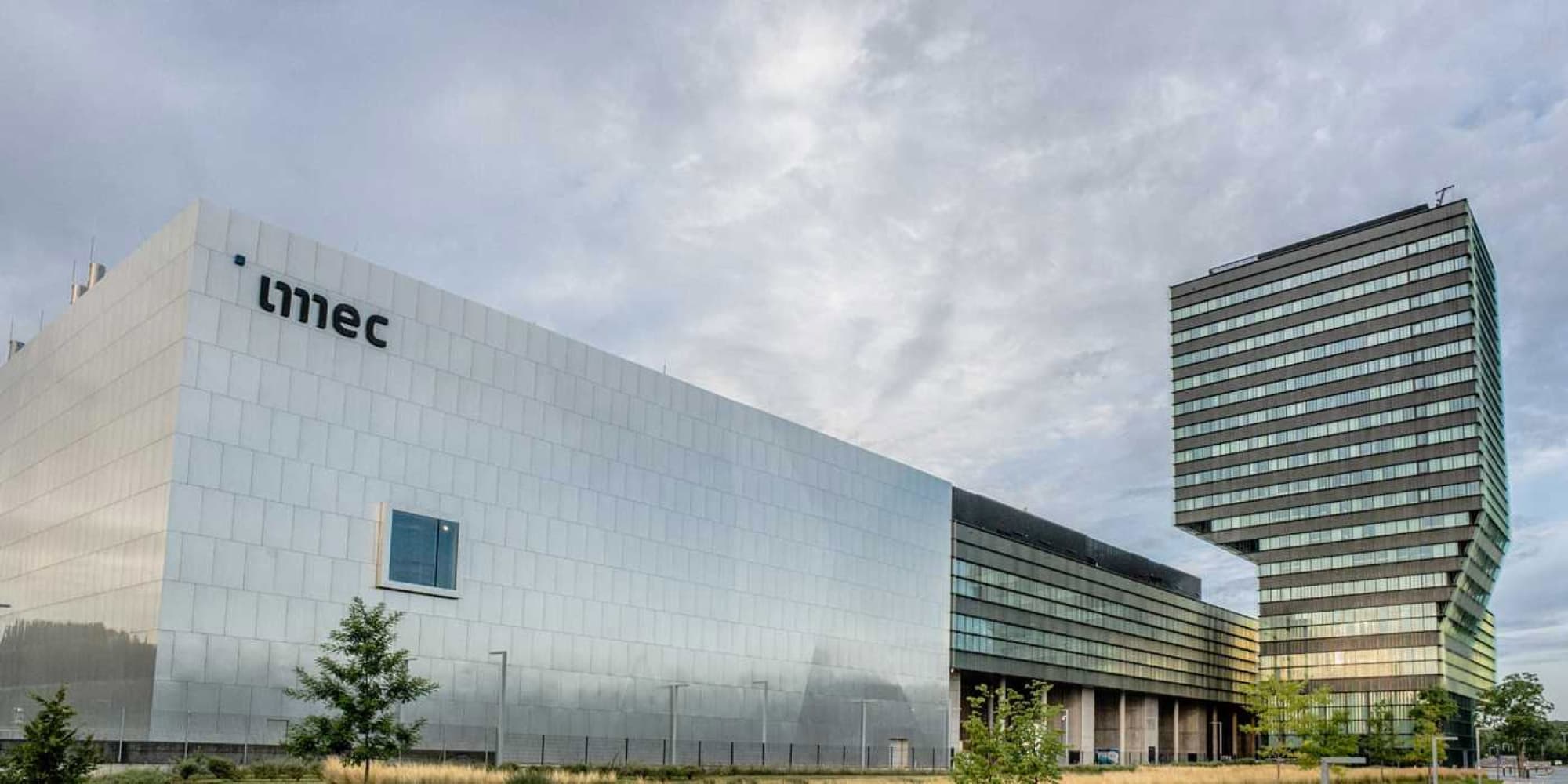
Neuropixels 2.0’s advances come from several key innovations, Harris says. Janelia scientists and engineers developed new ways to process the data. Strategic changes to the layout of the probes helped make them better suited to certain tasks. And engineers at imec, the non-profit nanoelectronics research center that manufactures the probes, used imec’s proprietary technology to design, develop, and fabricate the probe.
“This unique platform allowed us to design a small probe with high recording-site density and long-term stability,” notes Barun Dutta, Chief Scientist at imec.
Tracking the same neuron over time has been an ongoing challenge, says Harris, because brains move a little bit whenever animals move. Each Neuropixels probe contains multiple recording sites—spots that pick up neural signals. The latest version has more of these sites, and they’re spaced closer together. Like positioning many microphones around a crowded room, the design change makes it more likely that if a neuron jiggles out of reach of one recording site, it’ll still be picked up by a neighboring one. Anna Lebedeva, a student in Matteo Carandini’s lab at University College London, collected data showing this effect. And Janelia group leader Marius Pachitariu developed software to track the neurons.
While the original Neuropixels probes have just one narrow metal piece that enters the brain, the new version has four. That means the recording sites are distributed over a wider area, allowing for more efficient recording in many important brain areas, especially thin layers within the brain.
In experiments in mice, the team found they could use two probes to pick up electrical signals from more than 6,000 different sites, says first author Nick Steinmetz, a researcher at UCL and the University of Washington.
Prototypes of the latest version are currently being tested by neuroscientists in labs across the world and being tweaked and fine-tuned in response to users’ experiences. Harris and his colleagues hope that the product will be ready for widespread distribution sometime in 2022.
The Neuropixels 2.0 consortium is led by Tim Harris at the Howard Hughes Medical Institute’s Janelia Research Campus, and includes funding from and scientists at University College London (UCL), at the Norwegian University for Science and Technology (NTNU) in Trondheim, Norway, at Neuroelectronics Research Flanders (NERF) in Leuven, Belgium, and at the Champalimaud Centre for the Unknown in Lisbon, Portugal.
About imec
Imec is a world-leading research and innovation hub in nanoelectronics and digital technologies. The combination of our widely acclaimed leadership in microchip technology and profound software and ICT expertise is what makes us unique. By leveraging our world-class infrastructure and local and global ecosystem of partners across a multitude of industries, we create groundbreaking innovation in application domains such as healthcare, smart cities and mobility, logistics and manufacturing, energy and education.
As a trusted partner for companies, start-ups and universities we bring together more than 4,000 brilliant minds from almost 100 nationalities. Imec is headquartered in Leuven, Belgium and has distributed R&D groups at a number of Flemish universities, in the Netherlands, Taiwan, USA, and offices in China, India and Japan. In 2019, imec's revenue (P&L) totaled 640 million euro.
Further information on imec can be found at www.imec-int.com.
Imec is a registered trademark for the activities of imec International (IMEC International, a legal entity set up under Belgian law as a “stichting van openbaar nut”), imec Belgium (IMEC vzw supported by the Flemish Government), imec the Netherlands (Stichting IMEC Nederland, imec Taiwan (IMEC Taiwan Co.), imec China (IMEC Microelectronics (Shanghai) Co. Ltd.), imec India (IMEC India Private Limited), imec San Francisco (IMEC Inc.) and imec Florida (IMEC USA Nanoelectronics Design Center Inc.).
About KU Leuven
KU Leuven is a leading European university dedicated to research, education and service to society. It is a founding member of the League of European Research Universities (LERU) and has a strong European and international orientation. Its sizeable academic staff conducts basic and applied research in a comprehensive range of disciplines. University Hospitals Leuven, its network of research hospitals, provides high-quality healthcare and develops new therapeutic and diagnostic insights with an emphasis on translational research. The University welcomes more 50,000 students from over 140 countries. Its doctoral schools organize internationally oriented PhD programmes for over 4,500 doctoral students. More info: www.kuleuven.be/english.
About VIB
Basic research in life sciences is VIB’s raison d’être. VIB is an independent research institute where some 1,500 top scientists from Belgium and abroad conduct pioneering basic research. As such, they are pushing the boundaries of what we know about molecular mechanisms and how they rule living organisms such as human beings, animals, plants and microorganisms. Based on a close partnership with five Flemish universities – Ghent University, KU Leuven, University of Antwerp, Vrije Universiteit Brussel and Hasselt University – and supported by a solid funding program, VIB unites the expertise of all its collaborators and research groups in a single institute. VIB’s technology transfer activities translate research results into concrete benefits for society such as new diagnostics and therapies and agricultural innovations. These applications are often developed by young start-ups from VIB or through collaborations with other companies. This also leads to additional employment and bridges the gap between scientific research and entrepreneurship. VIB also engages actively in the public debate on biotechnology by developing and disseminating a wide range of science-based information. More info can be found on www.vib.be.
Citation:
Nicholas A. Steinmetz, Cagatay Aydin, Anna Lebedeva, Michael Okun, Marius Pachitariu, Marius Bauza, Maxime Beau, Jai Bhagat, Claudia Böhm, Martijn Broux, Susu Chen,
Jennifer Colonell, Richard J. Gardner, Bill Karsh, Fabian Kloosterman, Dimitar Kostadinov, Carolina Mora-Lopez, John O’Callaghan, Junchol Park, Jan Putzeys, Britton Sauerbrei,
Rik J. J. van Daal, Abraham Z. Vollan, Shiwei Wang1, Marleen Welkenhuysen, Zhiwen Ye, Joshua Dudman, Barundeb Dutta, Adam W. Hantman, Kenneth D. Harris, Albert K. Lee, Edvard I. Moser, John O’Keefe, Alfonso Renart, Karel Svoboda, Michael Häusser,
Sebastian Haesler, Matteo Carandini, and Timothy D. Harris. “Neuropixels 2.0: A miniaturized high-density probe for stable, long-term brain recordings.” Science, published online April 16, 2021. Doi: 10.1126/science.eabf4588
Discover more
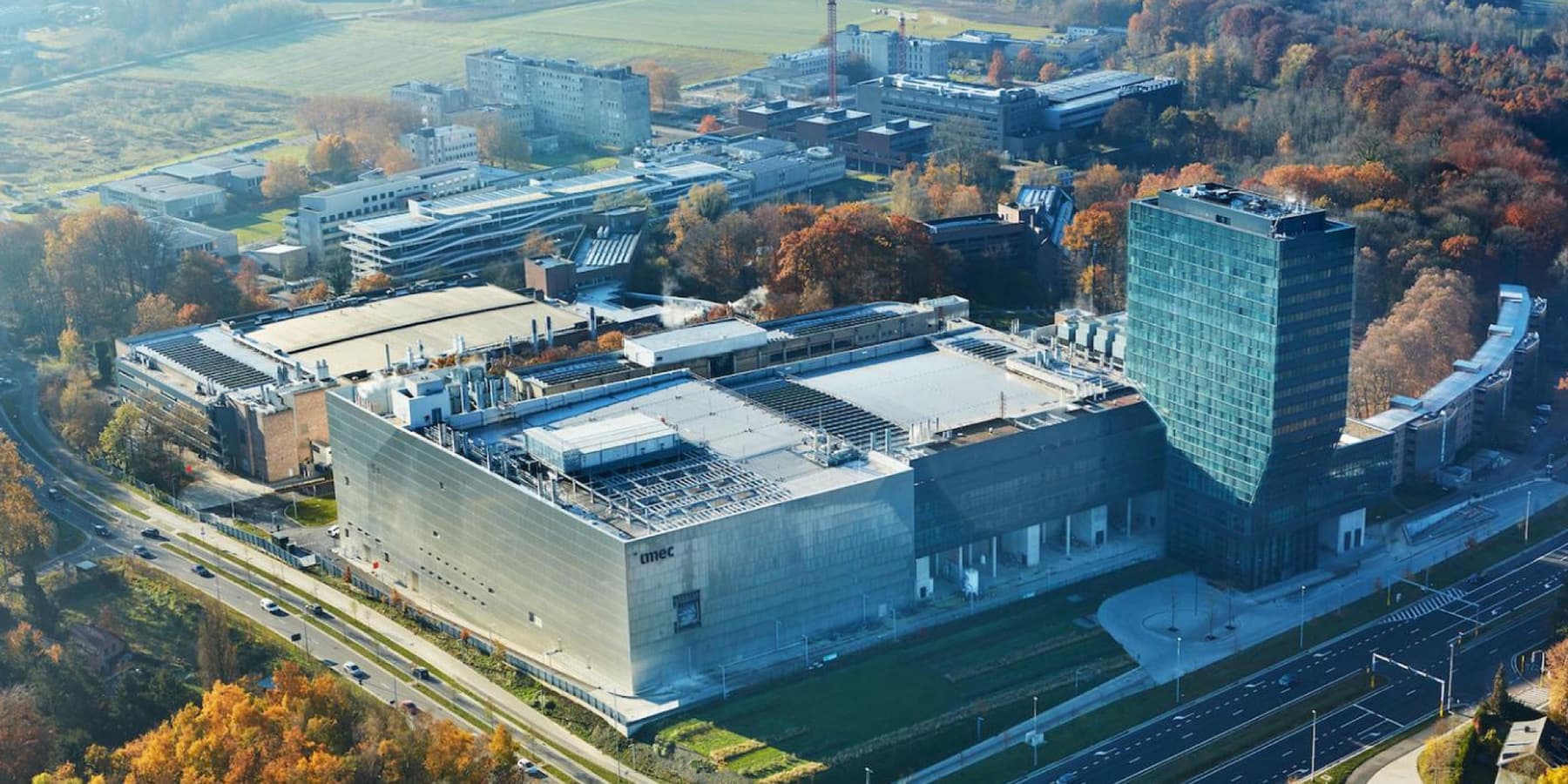
Imec participates in ELENA L.E.U.V.E.N. project and is committed to the evolution towards a climate neutral Leuven
Read more



Belgian security researchers from KU Leuven and imec demonstrate serious flaws in Tesla Model X keyless entry system
Read more