Imec Pioneers Ultra-Wideband Transmitter Chip That Pushes Data Rates up to 1.66Gb/s with Milliwatt Power
ISSCC ’22 contribution confirms that UWB technology is capable of supporting low-power, high-bitrate applications – from smart glasses delivering tomorrow’s AR/VR experiences, to wireless telemetry modules for intracortical sensing
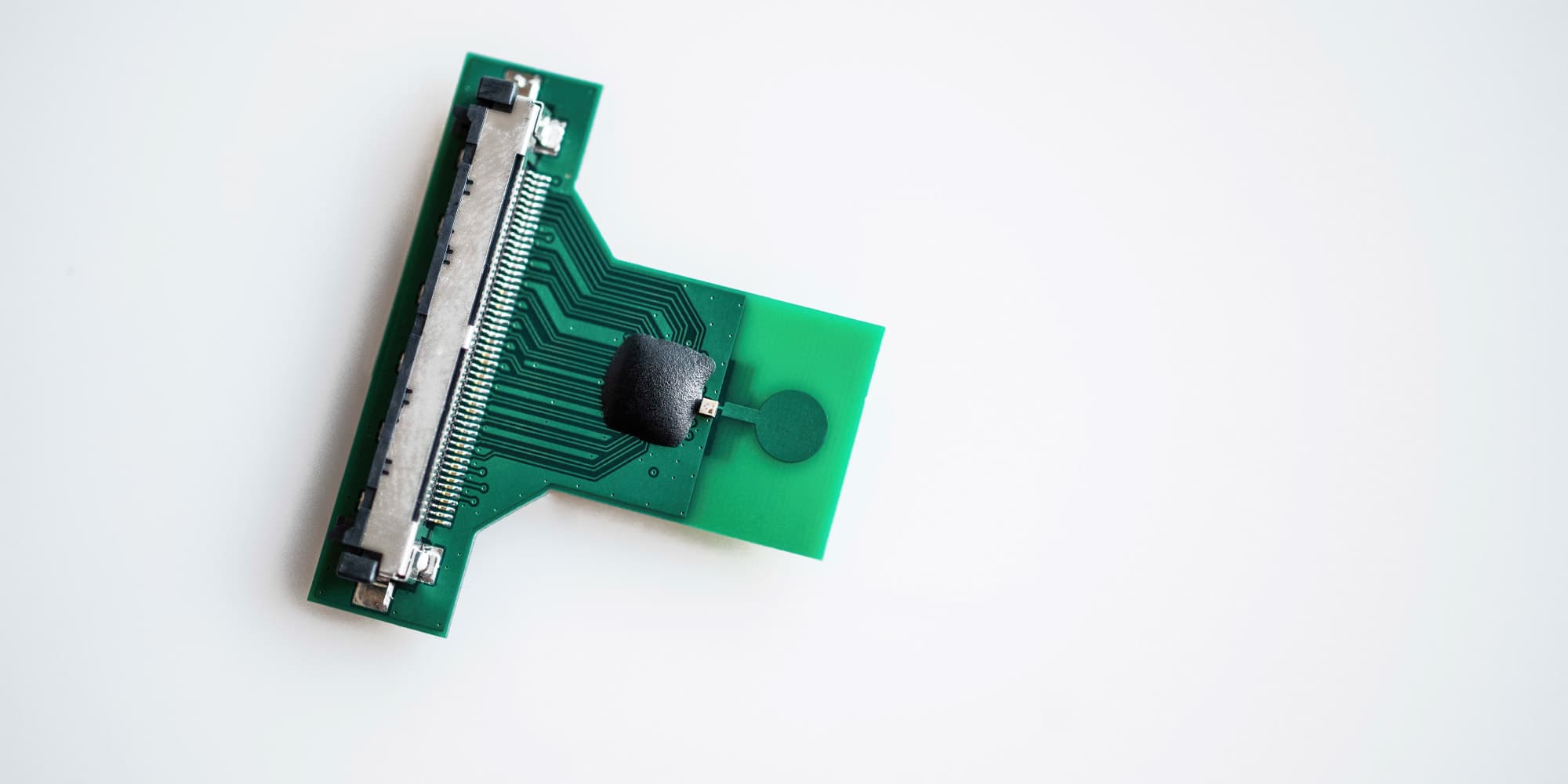
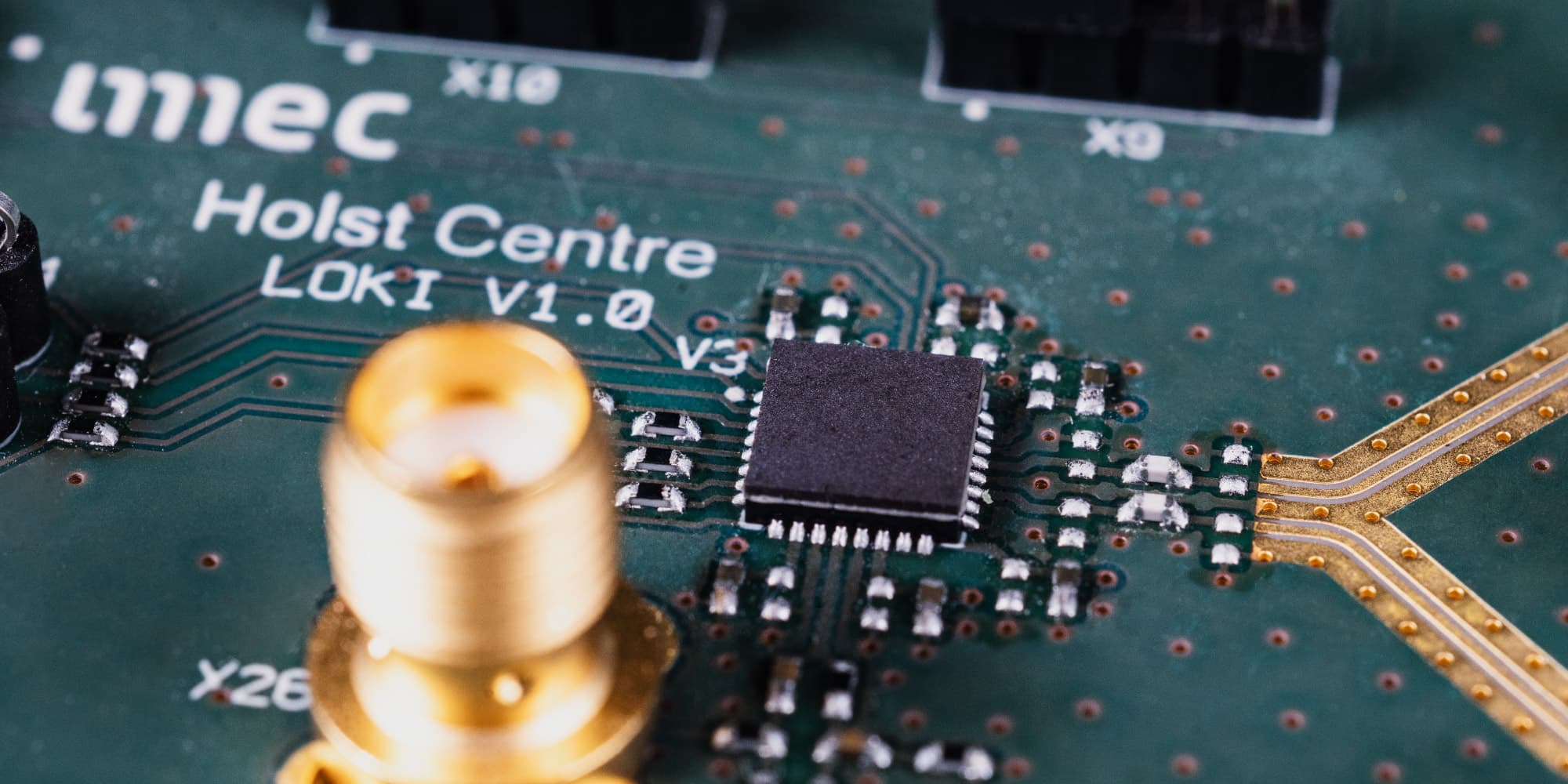
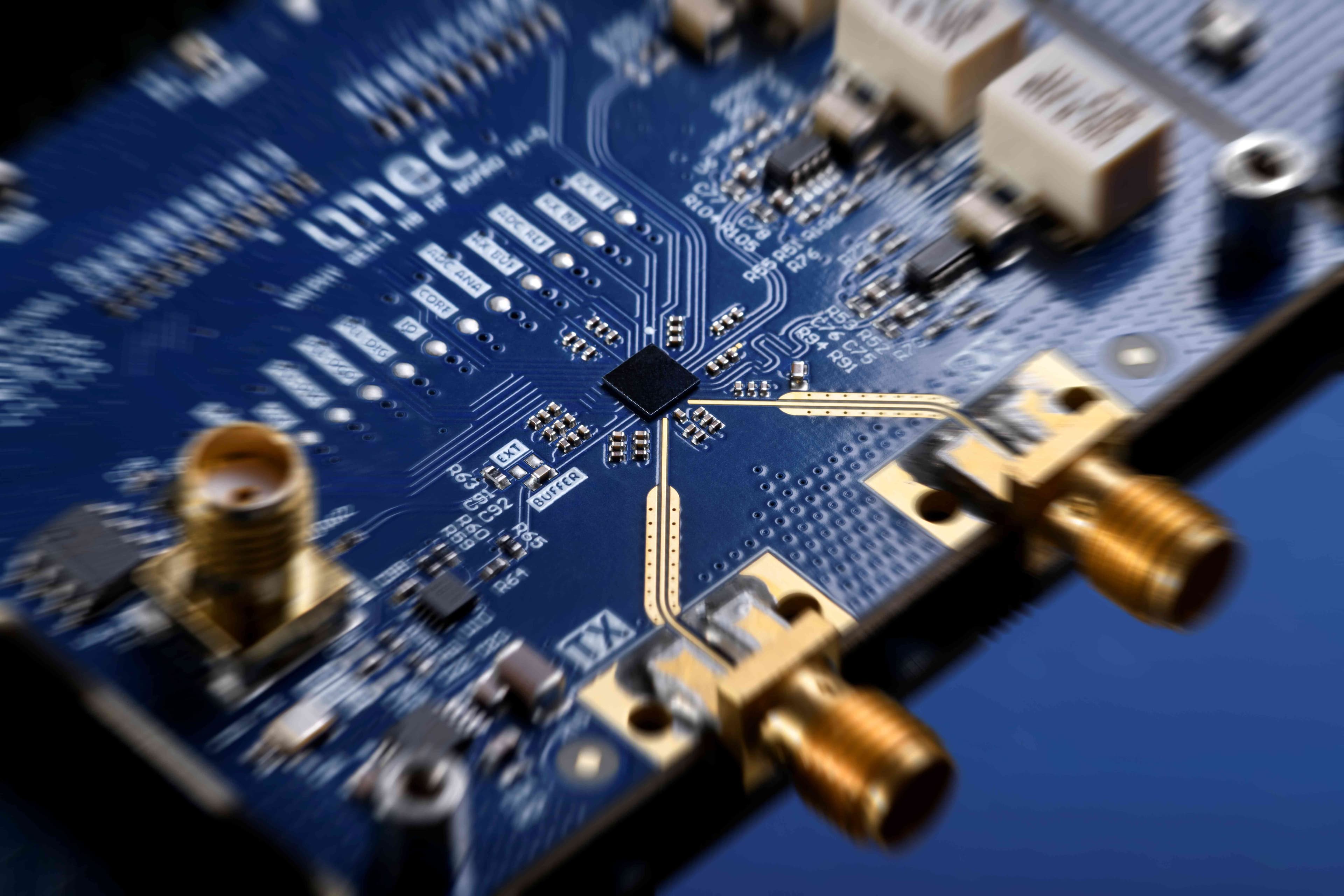
LEUVEN (Belgium), February 24, 2022 — At this week’s International Solid-State Circuits Conference (ISSCC), imec – a world-leading research and innovation hub in nanoelectronics and digital technologies – presents a new impulse-radio ultra-wideband (IR-UWB) transmitter chip that could redefine the future of UWB technology.
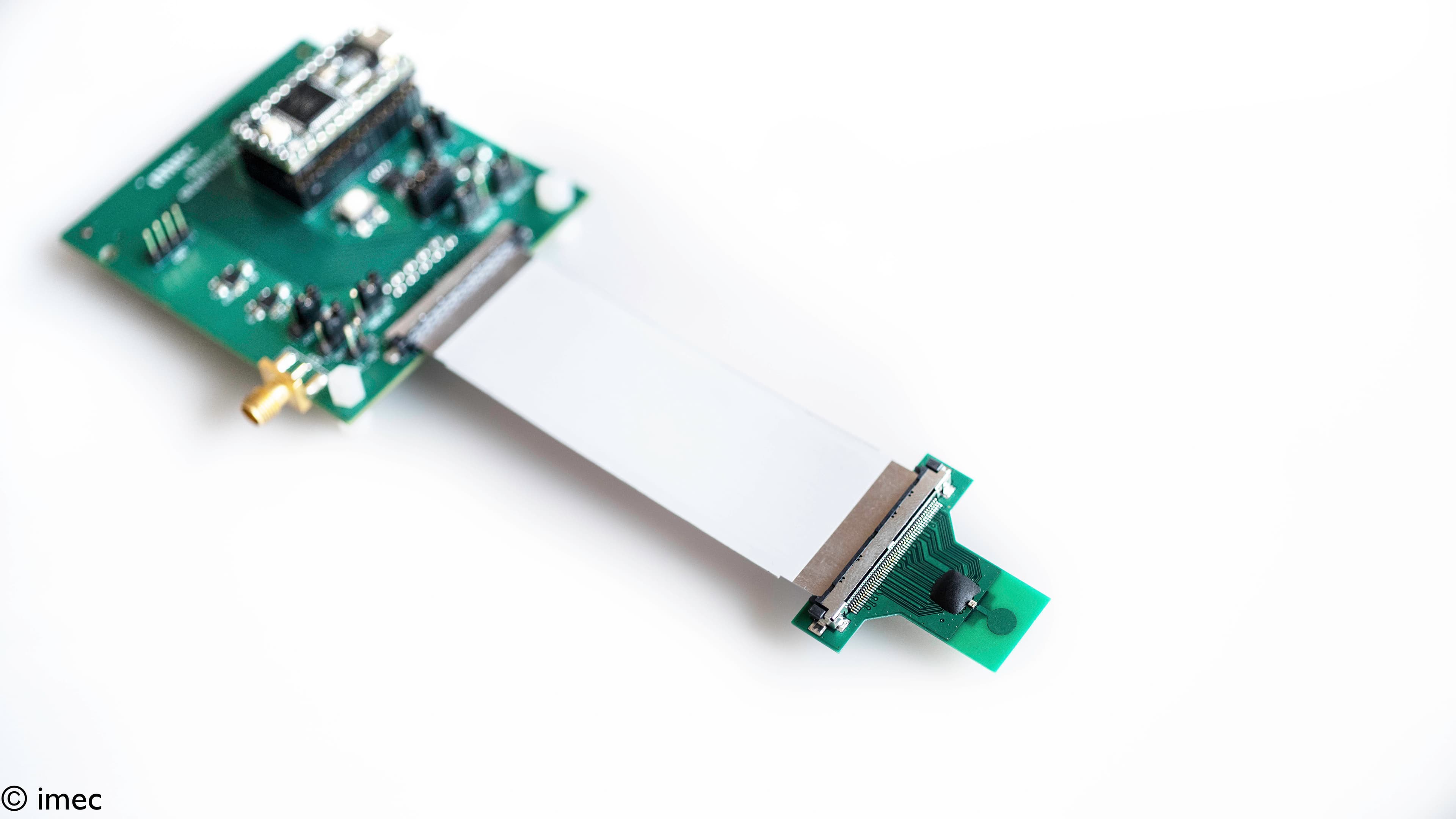
Fabricated in 28nm CMOS and occupying an area of merely 0.155mm², imec’s IR-UWB chip comes with a power consumption of less than 10 milliwatt (mW). Moreover, it has shown to accommodate data transfer rates of 1.66Gb/s. This is 50 times the speed supported by today’s UWB standard. The chip’s performance strengthens researchers’ belief that UWB is perfectly capable of expanding beyond its typical ‘accurate and secure ranging’ use cases.
Today, ultra-wideband communication technology is commonly used to support applications such as secure keyless entry for automotive and hospitality, indoor localization, and asset tracking. Yet, experts have been claiming for some time that UWB’s potential is much larger than that.
“Based on this firm belief, we continue to push the boundaries of UWB”, says Christian Bachmann, program director of UWB at imec. “It has led us to investigate whether the technology is effectively capable of supporting low-power, higher bitrate applications, which in turn has resulted in the development of a brand-new ultra-wideband transmitter chip.”
Complex modulation schemes help exploit UWB’s untapped potential
Imec’s new IR-UWB chip was fabricated in 28nm CMOS and has a surface area of only 0.155mm². It accommodates data transfer rates up to 1.66Gb/s for in-body and short-range applications. This is more than 50 times faster than what is possible using the current IEEE 802.15.4z standard. Despite the record high bitrates it supports, the transmitter comes with a power consumption of less than 10 milliwatt (mW). And its energy efficiency of 5.8pJ/b is at least an order of magnitude improvement over Wi-Fi.
To achieve those higher data transfer rates, the chip leverages more complex (and even combined) modulation schemes that build on imec’s expertise in developing all-digital phase-locked loops (ADPLLs) and digitally-controlled power amplifiers. To enable those hybrid impulse modulation schemes at the lowest possible footprint, researchers developed a highly energy efficient and low jitter ring oscillator in combination with a low-power polar transmitter.
From immersive AR/VR experiences to neuroscientific research
These promising results prove that UWB is indeed capable of supporting a wide range of new applications that combine the need for high data transfer rates at short distances with very low energy consumption, and a small form factor.
“A matching use case includes the next generation of smart glasses to enable immersive AR/VR experiences”, Bachmann says. “And neuroscientific research could benefit from these new insights as well, powering high bitrate and miniaturized wireless telemetry modules for intracortical sensing purposes. In each of these cases, UWB could become a strong contender to Wi-Fi technology – as the latter typically comes with a much larger footprint and more complexity.”
Now, further research and standardization efforts are required to mature this technology and so the world can reap its benefits. To this end, imec welcomes partners to join its UWB R&D program and extensive partner network.
Imec’s new IR-UWB chip will be presented and demonstrated at ISSCC ‘22. More details at www.isscc.org. To discover more about imec’s widely acclaimed UWB R&D program, please visit https://www.imec-int.com/en/5G-and-wireless-iot-communication/ultra-wide-band-uwb-technology
About imec
Imec is a world-leading research and innovation center in nanoelectronics and digital technologies. Imec leverages its state-of-the-art R&D infrastructure and its team of more than 5,000 employees and top researchers, for R&D in advanced semiconductor and system scaling, silicon photonics, artificial intelligence, beyond 5G communications and sensing technologies, and in application domains such as health and life sciences, mobility, industry 4.0, agrofood, smart cities, sustainable energy, education, … Imec unites world-industry leaders across the semiconductor value chain, Flanders-based and international tech, pharma, medical and ICT companies, start-ups, and academia and knowledge centers. Imec is headquartered in Leuven (Belgium), and has research sites across Belgium, in the Netherlands, Taiwan and the USA, and offices in China, India and Japan. In 2020, imec's revenue (P&L) totaled 680 million euro.
Further information on imec can be found at www.imec-int.com.
Imec is a registered trademark for the activities of imec International (IMEC International, a legal entity set up under Belgian law as a “stichting van openbaar nut”), imec Belgium (IMEC vzw supported by the Flemish Government), imec the Netherlands (Stichting IMEC Nederland), imec Taiwan (IMEC Taiwan Co.), imec China (IMEC Microelectronics (Shanghai) Co. Ltd.), imec India (IMEC India Private Limited), imec San Francisco (IMEC Inc.) and imec Florida (IMEC USA Nanoelectronics Design Center Inc.).
Discover more

Neural telemetry breakthrough: new chip delivers ten-fold compression while preserving signal integrity
Read more
Next-gen UWB radio technology to enable radar sensing, data streaming, and advanced ranging applications
Read more