Imec and Ghent University Present a Smart Contact Lens Mimicking the Human Iris to Combat Eye Deficiencies
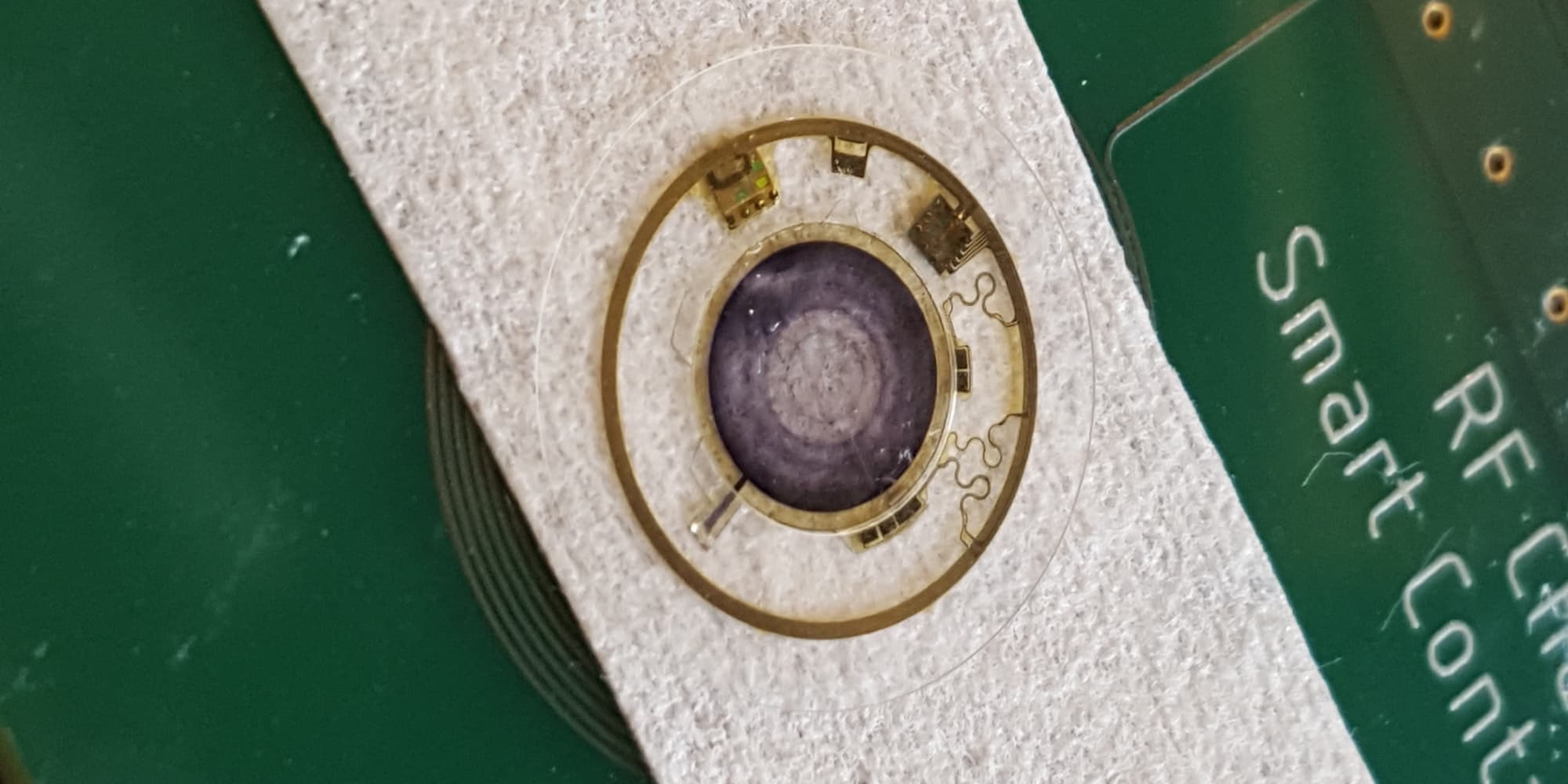
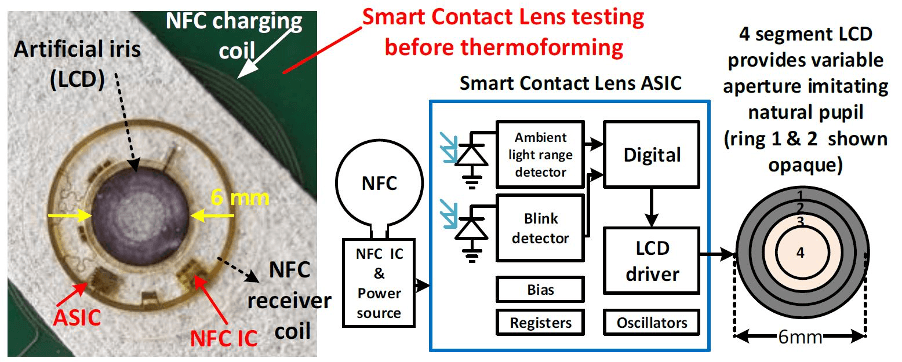
Ghent (Belgium), September 4, 2020 — Imec, a world-leading research and innovation hub in nanoelectronics and digital technologies and CMST (an imec-affiliated research group at Ghent University), together with their partners the Instituto de Investigación Sanitaria Fundación Jiménez Díaz (Madrid, Spain) and Holst Centre (an open innovation initiative from imec and TNO, the Netherlands) today presented an artificial iris embedded in a smart contact lens. The iris aperture is tunable through concentric rings on an integrated liquid crystal display (LCD). The smart contact lens is designed to operate for an entire day thanks to an ultra-low power design, offering a practical solution for people who suffer from human eye iris deficiencies like aniridia, high order aberrations like keratoconus, and light sensitivity or photophobia. The first performance assessment of the artificial iris is reported today in Scientific Reports from Nature, demonstrating its potential to expand the visual sharpness, decrease optical aberrations and reduce the amount of light entering the eye in a dynamic manner. The prototype presented today will be further developed into a medical device within the framework of the spin-off incubation initiative Azalea Vision, from imec and Ghent University.
The human iris controls the pupil size in response to light, hence regulating the amount of light that reaches the retina. Patients suffering from human eye iris deficiencies like aniridia, higher order aberrations like keratoconus, and light sensitivity or photophobia, which is highly prevalent in patients with chronic migraine, and Dry-Eye Syndrome (DES) could use this platform inside a contact lens. The prevalence for these groups adds up to more than 20 million patients. Current solutions such as contact lenses with a fixed iris, artificial iris implants or glasses with variable transparency, do not entirely mimic the normal functionality of the iris. For example, they do not affect the depth-of-focus, hence impeding a sharp vision. The artificial iris lens is capable of dynamically changing the pupil size, bringing back two levels of functionality of the eye, being light adaptation and expanded depth-of-focus.
Currently the Azalea Vision team is focused on validating this device with patients and volunteers under clinical investigations in order to provide a functional, robust and safe device for diverse eye disorders with light sensitivity and lack of visual sharpness.
“By combining our expertise on miniaturized flexible electronics, low-power ASIC design and hybrid integration, we have demonstrated the capacity to develop a solution for people who suffer from iris deficiencies."
“By combining our expertise on miniaturized flexible electronics, low-power ASIC design and hybrid integration, we have demonstrated the capacity to develop a solution for people who suffer from iris deficiencies, higher order aberrations and photophobia, a common yet debilitating symptom seen in many neuro-ophthalmic disorders”, says researcher prof. Andrés Vásquez Quintero at imec/UGent. “Our smart contact lens can control the level of incoming light mimicking a human iris and offering a potential solution to vision correction – by expanding depth-of-field with automatic control of pupil size. This way, our approach can surpass current solutions to combat human eye iris deficiencies. Its beneficial optical effects will be further clinically validated and developed into a medical device.”
“It is imec’s aim to create added value for the society and bring our research to the market”, said Luc Van den hove, president and CEO of imec. “We are convinced that this artificial iris prototype has all the potential to become a game changer in ophthalmic treatment. Therefore, we have launched an incubation project together with imec.xpand to fully support the team’s ambition to mature and validate the technology and support their efforts to commercialize via a strong business case as a spin-off.”
“The Azalea Vision initiative adds to our longstanding track record of creating spin-off’s in the photonics and microsystems area”, said Rik Van de Walle, rector of Ghent University. “Many of these new companies target important medical problems and several more startup initiatives are in preparation.”
About Azalea Vision
Azalea Vision is a spin-off initiative currently incubating at imec/UGent. Azalea Vision focuses on smart contact lens solutions for unmet clinical needs (e.g. high light sensitivity and lack of visual sharpness, among others). It builds on more than 12 years of top research performed at imec and UGent based on stretchable electronics, liquid crystal technology and low-power ASIC design. Smart contact lens technology is the base for future developments from active vision correction to biochemical monitoring, included in Azalea Vision roadmap.
About imec
Imec is a world-leading research and innovation hub in nanoelectronics and digital technologies. The combination of our widely acclaimed leadership in microchip technology and profound software and ICT expertise is what makes us unique. By leveraging our world-class infrastructure and local and global ecosystem of partners across a multitude of industries, we create groundbreaking innovation in application domains such as healthcare, smart cities and mobility, logistics and manufacturing, energy and education.
As a trusted partner for companies, start-ups and universities we bring together more than 4,000 brilliant minds from almost 100 nationalities. Imec is headquartered in Leuven, Belgium and has distributed R&D groups at a number of Flemish universities, in the Netherlands, Taiwan, USA, and offices in China, India and Japan. In 2019, imec's revenue (P&L) totaled 640 million euro. Further information on imec can be found at www.imec-int.com.
Imec is a registered trademark for the activities of IMEC International (a legal entity set up under Belgian law as a "stichting van openbaar nut”), imec Belgium (IMEC vzw supported by the Government of Flanders), imec the Netherlands (Stichting IMEC Nederland, part of Holst Centre and OnePlanet, supported by the Dutch Government), imec Taiwan (IMEC Taiwan Co.), imec China (IMEC Microelectronics (Shanghai) Co. Ltd.), imec India (Imec India Private Limited) and imec Florida (IMEC USA nanoelectronics design center).
About UGent
Ghent University is a top 100 university and one of the major universities in Belgium. Its 11 faculties offer a wide range of courses and conduct in-depth research within a wide range of scientific domains.
Next to this, Ghent University strategically invests in multidisciplinary clusters to expand its industrial R&D network. Key technology transfer activities include industrial collaboration programs, IP licensing and spin-off creation. Over the past ten years, this joint effort has resulted in 498 granted patents, the establishment of 75 spin-off companies and an intensive collaboration with companies.
Discover more